
Analysts of Donald Trump and his policies often make one or both of two assumptions: 1) The Trump administration is a standalone. It can operate free of previous developments or systems. 2) Trump’s opposition shares his esteem for America and its cultural and governmental principles.
Other assumptions abound and often oppose or modify these listed ones, but we’ll concentrate on these.
The first assumption allows such beliefs as that Trump can bring down inflation immediately, he can eliminate or change counterproductive institutions and systems quickly and without negative effect, he can easily bring powerful evildoers to justice, he can reorder the world economy without immense repercussions, and he can reestablish a privatized free-market system in deeply socialized sectors expeditiously and seamlessly.
The second assumption allows people to believe that differences between Trump and his detractors are cosmetic and minor, dialogue and compromise are sufficient to do the job that must be done, and all the Sturm und Drang chronicled in the nightly news is unnecessary and highly counterproductive.
However, the radical left, which heads up Trump’s opposition, has become quite clear in its position that America and Western (Christian) civilization are highly racist, sexist, colonialist, and exploitative in nature. The only thing that can be done with such a deeply evil society is to raze it to the ground and build a just society in its place. If Trump is America first, his opponents (its leaders, at least) are not America last, they are America gone. They have articulated this point extensively and unmistakably—if not always succinctly.
If the left’s assumptions listed in the previous paragraph are correct, then its conclusion is certainly a possible logical one (never mind the extensive history of failure of such utopian efforts). Without conceding those assumptions, however, the purpose here is merely to highlight the visceral, warp and woof, to-the-bone contradictions in the forces at work. They are not minor, and they will not be resolved without great difficulty. One side or the other will win after a monumental fight, and will take us to a destination nearly diametrically opposite to what the other side would have chosen.
The analysts whose work is summarized below do not try to predict the winner. They have thoughts on the matter, to be sure—and those slip out at times—but their concern is for the welfare of you and your family. When two bull elephants fight, it doesn’t matter if one of them is on your side. It’s wise not to stand too close to the melee or to wait and see if the hostile one will be kind to you if he wins. You can help, of course, if you happen to have the means and opportunity to do so, but it is wise for us to also insure our families’ safety. The analysts mentioned below tell you how protect yourself and your family financially from the fight and its effects.
Key Takeaways:
- Is it time to sell your gold and silver?
- Recognize and adapt to the ongoing sea change
- When markets reignite, watch out!
The McAlvany Weekly Commentary: When Do We Start Selling Ounces? Not Yet!
David and Kevin assert in a wide‑ranging conversation that, despite eye‑popping prices, it is decidedly not time to sell gold and silver. They frame precious metals as a critical financial signal that most investors are still ignoring, even as confirmation of a young but powerful bull market finally emerged in late 2025 through the gold/silver ratio, miner performance, and growing (yet still sub‑peak) ETF demand. Much of the discussion centers on liquidity: abundant QE, politically driven rate pressure, and concerns that President Trump’s attacks on Fed Chair Jerome Powell could undermine the illusion of Fed independence that markets quietly rely on. The hosts explore how a weakening dollar, volatile bond markets, and massive foreign ownership of U.S. assets raise the risk of a 2026 “repatriation trade,” where global capital heads home. They contrast feverish enthusiasm for AI and equities with the near‑absence of mainstream participation in metals, noting that central banks and Asian buyers have carried prices so far. Volatility across commodities, housing affordability, and mortgage policy proposals round out the picture. The conclusion is clear and colorful: the gold “fever” hasn’t gone viral yet. Until it does, sitting on one’s ounces may be the hardest—and wisest—move.
Hard Asset Insights: A Generational Bull
Morgan frames the discussion as a watershed moment, arguing that the intensifying clash between President Trump and Fed Chair Jerome Powell marks far more than political theater—it signals the effective end of the dollar‑Fed monetary era. He centers the conversation on the unprecedented DOJ subpoena and criminal threat against Powell, noting the rare global backlash as central bankers, economists, and former officials rally in defense of Fed independence. To Morgan, this “hot war” over monetary control accelerates an already‑underway regime shift: sovereign de‑dollarization and a global rotation from financial assets into real, hard assets. He connects this to the long‑term erosion of the petrodollar system, ballooning U.S. deficits, and the inevitability of deficit monetization, all of which point toward sustained dollar debasement. Against that backdrop, the powerful rally in gold and silver is not speculative froth but the early stages of a generational bull market—one most investors still misunderstand or ignore. Morgan suggests the world is drifting into an unofficial gold standard by default, with freely floating prices doing the rebalancing that policy cannot. He closes with a tour of weekly market performance, underscoring precious metals’ strength, and invokes Churchill to suggest this is not the end—only “the end of the beginning.”
Golden Rule Radio: Market Rally Reignites
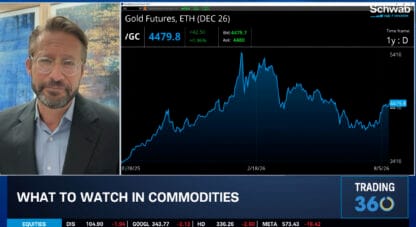
The hosts deliver a fast‑moving snapshot of markets moving back into rally mode, with precious metals taking center stage. They lead with gold reclaiming the $4,600 level and pressing toward fresh all‑time highs, a move that signals renewed momentum rather than a tired bounce. Silver steals the spotlight, surging an eye‑catching 22% to $92.60 and smashing its previous highs, a breakout strong enough to drag the gold‑silver ratio below 50 for the first time in years—an important psychological and technical milestone. The conversation widens to the rest of the metals complex, where platinum and palladium join the party with solid single‑digit gains, confirming that strength isn’t isolated to just one corner of the market. From there, the hosts zoom out to the broader landscape, noting that risk assets are rising in tandem, with the S&P 500 also printing new all‑time highs. That cross‑asset rally underscores the unusual character of the moment: hard assets and equities climbing together, fueled by liquidity, momentum, and investor confidence. The tone is upbeat but measured, suggesting this resurgence reflects a powerful trend reasserting itself rather than a fleeting burst of enthusiasm—and reminding listeners that when markets reignite, they often do so faster than expected.