
If the times were a-changin’ for Bob Dylan in 1963, how should we describe them in 2026? When Δeverything = ∞, or seems to, you’ll be excused if you need to sit down and wait for your head to stop spinning.
Such a rate of change makes analysis challenging—not because a given analyst lacks insight, but because the analysis that’s correct for Tuesday is so often overcome by events on Wednesday.
But this is where the reasoning offered by the below-mentioned analysts is different. Yes, they offer incisive comments on the day’s events, but their underlying analysis has a much longer shelf life. It’s based on principles, and principles do not change with fads or developments.
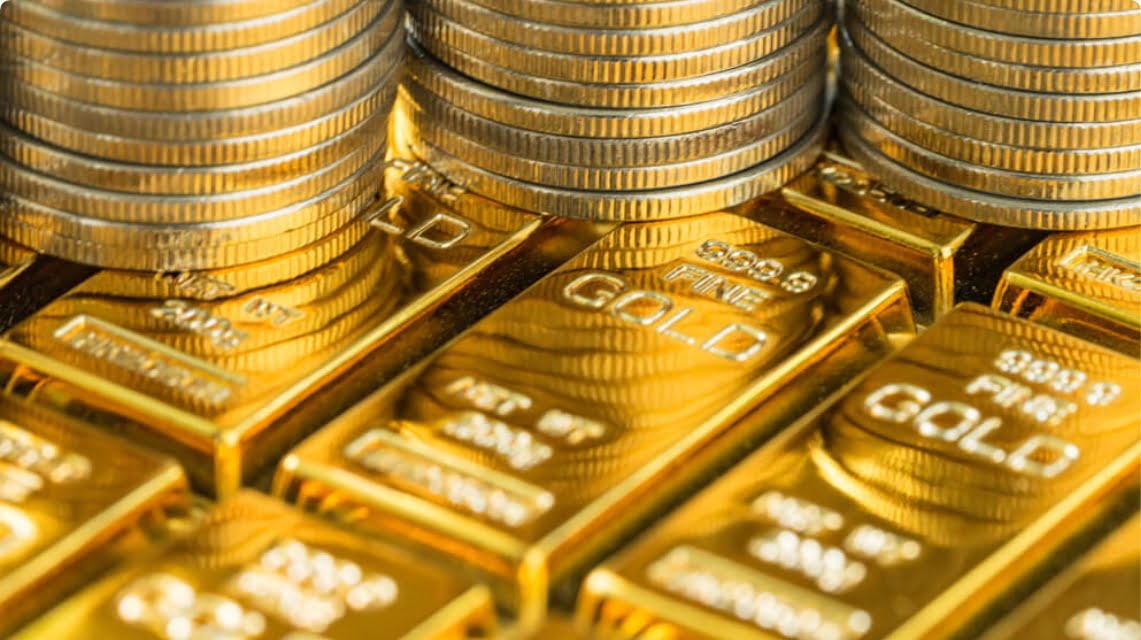
The McAlvany companies offer significantly more services than they did when they started in the 1970s, but they built their foundation on the substance that has held its value for millennia. Gold is not going away. It’s not losing its value. Like the earth from which it comes, it has seasons—times of growth and times of dormancy. But the value remains.
Will the months and years to come be times of growth or dormancy for gold? God knows, and we guess. But some guesses are far more thoughtful and informed than others. The past is often prologue, and many critical factors can be sussed and known. You’ll find several such informed estimates summarized below.
In times of upheaval, perhaps you—like many, many millions of people before you—will find help in the ultimate temporal store of value, along with the insights of its advocates.
Key Takeaways:
- Liquidity is key
- Is the petrodollar giving way to the petroyuan?
- When ratio trading, take the emotion out of it
The McAlvany Weekly Commentary: Gold Is Key Player In New Monetary Regime
David and Kevin kick off their program by zeroing in on liquidity—especially the squeeze in U.S. Treasury markets—and argue it matters at least as much as gold’s recent spotlight. They note that foreign official institutions have been cutting Treasury holdings, contributing to a scramble for cash, while U.S. auctions have shown tepid demand, forcing the government to buy back much of what it issues. From there, they connect the dots: monetizing debt can stoke inflationary pressure, negative real rates can improve gold’s appeal, and crisis—like time-lapse cinematography—can “compress” years into months. David then broadens the lens to central banks’ motives for gold: not just return-seeking, but liquidity and control, particularly as the dollar is weaponized. He links this to Iran’s oil toll concept (with payments in yuan), the idea of a “petroyuan,” and a longer-running shift where trade invoicing may move away from pure dollar settlement toward gold-centric net settlement. Along the way they also cite recession risks, valuations, and foreign ownership of U.S. assets, while keeping the gold theme running like a steady basso continuo.
Hard Asset Insights: Grand Global Economic Reordering?
Morgan frames the near-term fate of asset prices as hinging on how events in the Middle East—especially the Strait of Hormuz—play out, urging a cautious “wait-and-watch-closely” stance while ceasefire hopes are tentative and supply chains remain compromised. If the Strait stays closed, the knock-on effects could deepen into something closer to the Covid era’s severe global shock; if it reopens quickly, complications may be manageable. From there, Morgan widens the lens to argue that current developments may mark the informal end of the dollar’s unipolar dominance, citing the idea that central banks are increasingly favoring gold as “unimpeachable global collateral” amid growing distrust and fewer reasons to recycle trade proceeds back into U.S. assets. He ties this to a petrodollar-to-petroyuan (gold-for-oil) framework, suggested via the Shanghai Gold Exchange International, and speculates on the possibility of a “Mar-a-Lago Accord” type deal that could restructure the global system and (structurally) weaken the dollar to help reshore U.S. manufacturing. He closes by highlighting this week’s mixed market performance—S&P 500 up, gold and miners rising—against a backdrop of volatile energy, a softer dollar index, and slightly higher 10-year Treasury yields.
Golden Rule Radio: Metals Climb Amid Uncertainty
Tory, Miles, and Rob open with the idea that volatility is driving quick, sometimes jaw-dropping swings, yet precious metals keep climbing anyway—gold modestly higher and silver nearing the mid-$70s, while platinum and palladium lead with stronger percentage gains. The week’s big setup is macro-geopolitical: a fragile potential ceasefire keeps markets on their toes, and prices are moving fast enough to make “wait for things to settle down” feel a bit like waiting for the tide—except the tide is repricing by the hour. They highlight the gold–dollar relationship as mirror-image trading (a structurally weaker dollar remains the undercurrent), then dig into silver’s decision point: watch momentum, and pay attention to key Fibonacci areas and whether the market confirms a higher direction or extends a correction. They also cover ratio trades, urging process over emotion—shift weight from silver back toward gold gradually rather than chasing a “perfect” ratio. From there, they connect equities strength to timing (overnight gaps), mention technical resistance, and frame gold’s role as the foundation/anchor while silver acts like torque that amplifies moves.