
An Emperor-(the Fed)-Has-No-Clothes Moment?
A common refrain out of HAI over recent years has been that the United States Federal Reserve Bank is trapped in a policy quagmire. After running an unsustainable policy regime for far too long, the Fed can’t cut interest rates because of above-target inflation (five straight years of it), and they can’t hike rates to fight that inflation because doing so would likely tip the country into a ruinous interest expense-fueled government debt death spiral with devastating consequences.
To say that the Fed is trapped isn’t sensational, it’s just math. In HAI‘s view, the trap now looks set to spring.
The Personal Consumption Expenditures (PCE) index is the Fed’s preferred inflation gauge. A week ago, Chief Economics Correspondent for the Wall Street Journal Nick Timiraos pointed out that “core PCE goods prices [excluding food and energy] are rising at the fastest pace since 2022, up 2.8% over the 12 months ended March, and 3.6% using a six-month annualized rate.”
It’s not just the core PCE goods category. In fact, while year-over-year (y/y) core PCE in March was 3.2%, the figure was 3.5% if you include food and energy. Again, we’ve already had more than five years of PCE inflation well above the Fed’s 2% target. Now it’s starting to aggressively re-accelerate—again.
In fact, according to former St. Louis Fed official David Andolfatto, the latest March PCE ran at a blistering 8.3% month-over-month (m/m) annualized inflation rate. Meanwhile, both the latest manufacturing and services ISM Prices Paid readings (a leading indicator for PCE and CPI) jumped to the highest levels since 2022.
In short, the post-Covid inflation problem that never died is now rapidly re-intensifying. What’s worse, the Strait of Hormuz remains shut while we’re quickly reaching the point where physical oil and commodity fundamentals are going to assert themselves in the form of shortages that pressure prices higher.
This week, according to both ConocoPhillips and Chevron (both MWM companies), those who know best say the Hormuz oil shortages haven’t hit yet, but are about to.
A new Bloomberg article titled, “ConocoPhillips Sees ‘Critical Shortages’ of Oil on Horizon” and a Reuters article this week titled, “Chevron CEO says shortages in oil supply will begin appearing,” underscore the point: until Hormuz is reopened, physical shortages and upward price pressures remain the inflationary base case.
This week, Carlyle’s (and former Goldman Sachs Head of Commodity Strategy) Jeff Currie was also sounding the alarm. Currie told Bloomberg TV that, “I’ve never seen anything like it before.” According to Currie, a true shortage—where there is no physical fuel available—will only begin once “tank bottoms” are reached. He warned that storage tanks for oil, jet fuel, diesel, and gasoline will be running out in Europe later in May, and in the United States “somewhere in the July 4 period.”
In 2022, the last time inflation rapidly spiked (post-Covid), the Fed raised rates dramatically to quell surging prices. While those rate hikes had only limited success in subduing inflation, they absolutely did result in a massive surge of government interest expenses that pushed the deficit to unsustainable levels totally unprecedented outside of war or a major financial crisis.
The absurdly unsustainable deficit has remained stuck there ever since. As a result, in HAI‘s view, the Fed will not be able to similarly jack rates again this time.
All that is to say that we may now be on the verge of an “emperor has no clothes” moment for the U.S. Fed.
The renewed inflation surge will soon force policymakers to choose between a policy of “save the currency” (hike rates, let bond yields rise sharply/bond prices fall sharply in a 2022 redo that risks a debt spiral) or a policy of “save the bond market” (print U.S. dollars to buy bonds and cap yields to maintain nominal U.S. government solvency, while turbocharging already accelerating inflation and crushing the currency).
To HAI‘s eye, the Fed appears to have been fully trapped since late 2022. However, circumstances are now rapidly conspiring to reveal the nakedness of the institution and the severity of the U.S. fiscal problem for all to see.
Despite the “price stability” mandate, HAI expects that the Fed, one way or another, will sacrifice the purchasing power of the dollar to at least nominally “save the bond market.” Furthermore, HAI expects widespread recognition of that expected policy decision to be massively bullish for both precious metals and commodities.
One added reason for confidence in that “sacrifice the currency to save the bond market” outcome is the ongoing state of decline of the post-1971 global petrodollar system. In other words, if the global monetary system is shifting away from mechanical dollar/Treasury accumulation, as HAI believes, then the Fed will have to step in as bond buyer of last resort—at the dramatic expense of the purchasing power of the currency.
This week on Macrovoices, HAI favorite macro analyst and co-founder of Gavekal Louis-Vincent Gave shared his view of the negative impact to global demand for U.S. Treasuries stemming from a newly multipolar world and the inability of the U.S. to reopen Hormuz.
As Gave put it:
I think perhaps most importantly what this whole war highlights is a message… In this new age of drone warfare, controlling the world’s ocean has just become impossible. And this matters a lot because I think it really means that every country that for years and years just always saved in US Treasuries because [in the U.S. dominated unipolar global system] you could… always transform your Treasuries into whatever commodity you needed. That is no longer true.
Look at India. India’s got $700 billion in US Treasuries, and they’re out of fertilizer. And so they call China [a country we know is no longer accumulating Treasuries] and say, ‘Hey, you guys have a lot of fertilizer… Can you sell us some, please?’ And China says, ‘sorry, mate, I’d rather keep what I have. But good luck selling your Treasuries for fertilizer.’…” I think it’s a dramatic shock to the system.
I think coming out of this every country will say, ‘You know what? I can’t sprinkle Treasuries on my field to grow wheat. I can’t shove Treasuries into my car to make it go.’ So, every country will have to build inventories of refined products, inventories of fertilizer, inventory stockpiles of oil.
If you want to essentially have an independent monetary policy and an independent foreign policy, you will now need to stockpile commodities. It’s just that simple, because the days when you can rely on the United States to bring you what you need are now over. And I think this was already obvious for anybody who paid attention following Russia-Ukraine and following Houthis, but now it really is in your face.
The bottom line for me, if we step away from the day-to-day…and we project ourselves to six months, 12 months, 18 months from now, I think you’re still left in a situation where individuals, where companies, where countries will be building more [commodity] inventories.
We will look at the supply shock and decide, I’d rather have fewer US Treasuries, and I’d rather have more natural gas in storage, thank you very much. And so I think every country will head down this way. So however you cut it, you end up with a structural outlook for commodities that is, for me, pretty darn bullish.
In HAI‘s view, Gave is essentially explaining the logical consequence of a newly multipolar world. In the old unipolar, U.S. dominated world, the U.S. insured the smooth functioning of the global trade system, and U.S. dollars (and U.S. Treasuries as reserve asset) were the global currency to secure needed supplies—full stop.
In a new multipolar world where the U.S. does not fully dominate and can’t completely insure the smooth functioning of the old U.S. dollar-based global system (and has weaponized the dollar and alienated other important poles that have needed resources), nations prioritizing their national security interests increasingly realize they can’t just “sprinkle Treasuries on my field to grow wheat.”
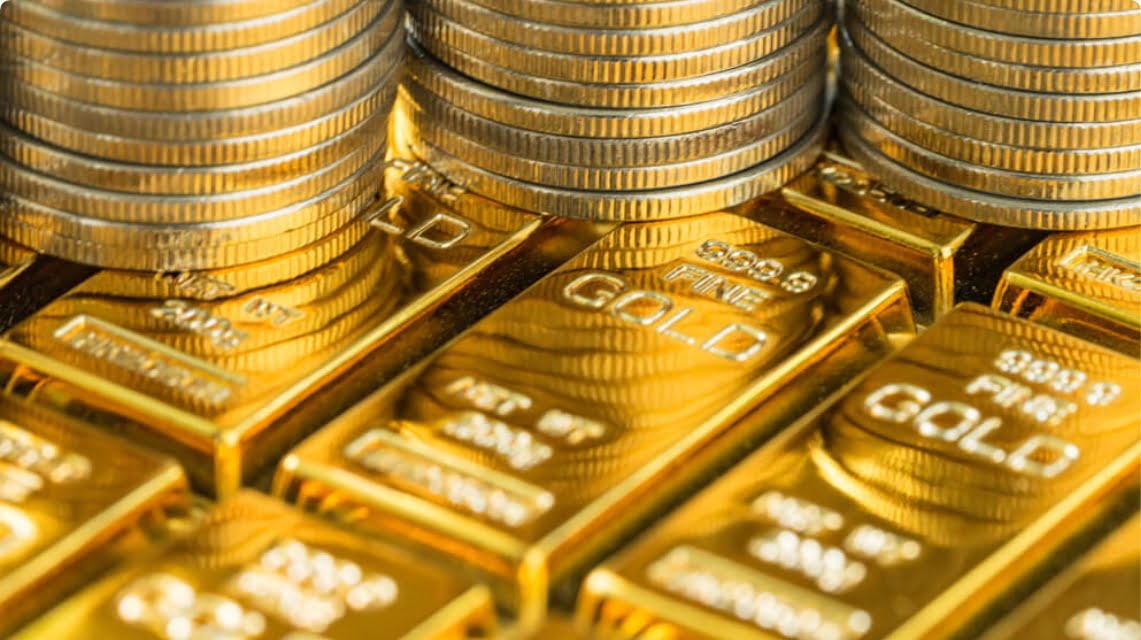
As Gave points out, that translates to a very bullish outlook for commodities as nations build stock of needed commodities rather than stocks of U.S. Treasuries. But Gave’s point is also extremely bullish for gold, as gold effectively becomes the needed and trusted neutral net settlement asset for trade in a new multipolar world.
In short, in a multipolar world, a nation cannot always secure needed supplies by payment in weaponized U.S. dollars. In a new multipolar world, a new neutral net trade settlement asset is a necessity. Over the last decade, central bank gold buying and China’s “golden road” initiative are both statements that gold is the newly needed neutral net trade settlement/reserve asset in the newly multipolar world.
As an aside, what’s totally speculative—but nevertheless fascinating to HAI—is the question of whether the Trump administration has been subtly angling for just such a new multipolar world outcome. As strange as it may seem, the Trump administration has been adamant about the need for a weaker dollar as a key to revitalizing the domestic manufacturing base that’s been hollowed as a consequence of the strong dollar under the global dollar system. In HAI‘s view, that would ultimately be a healthy, pro MAGA outcome, but only time will tell.
That said, in HAI‘s view, when the Fed prints and chooses “save the bond market” over “save the currency,” the full dollar-negative implications of the newly emerging multipolar world will begin to hit Western investors—hard. HAI expects that recognition moment (and resulting generational capital rotation event) to translate towards much higher prices for both precious metals and select commodities more broadly.
While broad U.S. equity markets have been booming of late, in HAI‘s view, the recent price action and the fundamentals driven by the AI capex boom both look ominously similar to the late stages of the dot.com bubble top. While HAI suspects there is still more time and more blow-off upside to the broad equity market, HAI also believes that the real opportunity in both time and upside is in the precious metals and commodities, once it is revealed that the Emperor (the Fed) has no clothes.
Weekly performance: The S&P 500 was up 2.33%. Gold was up 2.22%, silver gained 6.91%, platinum was up 2.85%, and palladium was off by 2.78%. The HUI gold miners index was up 8.27%. The IFRA iShares US Infrastructure ETF was down 1.81%. Energy commodities were volatile and lower on the week. WTI crude oil was down 7.08%, while natural gas was off 1.15%. The CRB Commodity Index was down 1.01%. Copper gained 5.15%. The Dow Jones US Specialty Real Estate Investment Trust Index was flat. The Vanguard Utilities ETF was down 3.59%. The dollar index was off 0.32% to close the week at 97.84. The yield on the 10-yr U.S. Treasury was off 2 bps on the week, closing at 4.36%.
Have a wonderful weekend!
Morgan Lewis
Investment Strategist & Co-Portfolio Manager
MWM LLC