
Remembering 9/11; Awaiting a Hike
Twenty-five years ago, this country suffered a devastating and unprecedented set of terrorist attacks. This author, like most of you reading, will never forget where I was and will never forget each agonizing minute of the unfolding horror. It is important to remember, however, that on one of the worst days in America’s history, we all saw some of the very best of the American people.
This week, HAI would like to remember and honor those lost on 9/11/2001, and offer sincere hope that Americans never lose the underlying goodness of character that was so obviously and spectacularly on display during and immediately after that devastating crisis.
On the economic/financial side of things, HAI doesn’t have much to add this week to what’s already been said in prior weeks. The big picture remains the same, so this week’s installment will largely update ongoing events.
The Federal Reserve will hold its September FOMC policy meeting next week. After the hotter-than-expected inflation data this week (both PPI and CPI), the die has now been cast. Markets overwhelmingly expect a 25-basis point rate hike out of new Fed Chair Kevin Warsh. Warsh will very likely accommodate them rather than fully and instantly cede Fed institutional credibility.
Over the past several weeks, HAI has framed this set-up by pointing out that if Warsh wants to prove something, he can certainly raise rates by 25 basis points once or perhaps twice before quickly reversing to cuts again. It’s a calculated risk, but likely doable.
If he initiates a true rate hiking cycle to really fight inflation, however, he’ll initiate a sequence of events that will fully put the match to the powder keg of the extremely precarious U.S. fiscal position. The U.S. dollar will rise, 10-year Treasury yields in the U.S. and across the West will rise sharply, U.S. government tax receipts will fall with the financialized economy and equity markets, and foreigners will sell U.S. Treasuries to service trillions in U.S. dollar-denominated debt and defend their own currencies.
The U.S. is neck deep in fiscal dominance, where debt service overwhelms monetary policy. If Warsh raises rates to try and squash inflation back down to the Fed’s two percent target, he’ll have to sacrifice the bond market, the stock market, the economy, and the government fiscal position to do it. In that light, that is almost certainly not the plan.
Instead, we’re likely entering the head-fake portion of the Warsh legacy. The Fed Chair is now likely to hike rates to prove his hawkish credentials and defend Fed credibility before eventually finding a reason to pivot to more aggressively cutting rates later.
Why is a pending dovish pivot such a high-conviction view? Because the reality is that the U.S. is saddled with true interest expense (a combination of gross interest expense, entitlement spending, and veterans benefits spending) that alone represents 106% of tax receipts. And that combined core expense is growing at 7.5% annually while tax receipts (even amid record receipts) is growing at only 4% annually. Furthermore, amid that grisly fiscal math, and given political realities, the only line item that can be realistically and meaningfully cut is interest expense.
Last week, HAI quoted Robin Brooks (Senior Fellow at the Brookings Institute and former Chief FX Strategist at Goldman Sachs) speculating that perhaps underneath the headlines, “We’re seeing the emergence of a new Treasury-Fed accord where the overriding goal is to keep borrowing costs down.”
This week, renowned Stanford economist John Cochrane (perhaps not coincidentally a colleague of Fed Chair Kevin Warsh at the Hoover Institute for well over a decade) publicly added his influential voice to the Fed policy debate.
In a Substack article titled, “Reasons to Lower Rates,” Cochrane said, “the best I know of to address this sort of question, the government should first drastically shorten the maturity structure of debt, and then lower interest rates persistently.” He then added, “Maybe Bessent and Warsh are cleverly working together!”
Bessent is already working to “shorten the maturity structure of debt.” In HAI‘s view, after an initial credibility-enhancing hawkish rate-hike head fake, Warsh may then be better positioned to eventually “lower interest rates persistently.”
We will likely know much more about a potential Warsh hawkish head fake after next Wednesday’s Fed FOMC meeting and subsequent Warsh presser. HAI will update accordingly.
But while U.S. policy has for now seemingly relied upon smoke, mirrors, and pageantry, HAI suggests investors take their cue from abroad. As Bloomberg reported on Monday in an article titled, “China Central Bank Adds Most Gold Since 2023 Even as Prices Jump,” the government of the world’s second largest economy isn’t hanging on every word out of Kevin Warsh’s mouth.
As Bloomberg reported, “China added the most gold to its reserves since 2023, accelerating purchases in August even as bullion prices surged. Holdings at the People’s Bank of China, one of the world’s biggest official-sector buyers, rose by 650,000 ounces, according to data released by the central bank on Monday. That extends the PBOC’s buying streak to 22 months.”
At next week’s Fed FOMC, we’ll get our next clue as to how far Warsh wants to take his hawkish pretense, and how long markets will buy it.
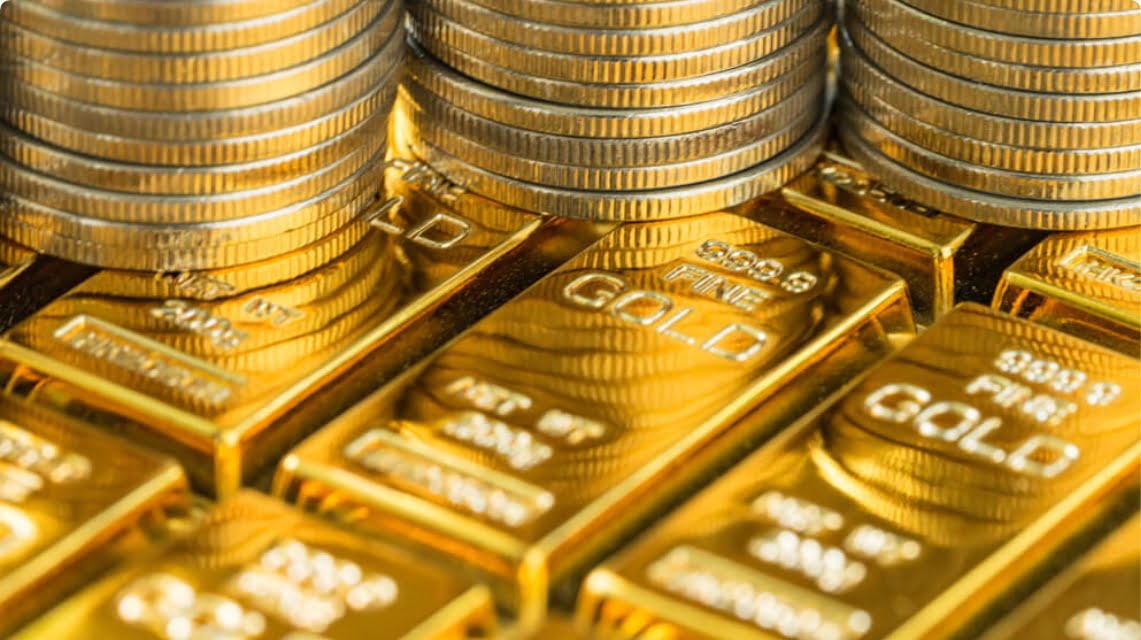
That said, in HAI‘s view, despite a looming rate hike and the potential for more near-term volatility, given what likely comes after, this appears to be a very bullish set-up for gold and hard assets more broadly. At this point, despite what Warsh says, debasement very much appears to be the path of least resistance out of America’s current fiscal predicament. As HAI said last week, beyond a potential near-term hawkish head fake by Warsh, a new Trump-Treasury-Fed accord with the overriding goal of keeping borrowing costs down should be assumed.
Weekly performance: The S&P 500 was off 0.80%. Gold was down 1.91%, silver was down 2.29%, platinum was off 1.37%, and palladium was down 6.34%. The HUI gold miners index was down 2.20%. The IFRA iShares US Infrastructure ETF was down 1.48%. Energy commodities were volatile and mixed on the week. WTI crude oil was up 9.31%, while natural gas was off 5.20%. The CRB Commodity Index was up 1.60%. Copper was off 1.80%. The Dow Jones US Specialty Real Estate Investment Trust Index was down 0.58%. The Vanguard Utilities ETF was down 1.70%. The dollar index was nearly flat, down 0.06% to close the week at 99.09. The yield on the 10-yr U.S. Treasury was up 18 bps on the week, closing at 4.97%.
Have a wonderful weekend!
Morgan Lewis
Investment Strategist & Co-Portfolio Manager
MWM LLC