
The content creators below do not scream and yell, wave their arms and send up flares, but they do convey a clear and critical message. And while a word to the wise might be sufficient, these analysts repeat the message so there will be no misunderstanding: These are pivotal days for America and the world, both culturally and financially. While the issues in play go far beyond finance, they most certainly include finance. And while they pose once-in-a-century threats, they also pose once-in-a-century opportunities.
The McAlvany companies’ gold sales began with legal and moral ways to offer gold to clients when general trading in gold was still outlawed in America. That same innovation and moral foundation has guided the company and its personnel for over 50 years, allowing clients to make money safely during stagnant or down-trending precious metals markets and fully benefit from bull markets. Now, when every me-too, also-ran, johnny-come-lately company is selling gold (because they can), it might be wise to consider more than just the mania.
How is it wisest to participate in bull precious metals markets? Which metals stand to gain most? How and when will you exit your metals positions? And where will you put your money then? These and other equally crucial questions take experience and insight to answer. That’s exactly what the McAlvany companies offer—lots of it. Sample the publications below, and you’ll see the depth and breadth of understanding offered by the company and its people.
These are crucial times to protect and grow what you’ve worked for. Don’t miss out on the opportunity, but don’t participate in a way you’ll regret later, either.
Have a Merry Christmas and a wonderful holiday season!
Key Takeaways:
- QE by any other name would liquefy as well
- Displacing risk doesn’t eliminate it
- Especially seize the momentousday!
- Opportunity knocks; only the wise will answer
The McAlvany Weekly Commentary: Which Is Rising Faster: Gold Or McDonalds Fries?
David opens with a sharp critique of the Federal Reserve’s late‑2025 actions, arguing that “not‑QE” looks, smells, and behaves exactly like quantitative easing, as the Fed injects tens of billions into short‑term Treasury markets under the guise of “reserve management.” He and Kevin spend most of the discussion unpacking why this matters: the Fed appears worried about hidden fragilities in repo markets, leveraged credit, and debt rollover risks, especially as rate cuts have failed to bring down long‑term Treasury yields. From there, David broadens the lens to valuation extremes, highlighting the Buffett ratio blowing past all historical peaks and warning that U.S. equities face painful mean reversion, potentially alongside deeper trouble in private credit and shadow banking. Inflation is illustrated memorably through McDonald’s prices—medium fries doubling since 2019—underscoring that consumer prices are unlikely to revert lower. Against this backdrop, David frames gold not as a trade but as an existential hedge, tied to global de‑dollarization and central bank accumulation. His bottom line is blunt but wry: in a world awash in abundant paper claims, survival favors scarce, real assets—preferably ones that don’t go soggy like fries.
Credit Bubble Bulletin: Global Monitoring Report on NBFI
Doug frames the week as ominous, centering his analysis on the explosive growth and opacity of nonbank financial intermediation (NBFI), which the Financial Stability Board now shows has swollen past $250 trillion and overtaken traditional banks as the dominant holder of global financial assets. He underscores how hedge funds, money‑market funds, private credit, and trust companies are expanding at double‑digit rates, often offshore and beyond regulators’ clear sightlines—fertile ground for leverage, runs, and unpleasant surprises. Against this backdrop, Doug surveys tightening global bond markets, led by Japan’s rate hike and a sharp rise in long‑dormant JGB yields that rippled through Europe, while U.S. Treasurys held steadier amid muddled inflation data. He weaves in signs of late‑cycle fragility: AI spending excesses, stressed corporate credits, record CLO issuance, and speculative froth from crypto to options trading. Politics and geopolitics add further instability, from U.S. election maneuvering and housing‑finance risks to trade wars and intensifying global conflicts. The through‑line is clear and unsettling—financial excess has migrated outside the banks, risks are compounding quietly, and markets appear calm mainly because liquidity still papers over the cracks.
Hard Asset Insights: Rational Exuberance
Morgan frames this week’s discussion around what he sees as a once‑in‑a‑generation monetary regime change, arguing that the Trump administration’s new national security focus on re‑industrializing America is fundamentally incompatible with the post‑1971 dollar‑recycling system. Most of his letter is spent explaining why reshoring manufacturing implies a weaker dollar, shrinking current‑account deficits, and ultimately the need for an alternative global reserve framework—one that increasingly points to gold. Morgan contends that gold’s already remarkable run is only the “slowly” phase of a paradigm shift that may soon move to the “all at once” stage, with long‑term price potential well north of current levels. Drawing on financial historian Edward Chancellor, he emphasizes that gold’s rise lacks classic bubble psychology: Western investors remain underexposed, ETFs are subdued, and Wall Street consensus still lags reality. Central banks, not speculators, are doing the heavy lifting. Morgan extends the thesis to silver and mining equities, arguing they are poised to outperform as investor participation broadens and industrial demand—especially from new battery technologies—accelerates. He rounds out the update with a brisk market recap and a seasonal note of optimism, suggesting that a little “rational exuberance” may soon arrive just as the fundamentals demand it.
Golden Rule Radio: Fundamentals Behind the Metals
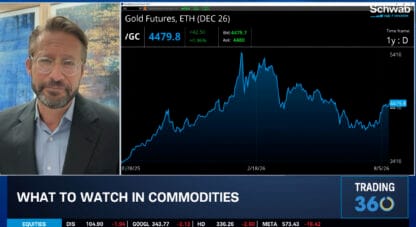
The MPM team opens with a brisk rundown of a powerful week in precious metals, noting that gold climbed to about $4,340 while silver surged into the mid‑$60s, joined by eye‑catching double‑digit gains in platinum and palladium. Most of the discussion focuses on the macro forces driving this momentum: a weakening U.S. labor backdrop, global rate cuts, renewed balance‑sheet expansion by the Fed, and aggressive stimulus from Japan and China—all of which make the policy environment look like a “pre‑crisis bailout” before a crisis is officially declared. From there, the hosts frame precious metals as the scoreboard for quietly dying fiat currencies, highlighting how gold’s much stronger performance in yen terms illustrates currency decay long before any dramatic collapse. A key segment dives into the gold‑to‑silver ratio, which has compressed rapidly from extreme levels, setting up opportunities for disciplined ratio trading rather than emotional market timing. They stress partial, staged swaps—“70‑ish, 60‑ish, maybe 40‑ish”—as a way to compound ounces over cycles. Geopolitical tensions, including U.S.–Venezuela escalation, round out the picture, reinforcing the idea that metals benefit when uncertainty, spending, and money printing become the rule rather than the exception.