

Podcast: Play in new window
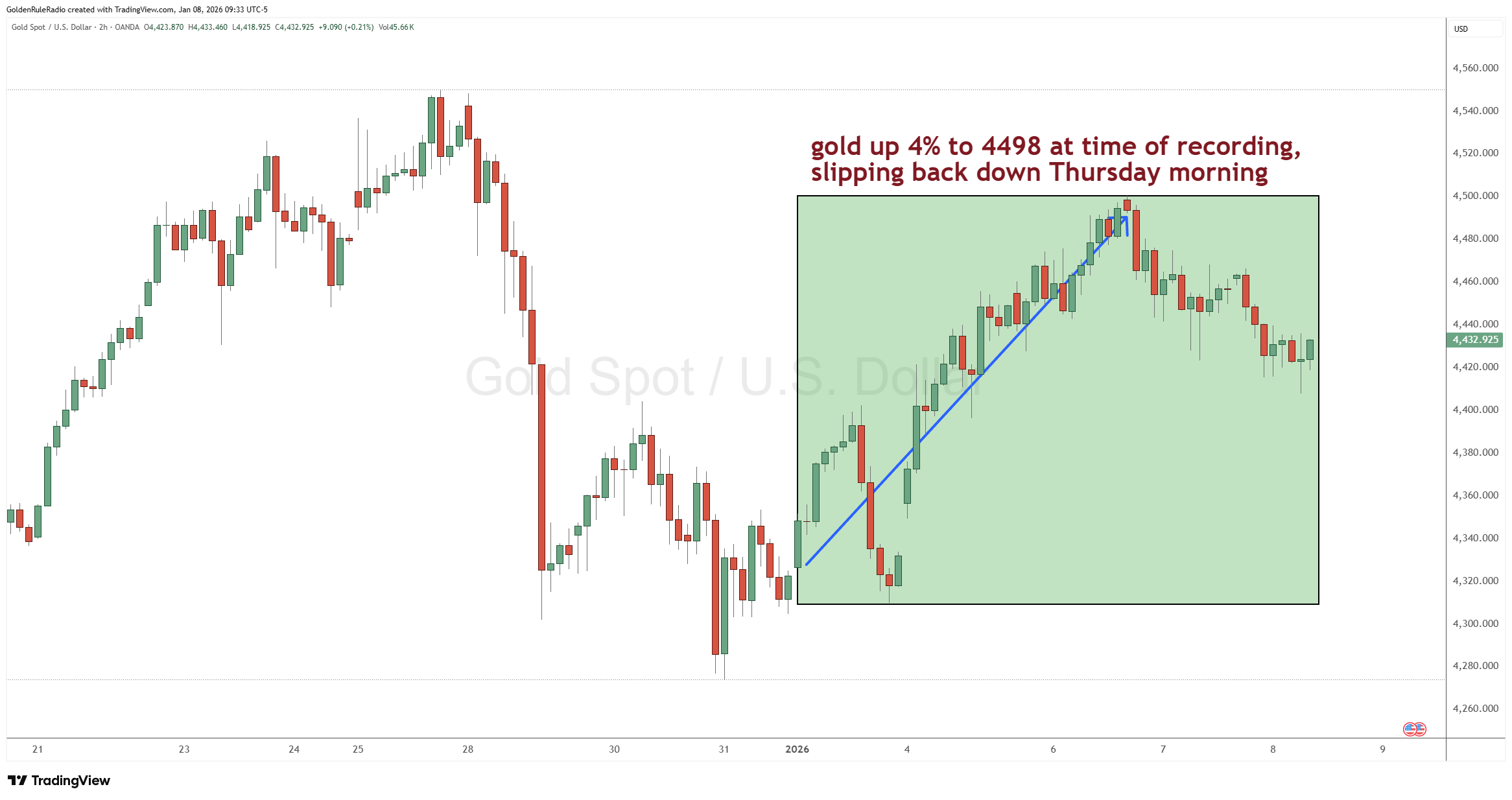
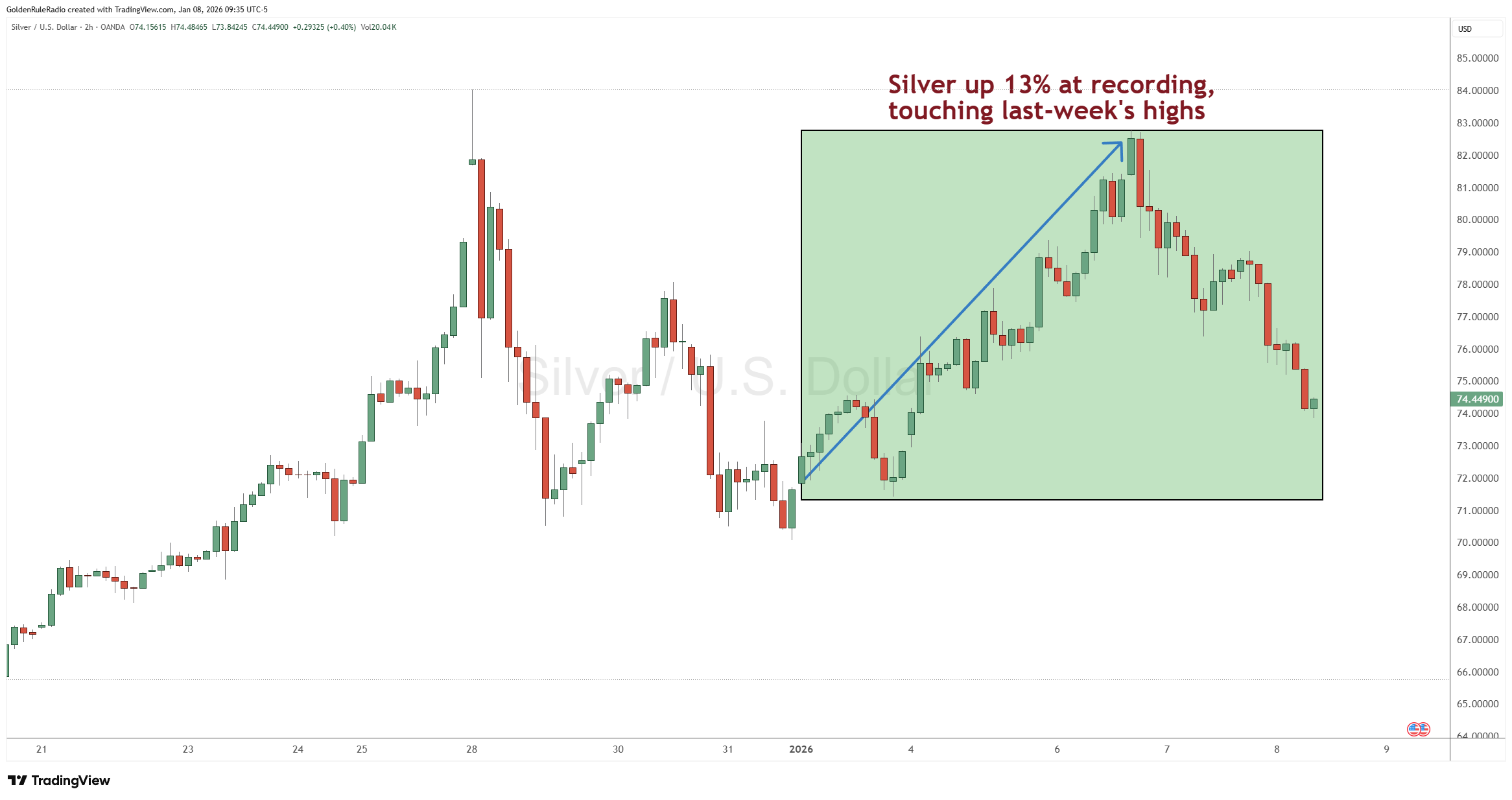
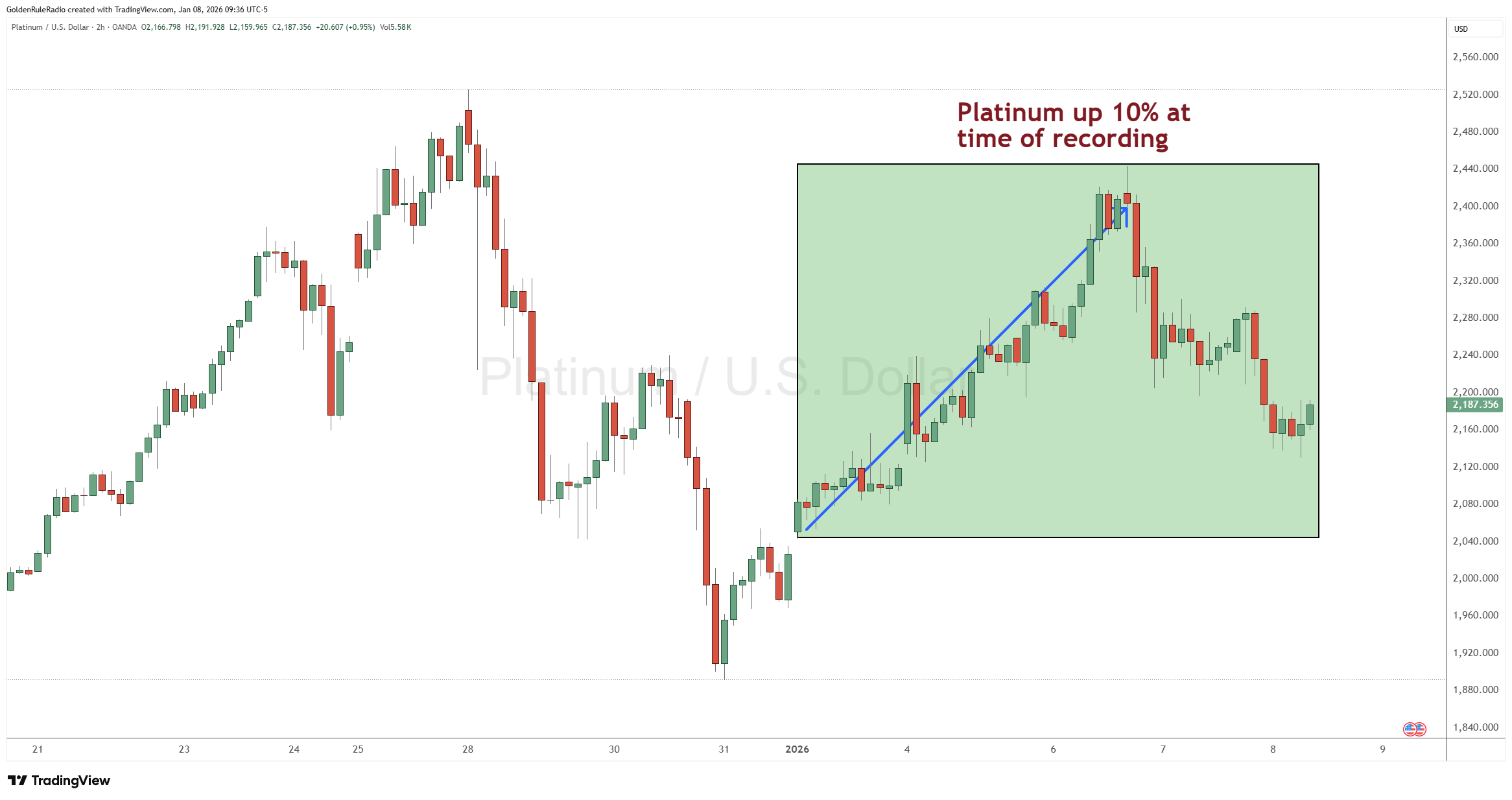
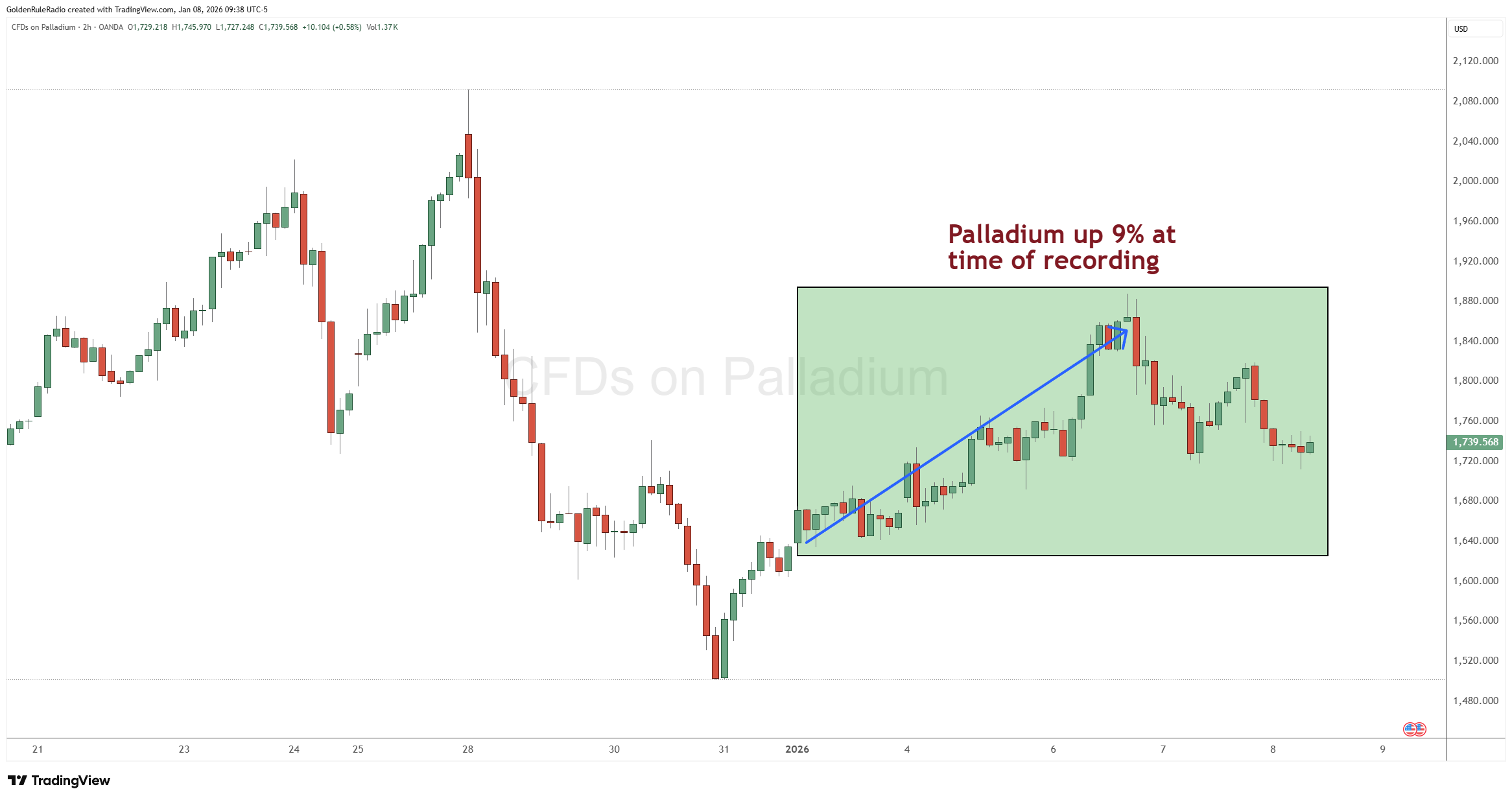
Precious metals kick off the new year with a bang, with gold seeing a 4% rise and silver surging almost 13% and nearing the previous high. Platinum and palladium trail close behind, seeing a 10% and 9% bump respectively. Equities and the dollar are also pushing higher but compared to the strength seen across the board in metals, this metals market does not look to be short-term.
Let’s take a look at where precious metals prices are as of Wednesday, January 7:
The price of gold is up 4% sitting at $4,498 as of recording. That puts gold about $50 below the previous all- time high.
The price of silver is up 13% at $81.60. The white metal is basically touching the previous all- time high that it put in last week. So we could see silver push to some new territory here shortly.
Platinum is up 10% sitting at $2,253.
Palladium is up 9%, sitting at $1,788. So all the metals have done pretty over the last week.
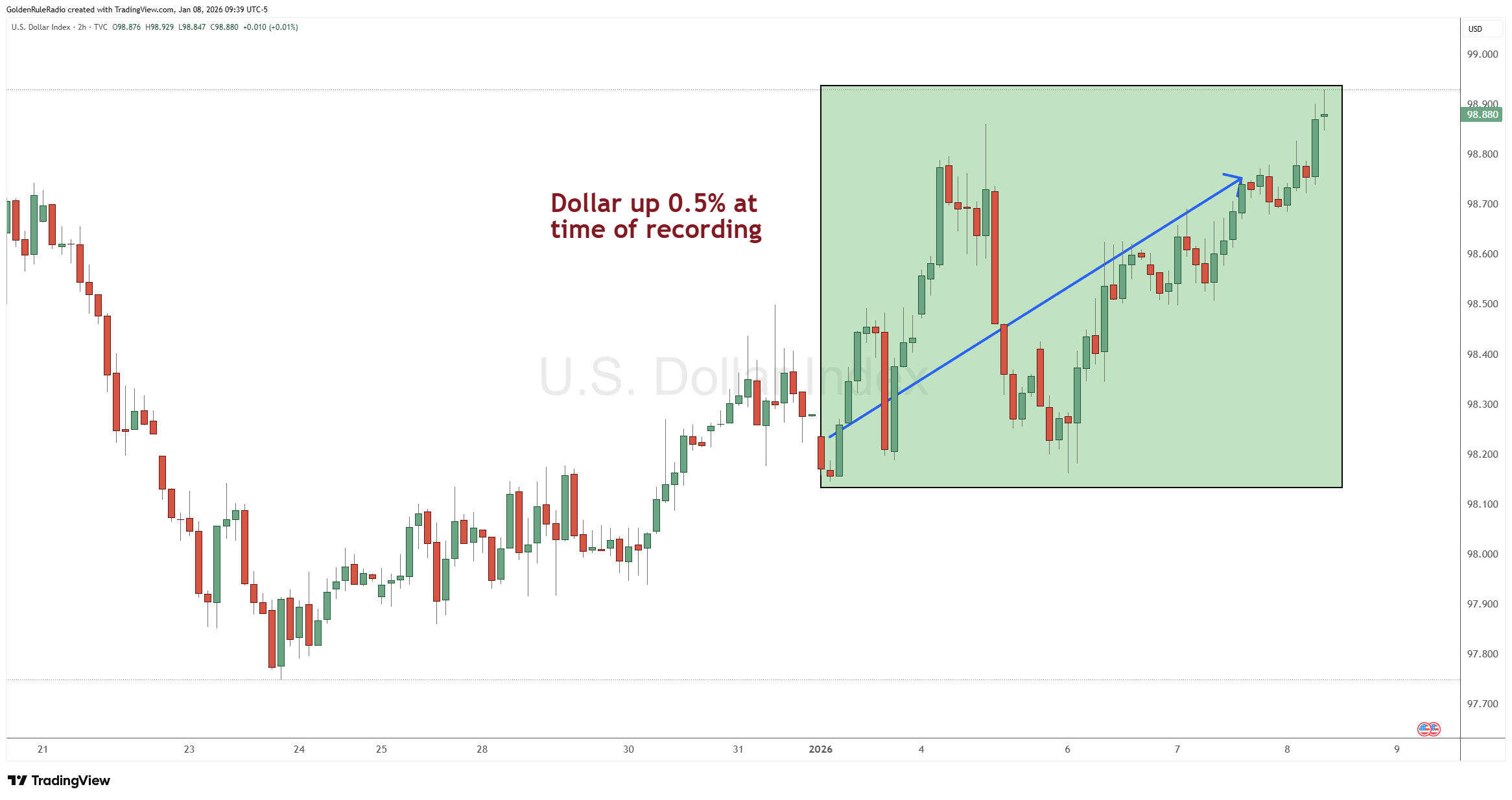
Looking over at the paper markets…
The US dollar index is up 0.5% currently sitting at 98.7.
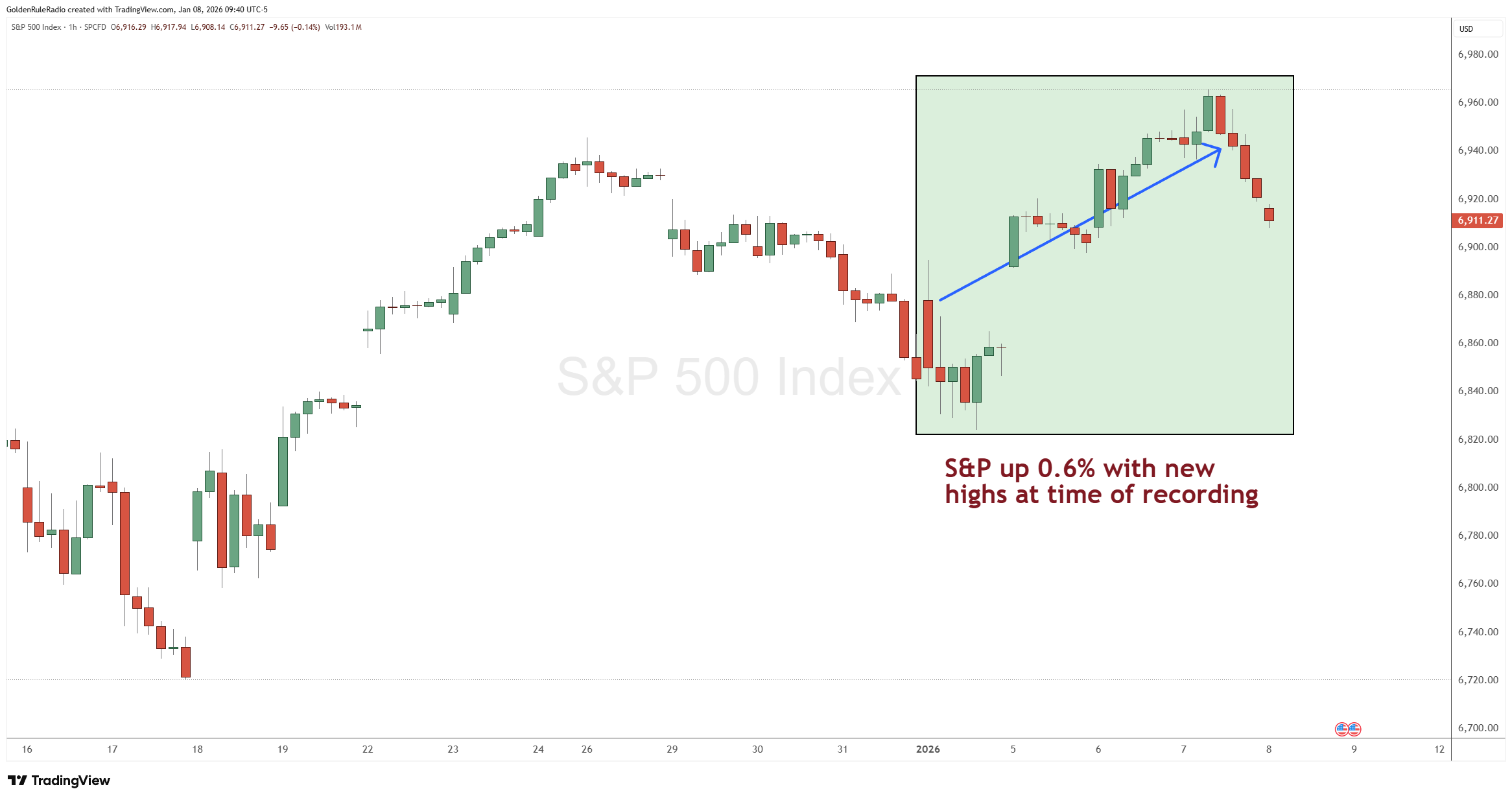
The S&P 500 is up about 0.6% currently at 6,920. It touched an all- time high earlier today at 6,965 today.
Metals’ Momentum: Not a One-Off Bull Market
When you zoom out, the recent explosion in precious metals prices sits on top of an already impressive multi‑year trend. In 2025 alone, gold gained roughly 64%, silver about 148%, platinum over 120%, and palladium around 76%—returns that most investors would happily accept over an entire five‑year window, not in a single calendar year. Yet even before 2025, from 2020 through 2024, gold was already up about 80% and silver around 75%, confirming that metals have quietly been among the best‑performing core assets in a diversified portfolio.
As we look at those numbers, we see multi‑year confirmation that precious metals deserve to be a central building block in your allocation, not a token 2–3% “hedge” that gets ignored until there is a crisis.
A “Go-Go” Economy in 2026
Looking ahead, we expect 2026 to be a “go‑go” year for the economy. Energy prices have fallen more than 20% from early last year, easing the cost of getting food to your table, gas in your car, and electricity into your home. At the same time, a new Federal Reserve leadership is openly setting the stage for aggressive interest‑rate cuts, creating a powerful cocktail of easier money, friendlier financial conditions, and renewed enthusiasm in risk assets like stocks and corporate bonds.
From our perspective, that same cocktail is decidedly bearish for the US dollar. It is already down meaningfully from its 2025 highs and facing even more pressure as real interest rates slide back into negative territory.
In that regime—what macro analysts often call “Quad 1” (growth up, inflation down)—the white metals tend to be the star performers. At the same time, lower rates and a weaker dollar reduce the opportunity cost of holding non‑yielding assets like gold and silver.
Physical demand, supply constraints, and the “hard bifurcation”
One of the most important dynamics is the growing split between the financial world and the physical world—what some analysts call a “hard bifurcation.” The tension between the monetary economy (paper claims and leverage), and the physical economy (mines and physical metals) is becoming a major driver of price.
For example, the United States is now committing billions of dollars to new refining and processing capacity, such as the planned smelter complex in Clarksville, Tennessee, to handle strategic minerals and rare earths—an acknowledgement that we have fallen behind China, Russia, India, and others in securing reliable supply.
The recent behavior of silver around CME margin hikes is another case in point. At the very end of 2025, CME raised margin requirements on silver futures by roughly 30–40% in a matter of days, segregating traders into “low‑risk” and “high‑risk” categories and forcing anyone using significant leverage to either post more capital or get out.
What that tells us is that this is not just a paper market chasing charts. It is a market in which utilities, manufacturers, sovereigns, and long‑term investors are scrambling for real metal and real supply chains.
Gold: silver ratio and why gold is “cheap”
If you only look at metals through the lens of US dollars, everything feels expensive right now.
But we encourage you to think in relative terms: gold to silver, gold to oil, metals to the S&P 500, and so on. By those measures, gold is actually cheap today. The gold‑to‑silver ratio has fallen to its lowest levels since around 2013, meaning that compared with silver, gold has not been this inexpensive in more than a decade.
Right now, an ounce of gold can buy roughly 100 barrels of oil, only the second time in history that the ratio has been that favorable, while an ounce of silver can almost buy two barrels on its own. That means that if you have been saving in metals instead of in cash, your purchasing power in terms of energy—and, by extension, in many other goods linked to energy—has skyrocketed.
If you have been holding silver through the 2025 explosion, gold is effectively “on sale” for you; measured in silver, gold is down more than 40% from where it stood a year ago, and if you swapped into silver at extreme ratios above 100:1 in 2025, your effective cost to swap back into gold today could be 50% lower.
The quiet gold‑reserve regime
Central banks have been accumulating gold at the fastest pace in decades, and gold has already surpassed US Treasuries as a share of global FX reserves. The direction is clear—major nations are voting with their balance sheets for hard assets over paper promises.
China and other BRICS‑aligned countries are building gold depositories and explicitly encouraging corporations and institutions to use gold as high‑quality liquid collateral for trade. The impulse is straightforward: if you distrust the long‑term stability of the dollar system or fear sanctions risk, you want a neutral reserve asset that no single government can print or freeze, and gold is the natural choice.
What should strike you is that even in the West, institutions that once dismissed gold are changing their tune. Wall Street CIOs have publicly floated allocations of 20–25% to physical gold for their top clients—despite the fact that they earn no ongoing management fees on metal sitting in a vault—and major European holders have been shipping gold to the United States for safer‑haven storage.
Here to Help
The team at McAlvany Precious Metals has a collective 75 years experience investing in the precious metals market. We are happy to speak with you about your goals on a no-obligation, complimentary consultation. Reach out to us at 800-525-9556.