

Podcast: Play in new window
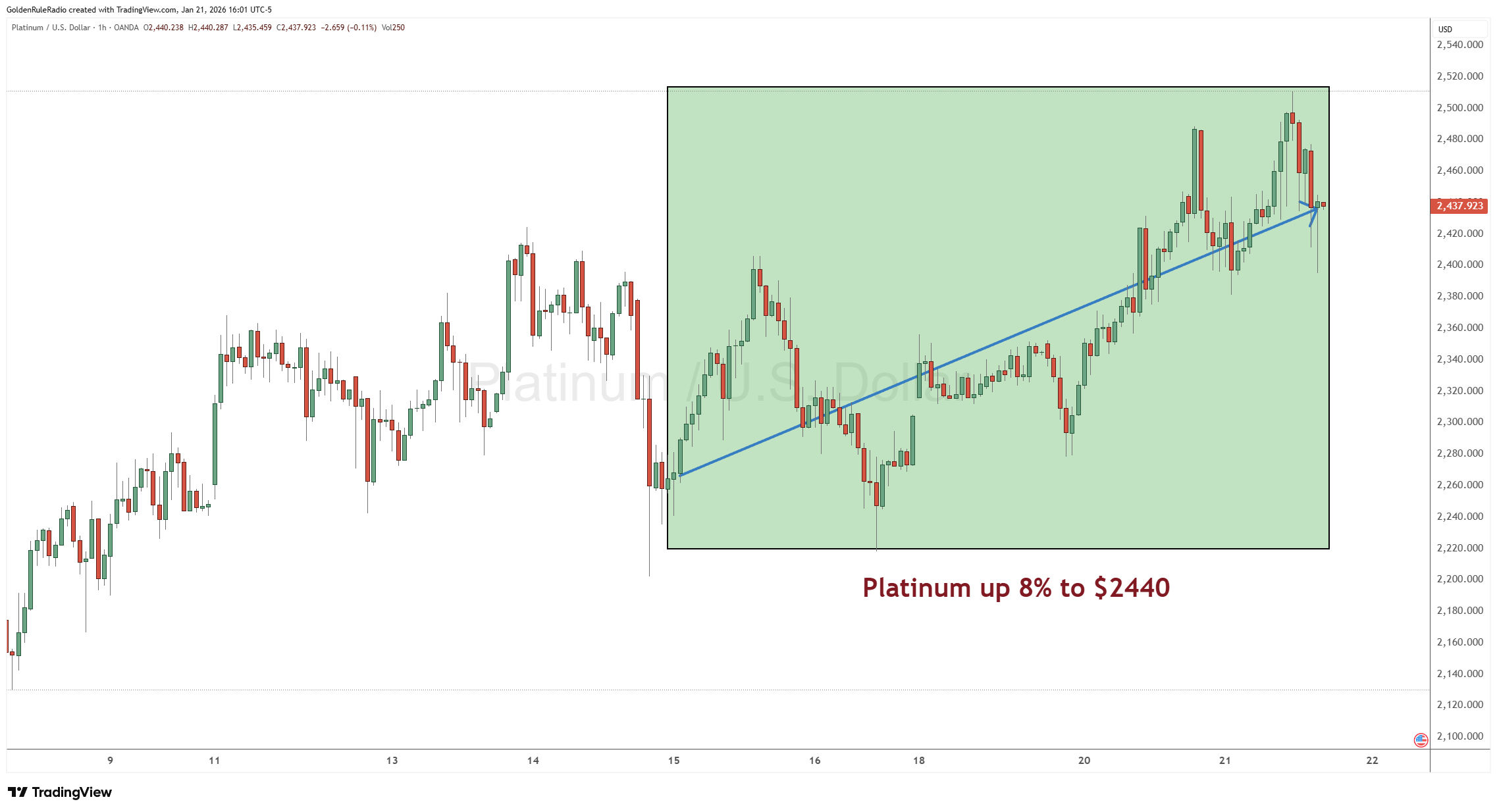
Gold continued its steady climb this week and crept up to $4,825. After silver’s explosive rise, this week saw a 5% increase as it cools down in the mid $90s. Platinum and palladium continued their push as well, with platinum gaining 8%.
Let’s take a look at where prices stand as of Wednesday, January 21:
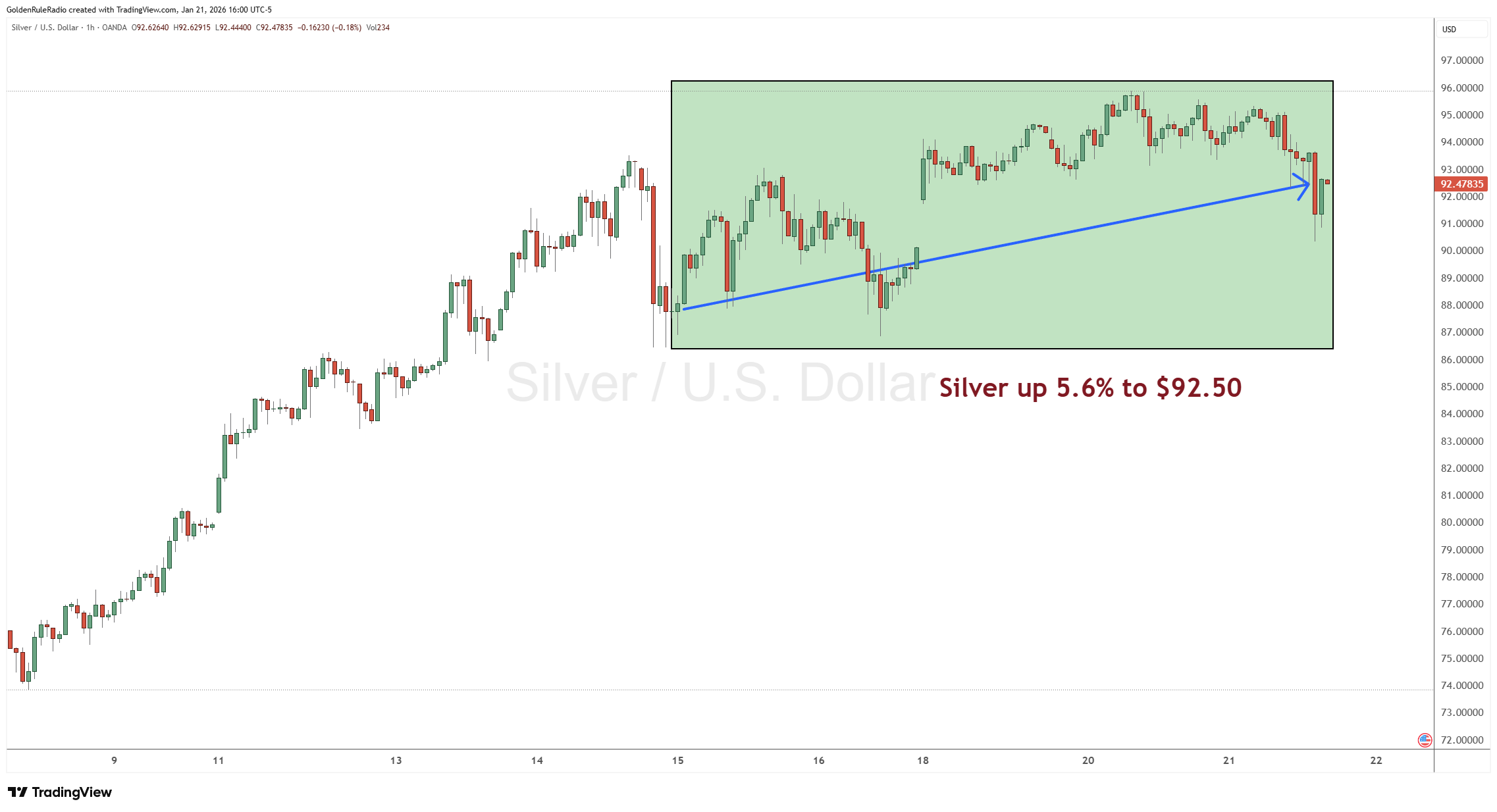
The price of gold is up 5% sitting at $4,825 at the moment and still looking very strong.
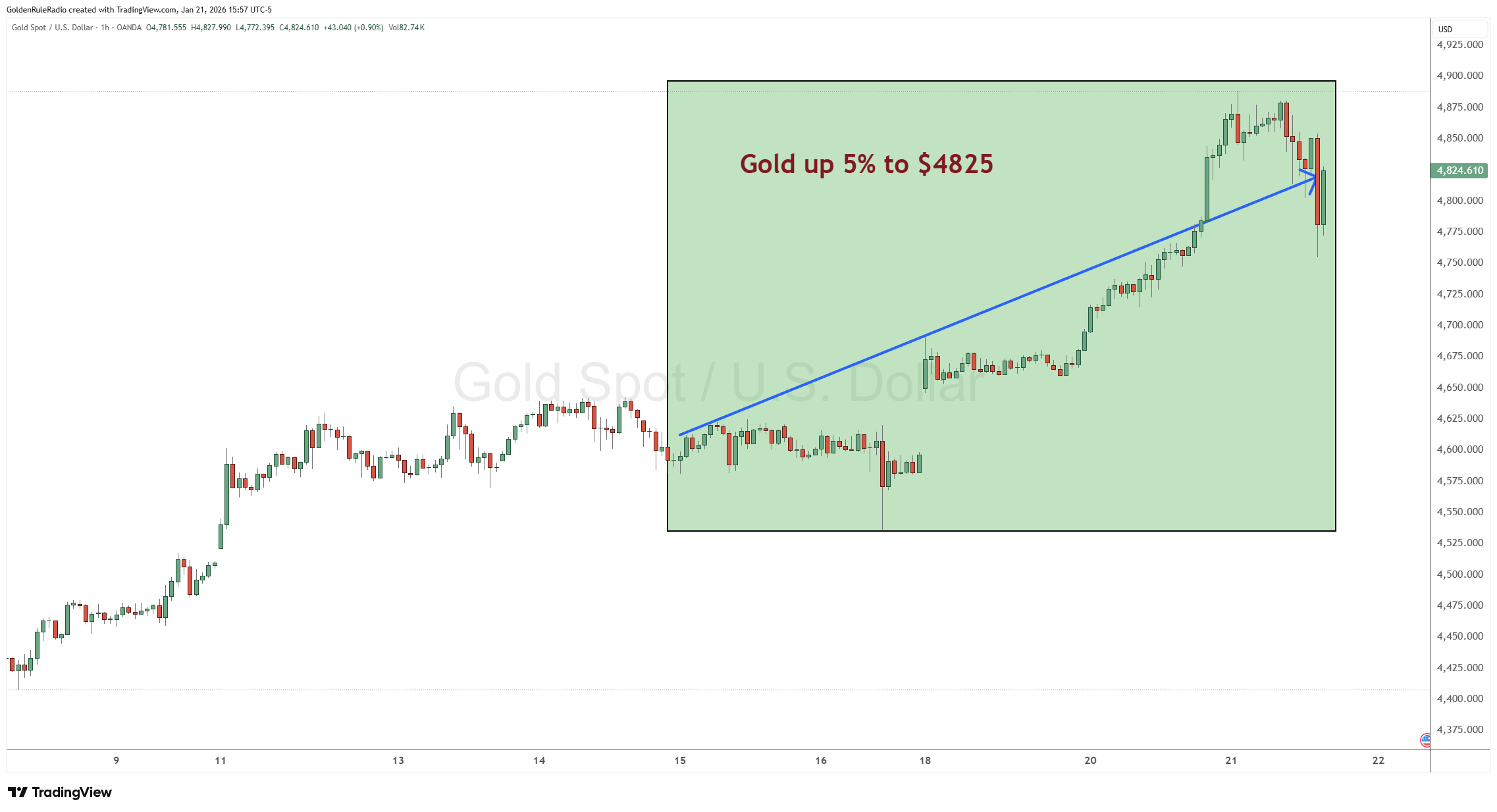
The price of silver is up about 5.6%, currently at $92.50. The white metal may have gone up about 12% at one point, closing at $94.95 the previous day.
Platinum is up 8%, sitting at $2,440. It is the big winner this week, but still below some of the previous highs.
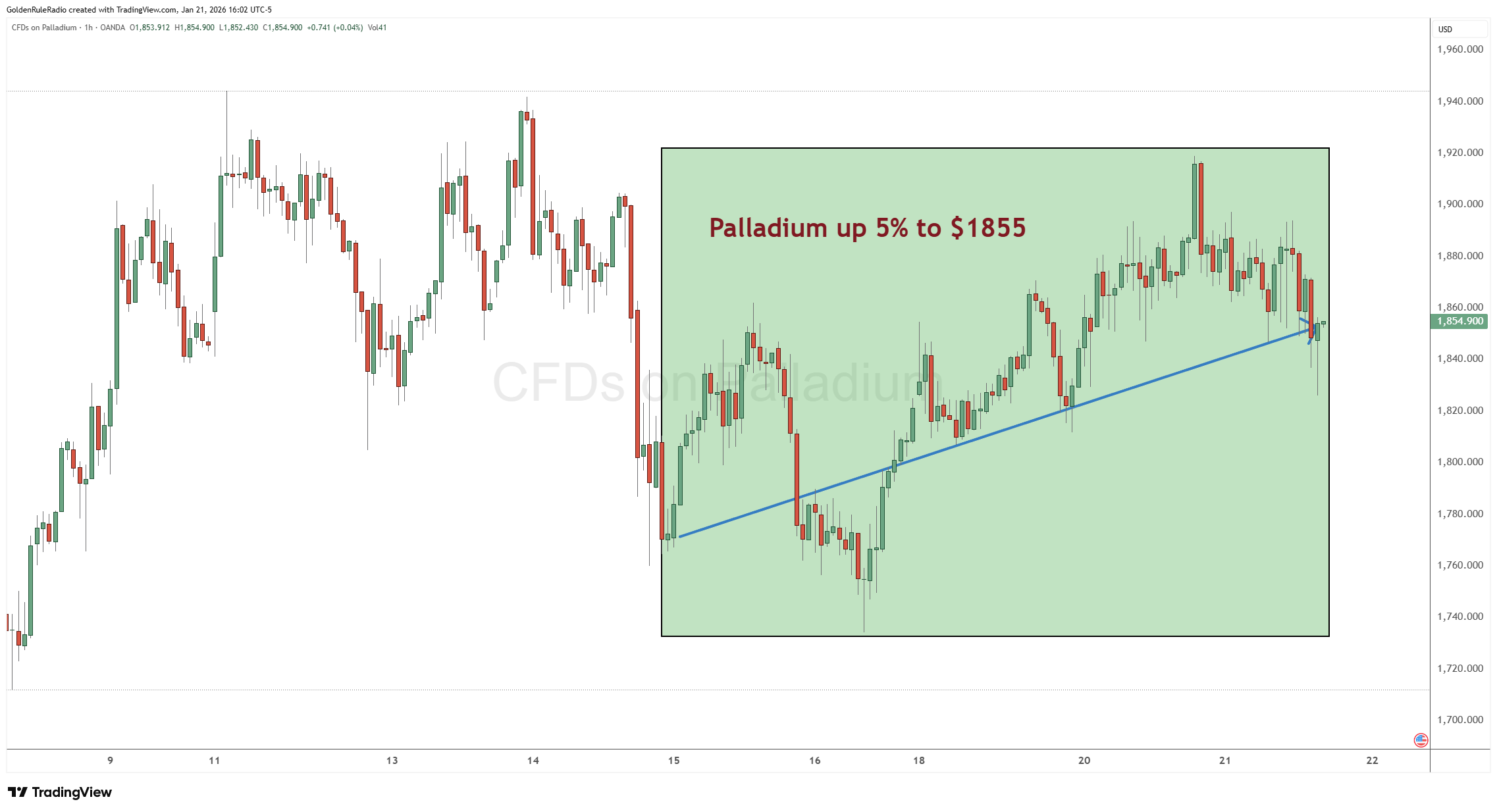
Palladium is up 5% at $1,855. Platinum is now about 30 some percent above its sister metal palladium.
Looking over at the paper markets…
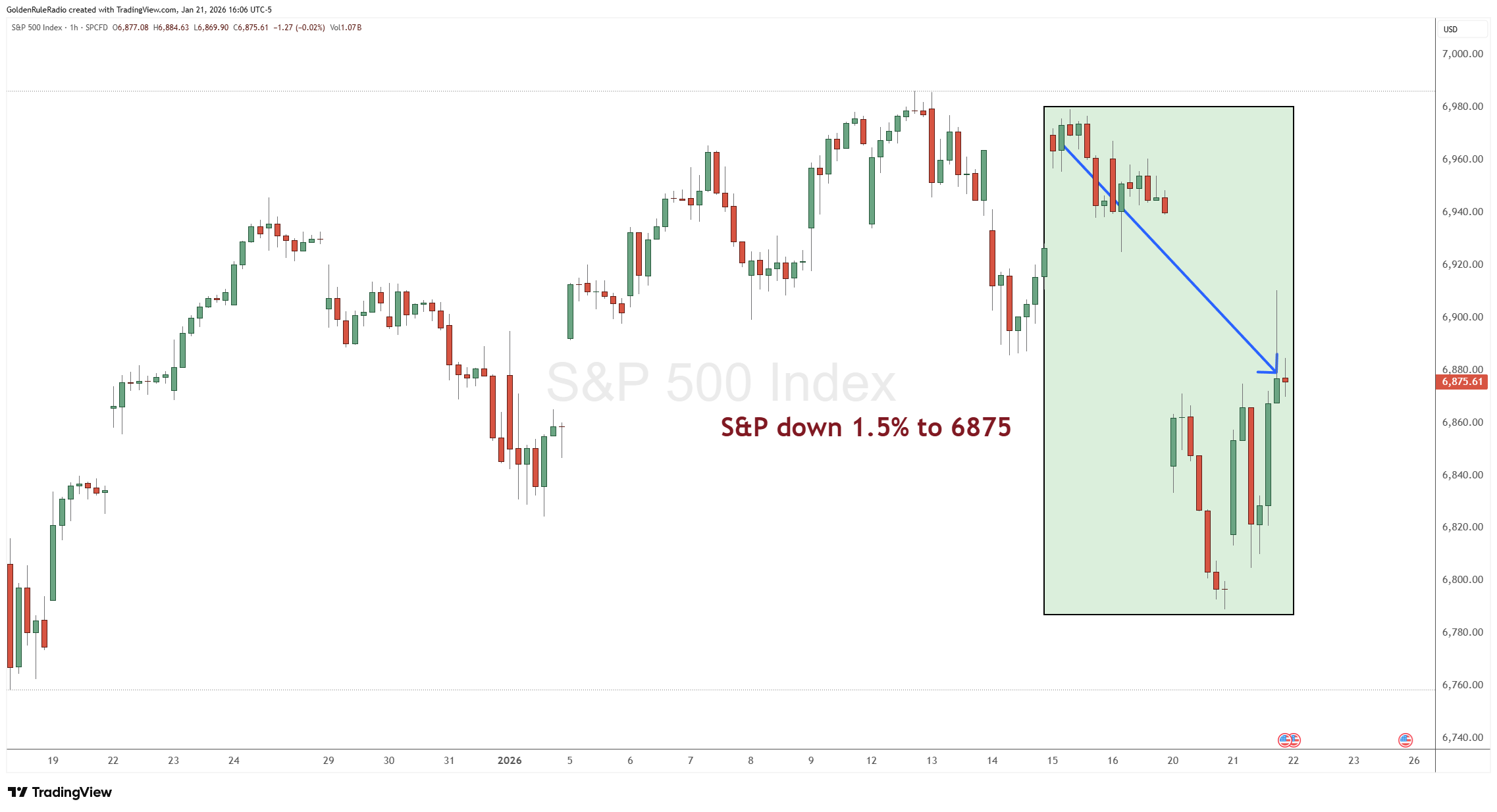
The S&P is down about 1.5% at the moment, sitting at 6,875. Most of that decline happened in the last day or so. It was down a little over 2%.
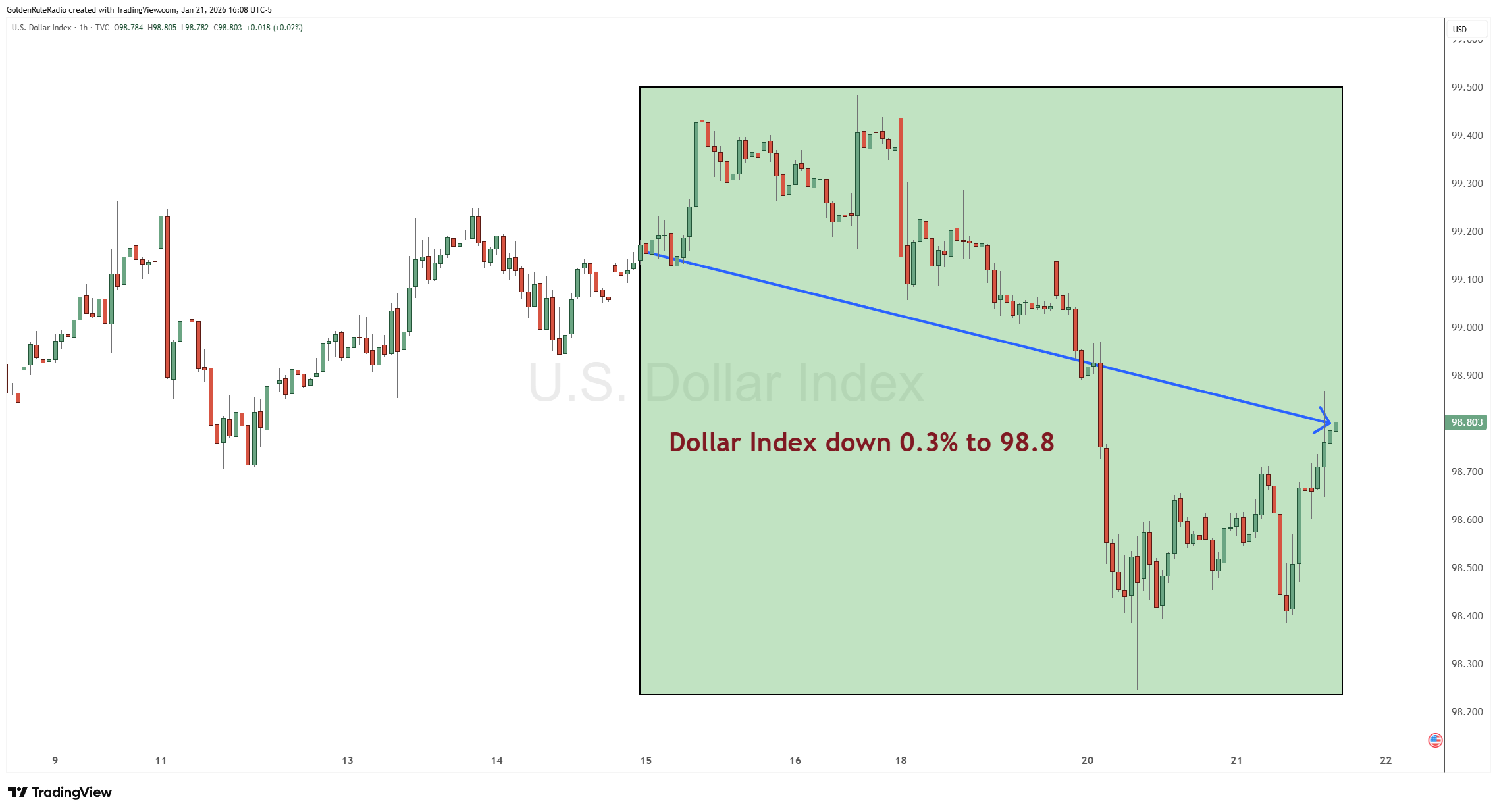
The US dollar index is down about 0.3% sitting at 98.8.
Physical market is finally wagging the dog
For decades, futures markets and large banks could manipulate silver with contract games and margin hikes. Recently, repeated margin increases have had almost no effect on price, which tells you the physical market now has the upper hand.
That matters for you because:
- Price is increasingly set by real bars and coins changing hands, not by leveraged paper players rolling contracts.
- Structural deficits in silver – where industrial and investor demand outstripped mine supply – are finally being reflected in price, instead of endlessly papered over.
In practice, this is why attempts at “pullbacks” in silver keep failing quickly; you might get a day or even half an hour, and then it grinds higher again.
Gold–silver ratio and active ratio trading
Over the last week the gold–silver ratio has essentially locked between about 49 and 52 to 1, after collapsing from around 105 to 1 last April – an enormous move in a very short time.
As a result, we have been actively swapping our clients’ silver into gold – especially in IRAs – as the ratio has tightened into the low 50s. This lets us harvest the outsized silver gains from 2025 and early 2026 and compound total gold ounces without adding fresh capital.
You should expect this ratio to be cyclical. Over time, the odds still strongly favor another trip back toward 75 to 1, and possibly tighter spikes into the low 40s on the way.
Fed politics, rates, and the case for gold
The DOJ investigation into Fed Chair Powell is unprecedented and adds political risk directly into the central bank itself, which gold markets interpret as a geopolitical and institutional stress event.
The late-January FOMC meeting is expected by every surveyed economist to hold rates steady; no cuts and no hikes, leaving policy around the mid‑3% range for now and likely through the first part of the year.
With Washington still running roughly a 2 trillion‑dollar annual deficit and debt continuing to climb, the money supply must expand to finance that shortfall – a classic long‑term positive for gold as political money is diluted and real money responds.
Tariffs, courts, and geopolitical odds
We’re trading in a world where policy is increasingly driven by “tail‑risk politics” – tariffs, courts, and conflict probabilities – and those odds matter for metals.
There is a material chance the Supreme Court rules on Trump’s tariffs within weeks, with low odds of fully endorsing them but equally low odds of forcing repayment of what has already been collected. The market implication is ongoing uncertainty around trade costs, which tends to be supportive for gold.
Odds-based analysis suggests non‑trivial probabilities of U.S. or Israeli strikes on Iran by mid‑year, and even a non‑zero chance of regime change talk around the Supreme Leader. Gold is already reflecting those risks; silver adds volatility on top.
Davos and “end of the world” narratives: Markets are pricing aggressive tail‑risk scenarios with relatively low modeled odds, which can exaggerate short‑term moves. But over time, these still resolve into the same basic conclusion: you want to own real assets, not promises, through the noise.
Your takeaway: do not trade headlines; let the ratio and long‑term probability structure guide your swaps. We stick to the process, not the drama.
Premiums, product selection, and the next swap
Finally, it’s important to not just track spot prices, but also product premiums – that’s where you might find your next “free ounces.”
For example, Silver Eagle and junk‑silver premiums remain relatively low, and in fact Eagle premiums have ticked down recently, which tells you retail availability is still healthy.
Meanwhile, there is a very real scramble for thousand‑ounce bars and larger wholesale silver, especially for ETFs, futures backing, and sovereign needs – but that tightness has not fully hit Main Street premiums yet.
When premiums on items like Silver Eagles eventually spike – as they did in 2011 and during COVID – you will likely have another premium‑swap window: selling high‑premium coins into lower‑premium bars, or swapping inflated silver products into additional gold ounces.
Here to Help
Wondering what your next move in precious metals should be? The team at McAlvany Precious Metals is happy to speak with you about your goals on a no-obligation, complimentary consultation. We have a collective 75 years experience investing in the precious metals market. Reach out to us at 800-525-9556.