
The Invisible Hand
This holiday-shortened week saw some welcome stabilization of the recent decline in precious metals. There’s been little comfort in the precious metals sector of late, but this week the U.S. labor market offered some.
According to the Labor Department’s closely watched employment report on Thursday, U.S. job growth slowed more than expected in June, and payroll gains for the prior two months were revised meaningfully lower. These developments point to a cooling labor market and are prompting financial markets to dial back expectations for a near-term interest rate hike from a perceived hawkish Federal Reserve under Kevin Warsh.
In HAI‘s view, the Warsh Fed wants to sound hawkish while it can. However, fiscal reality suggests that a dovish rate-cut bias will emerge in time. As detailed in recent HAIs, the Treasury Department has switched the vast majority of debt issuance over the last two and a half years to the front end of the yield curve. Inflation-targeting rate increases by the Fed will impact precisely that portion of the curve, and by implementing them the Fed will be opening the door to an interest expense-fueled debt spiral.
This week’s Labor Department data is potentially an emerging off-ramp that offers the new Fed Chair an excuse not to hike while maintaining inflation-fighting credibility. This week, Warsh himself highlighted another potential off-ramp.
According to NBC news, on Wednesday at a European forum on Central Banking in Portugal, Warsh stated that “Inflation risks have come down” assuming an end to the conflict in Iran.
Putting aside remaining uncertainty regarding that ending of conflict, Warsh’s comments indicate that he might be willing to back off rate-hike threats if energy prices return to pre-conflict levels. However, this would likely amount to little more than hawkish bluster as the Fed returns to its previous stance of tolerating the well-above-target pre-war inflation we’ve experienced for over five years.
HAI continues to believe that the hawkish Warsh “shock” will, one way or another, prove surprisingly dovish in time. And by extension HAI continues to assume that both secular inflation and Fed credibility risks remain meaningfully underpriced by markets.
Meanwhile, as the hawkish Warsh counter-trend narrative continues to weigh on gold in the West, HAI continues to find further compelling evidence that China’s efforts to internationalize the yuan (using gold) continue apace.
Recall that in June of 2015, at an LBMA event in Singapore, PBOC representative Dr. Yao Yudong (in a presentation called “World Needs New Reserve Currency”) explained that, “The gold market and Shanghai Gold Exchange International are vital to the internationalization of yuan… The key function of an international currency is trade invoicing for commodities like oil and gas… We would like to increase usage of yuan in trade invoicing by using gold.”
According to a Wall Street Journal article last week, half of China’s cross-border transactions are now denominated in its own local currency, compared to essentially none just 15 years ago. Even more remarkable, the WSJ noted that the Chinese currency share of global trade finance has grown by four times in the past three years, up to a statistically significant eight percent.
In HAI‘s view, China’s currency having reached eight percent of global trade finance is a crucially important development. It’s significant not just because it is now growing at an exceptional rate (4x in three years), but also because with the growing network effect of alternative non-dollar transactions via the Chinese CIPS network (using the gold link to offer a neutral reserve asset), real optionality away from the dollar has now been established.
Furthermore, as long as the U.S. fiscal position requires negative real yields on U.S. debt, and the weaponized dollar (or even any memory of it) lives on in the mind of foreign sovereigns, the rapid growth of non-dollar cross-border trade using gold as a neutral reserve asset is very likely to continue at an accelerated pace. And bringing the matter full circle, this trend impacts the U.S.’s ability to utilize a weaponized dollar to enforce its global policy objectives.
In HAI‘s view, we appear to be seeing this circular feedback loop undermine the power of the U.S. dollar in real time right now in Iran. According to Bloomberg on Monday, Iran just threw another wrench into peace negotiations by reasserting its determination to control maritime traffic through the Strait of Hormuz.
Without optionality away from the dollar system, a weaponized dollar can hit as hard as U.S. bombs. But with real non-dollar trade optionality established, the weaponized dollar just doesn’t hit so hard. That has serious implications for the accelerated roll-out of China’s alternative non-dollar (gold-linked) system.
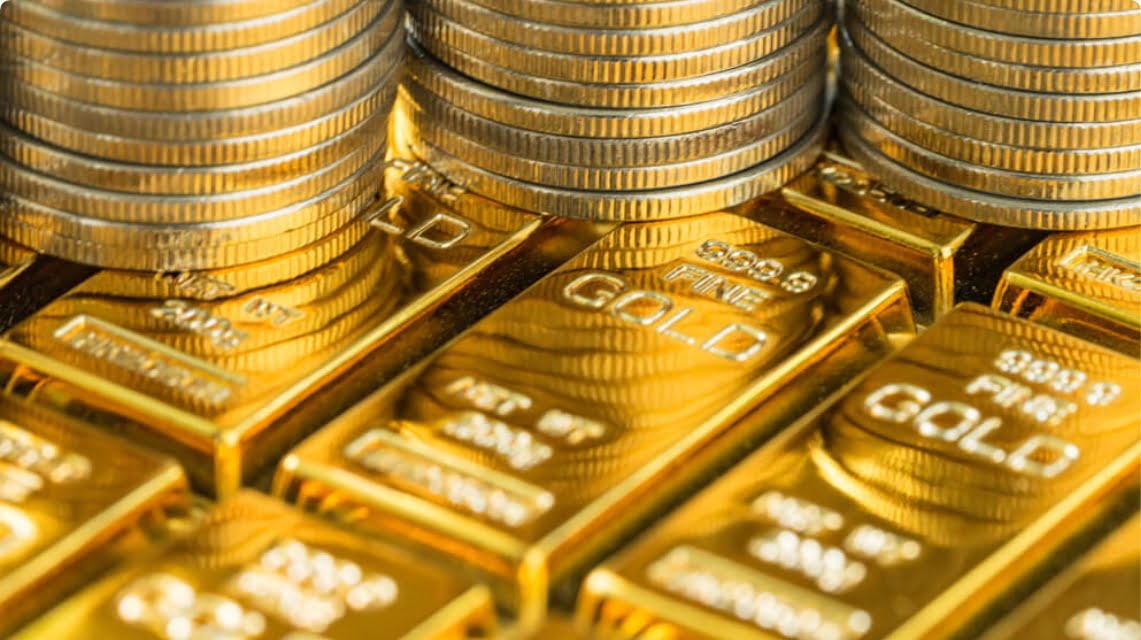
Now, if we step back to assess the big picture, as the Chinese currency share of global trade quadrupled over the past three years, China (not coincidentally) continues to soak up gargantuan sums of gold. Last week, Bloomberg reported that Chinese monthly gold imports reached a two-year high in May.
Chinese gold imports were 163 tons in May, and Chinese gold import volumes for the first five months of 2026 are now up to a whopping 692 tons. Those massive gold imports represent an astonishing 76% year-over-year increase.
Now, while Chinese gold imports are not the same as official state purchases, it’s widely recognized that a very significant portion of China’s gold imports are, ultimately, purchased unofficially by the state as Beijing actively seeks to mask the true scale of its state gold accumulation.
In short, outside of the comfortable Western narrative that assumes a perpetually unencumbered and dominant global dollar system, this global non-dollar shift continues to play out—and the shift continues to gain momentum.
With the Chinese currency now at 8% of global trade finance (4x more than just three years ago), China’s non-dollar trade alternative system now has proof of concept and offers real optionality. We appear to be at, or very rapidly approaching, a critical mass level where the network effects of this new system will ensure the next stage of its rapid growth.
If Western media and Western investors largely missed the 4x surge of the Chinese currency to eight percent of global trade finance over the last three years, in HAI‘s eyes, it will be utterly impossible for them to miss the massive global macro implications of the next surge from eight percent to 20 percent or more. Nor is it likely—and this is crucial—that gold’s very key role in the new dollar-alternative system will go unnoticed much longer in the West.
Now, this is a very special and important holiday weekend as the United States proudly celebrates its 250th birthday of Independence. Independence, after all, is no small thing. Foundationally for America, independence wasn’t just a sovereign statement. Rather, it was a sovereign statement based upon a deeper belief in the God-given freedom of the individual.
That respect for, and intentional preservation of, individual freedom was the philosophical foundation for our entire society to constantly live, learn, and grow towards the “more perfect union” described in the preamble of the U.S. Constitution. That preamble is a statement of the Constitution’s fundamental purposes and guiding principles. In it, the Founding Fathers highlighted, as a justification for the government’s very existence, the purpose of securing the “blessings of liberty to ourselves and our posterity.”
In fundamental human terms, the establishment of this foundational (and revolutionary) freedom principle at the heart of the new United States government’s purpose represented then, and remains today, a truly monumental development for humankind.
While HAI consistently voices very real concerns over current U.S. government debt, deficits, inflation risks, and monetary regime change dynamics, the fact is that, in HAI‘s view, nothing matters more than the United States’ ability to adhere to and uphold its founding principle of individual liberty.
Even if the U.S. loses reserve currency status, loses wars, and suffers significant economic setbacks in the near-term, in HAI‘s view the U.S. will always win the long game as long as it continues to be the world’s beacon of freedom and the torch-carrier of individual liberty.
HAI hopes this 4th of July is a most wonderful celebration of freedom for all readers and all Americans, but this author also hopes it serves as a reminder of the essential importance that the principal of freedom holds for not just our past, but our present and future as well.
Freedom is that indispensable element that facilitates the uniquely American opportunities for growth on the part of the individual, the economy, and the society as a whole, and it is the process that promises the hope of “a more perfect union” to come.
This 250th anniversary is a very special birthday for the land of the free and the home of the brave. When considering that, and the very real challenges we now face, also remember that serious times bring forth serious people, and serious people can solve serious problems. There’s real hope in that. After all, it is a proud American tradition to triumph in the face of peril. So this year, amid hot dogs and fireworks, let’s all endeavor to keep that particular tradition very much alive and well.
As George Washington said, “No people can be bound to acknowledge the invisible hand which conducts the affairs of men more than the people of the United States. Every step by which they have advanced to the character of an independent nation seems to have been distinguished by some token of providential agency.”
This 4th, while celebrating the 250th anniversary of the birth of this nation, HAI will remember who we are, remember who we need to continue to be, and (most importantly) remember to keep faith in that invisible hand. Happy 4th all, and may God continue to bless America for another 250 years and beyond!
Weekly performance: The S&P 500 was up 1.76%. Gold was up 0.87%, silver was higher by 3.66%, platinum was down 1.17%, and palladium was up 4.26%. The HUI gold miners index was up 2.11%. The IFRA iShares US Infrastructure ETF was down 1.98%. Energy commodities were volatile and down on the week. WTI crude oil was off 0.78%, while natural gas was down 2.53%. The CRB Commodity Index was up 0.23%. Copper was off 0.48%. The Dow Jones US Specialty Real Estate Investment Trust Index was off 2.53%. The Vanguard Utilities ETF was down 1.06%. The dollar index was down 0.48% to close the week at 100.88. The yield on the 10-yr U.S. Treasury was up 12 bps on the week, closing at 4.49%.
Have a wonderful Fourth of July weekend!
Morgan Lewis
Investment Strategist & Co-Portfolio Manager
MWM LLC