
Podcast: Play in new window
- A New Global Reality Is Appearing In Commodities
- Putin Feeling The Pressure To End War With Ukraine
- Government Policy, Not Investor Speculation, Gobbling Up The Gold
This week, David McAlvany looks at the forces reshaping commodities, the growing pressure on Putin to find an exit from Ukraine, and the role government policy is playing in gold demand. The conversation also explores why today’s gold market is about more than investor speculation. A new, unofficial global gold standard may already be taking shape.
“Treasuries and dollars were for decades the element used to grease the gears for global commerce, and times have changed. When you think about the Treasury market, demand dynamics have changed. Needs are more for basic and elemental reserves, and that, too, is changing. So resource procurement has become more of a critical objective, and reserve denomination is more and more biased towards a neutral, towards a globally trusted, expression that is more suitable to a multipolar world, which is where gold is the unique element.” —David McAlvany
* * *
Kevin: Welcome to the McAlvany Weekly Commentary. I’m Kevin Orrick, along with David McAlvany.
David, Morgan Lewis has been talking about when the fog of war, the Iranian war, the Ukrainian war with Russia, when that fog of war lifts, we are likely to see a new global structure, both monetary and just the way resources are handled.
David: Yeah. And a part of the challenge in figuring out what that looks like, a new regime going forward, is to what degree are there coordinated efforts? And is there a set of rules that people are willing to abide by? Or do you have countries acting purely out of self-interest?
Kevin: Every man for himself. Yeah.
David: Collective action, problems, we see that with OPEC. You want to maintain price stability in the oil price, and so everyone agrees to production caps. Even though individually in a high price environment one country may want to overproduce and capitalize on being able to sell more barrels of oil at a higher price, so they try to cheat the system. And so you have the UAE not wanting to cheat the system, just not wanting to be [unclear] to it.
Kevin: We don’t want to play anymore.
David: Yeah.
Kevin: We just don’t want to play anymore. And the U.S. dollar since 1944, Bretton Woods, has sort of smoothed things over and given this globalism coordination based on a single currency. But what we’re seeing is that that is starting to break down. Oil is now being sold in other things other than dollars.
David: Yeah. George Friedman’s May 11th commentary titled “The Week the New Global Reality Showed Itself,” I think it was particularly complimentary to last week’s Hard Asset Insights. Morgan connects the dots between the mounting pressures on the postwar deficit funding scheme, where the dollar dominance promoted Treasury purchases. And essentially what we had was recycling of trade partner surpluses, whether that was from oil or from the sale of tradable goods, finished goods, and that went back into Treasuries. This recycling, it represented a natural funding mechanism for our debt here in the U.S., and our deficit spending, again here in the U.S.
So the scale of our debts and the impact of rising rates now is meeting with growing disinterest in the U.S. Treasury market and the massive financing and refinancing needs on the horizon, which makes the system that we’ve been operating in less tenable by the day. And us, or from our perspective, gold is front and center in a world that is searching for a neutral asset for net settlement of trade. So the process that we’re seeing—I mean, this is not a theoretical thing. Gold is a neutral asset. This is not speculation on our part. This is happening in real time. This is what is being put in as a substitute system for the old, which was Treasury-based and dollar-based.
Kevin: Yeah. Just think if you lived for 4,000 years, let’s say that you could just watch things. This little blip on the radar, it was just a wisp of air when the dollar was the replacement for gold, from 1944 ’till now. But what we’re seeing, like you said, that’s coming back. Now we still have a deficit to resolve. So how are they going to do that if we can’t sell dollars or we can’t use this dollar recycling?
David: Dollar recycling. Mm-hmm.
Kevin: Yeah. Yeah.
David: Yeah. I mean, what’s likely to unfold in the years directly in front of us, and maybe even in the quarters or months on a much shorter time frame, is a massive monetization of Treasury debt by the Federal Reserve. And they’re basically standing in, filling the demand gap left by global players whose interests are no longer served by being our creditors and keeping the game going.
Kevin: Go into debt by buying our own debt.
David: There are needs far greater than Treasury script. And as they look at what they would rather have, whether it’s reserves in the form of gold or resources in the form of commodity caches, the unipolar world centered around the U.S. and U.S. finance, the U.S. currency, is rapidly shifting to a more regionalized multipolar world with structural implications for our debt financing here in the United States—with implications for dollar stability and gold, along with other economically vital commodities.
Kevin: Well, Dave, remember when you used to travel across Europe and you had to change currencies every time you’d change countries. That was very inconvenient. And the dollars smoothed that out. Gold has a way of smoothing that out. But right now, the inability to trade dollars for certain commodities is really catching up with some countries—like India, 700 billion in Treasuries. But basically they need fertilizer, not Treasuries at this point. China doesn’t want to take the Treasuries—
David: They need lots of other things. And so they look at their reserves of commodities. And in the context of the Strait of Hormuz being closed, they’re having to work through some of their reserves, some of their strategic reserves. The current rate right now is between 4.8 and 12 million barrels per day of reserves that are being depleted, and we still have supplies coming to market that were in transit at the time the war started.
Kevin: But that stops at some point. Yeah.
David: It does stop at some point. So everybody’s kind of watching. We started many months ago—in fact, in the first week of the conflict—saying duration is key. If this is a two-day event, not a big deal. And if it’s a longer term event, it’ll show up in inflation statistics. It’ll become more something that is sticky in nature.
So we’ve got the Iran conflict, which follows on the heels of the Russian invasion of Ukraine, which has underscored the importance of resource security. Whether it’s Europeans thinking about gas supplies, oil supplies, whether it’s a slowing of grain exports from Ukraine—resource security. Could be energy resources or any other commodity needed in a production and manufacturing supply chain. If you’re not adequately stockpiled, if your domestic production of resources is limited, or if your trade relationships don’t offer a clear and secure supply chain, you are scrambling to remedy this. And this is what’s shifting, is, again, can we think about the whole—an OPEC concept where we are making decisions based on a collective action model that allows for a better outcome for all—or do people start to think, “What do we need?” Not what do we as a collective, but as a nation state. And this is where you see a real scramble to remedy this.
And a part of this is knowing that your domestic economy is at risk, and therefore your political future is also at risk as constituents deal with the ramifications of higher prices in an “under-resourced world.” And by under-resourced I’m not saying there isn’t adequate supplies, just that accessing them when you need them can be costly enough to become a destabilizing factor politically.
Kevin: Well, and so what you’re taking into account at this point is inflation. And inflation not only has the effect of not being able to buy things because they’re too expensive, but politically, that spreads. The politicians probably fear inflation more than almost anything, don’t they?
David: Yeah. And actually there’s this sort of lever. You don’t expect geopolitics to be influenced by domestic politics, but actually, with enough economic pressure, there is a responsiveness. Domestic politics all of a sudden becomes very important and can be the guiding light for geopolitical choices, arrangements, negotiated trade relations, et cetera. So global inflation pressured by supply chain bottlenecks, that is the net effect of not having resource security buttoned up, having clarity on that.
So European energy needs in the wake of the Russian-Ukraine war, Asian demand for natural gas and LNG, and a diminishment of supply resulting from the closure of Hormuz, those are sort of prime examples. The domino-like effect from these energy supply disruptions, and they’re observable other places, tech sector. Well, you have to have helium to make chips. Helium is coming from production of natural gas. So helium scarcity, if that’s limited, that has implications for production of goods.
Kevin: Well, and even plastic.
David: Plastics.
Kevin: I mean, plastics, you require petroleum.
David: Less available. Financial Times back in early May: Asia is in a plastics crisis, with manufacturing warning of shortages, was the headline from May 6th. And jet fuel and diesel, they’re being repriced higher to reflect inadequate supplies. Jet fuel spiked from $85 a barrel to, at one point, over $200 a barrel.
Kevin: Wow.
David: That’s an issue. You don’t have adequate supplies to meet demand. Already U.S. airlines have shut down. I think they’ve canceled two million seats in terms of flights, so they’re restricting the number of flights, trying to pack them more, make sure they don’t have any empty seats.
Kevin: I noticed that yesterday. Yeah, I was flying back from Phoenix. And it used to be, every once in a while, you would be asked if you’re flexible on your flying. And I’m noticing the more I fly, they want to see if you can possibly give up your seat almost every time, overbooking.
David: And certainly there are policy stimulants to inflation as well. We talked about supply chain issues. That’s a reality. We had that post-COVID, but policy stimulants to inflation are real. Those are factors we’re likely to see in the future in the context of financial market stabilization efforts. So you’re talking about fiscal policy stimulus, monetary policy stimulus up to and including what we mentioned a moment ago, monetization of US debt. But first we are today engaged with an energy crisis.
Kevin: Which always leads to inflation in some form.
David: Yeah. It’s one that’s not quickly resolvable. While we may have Truth Social posts that suggest that resolution is just around the corner— I think we get those notices every Monday and Tuesday. That improves trading within the markets, and commodities do their thing in reaction to a glimmer of hope that all is well and—
Kevin: And it’s going to end soon. Yeah.
David: By Friday it’s back to: well, things have changed.
Kevin: Right. I’m so disappointed.
David: Yeah. So a reappraisal of supply chains post-conflict is likely to be as meaningful as the post-COVID reappraisals. But in this sense, it’s at a more molecular level. It’s at a more basic level.
Kevin: Real things.
David: Where do you source the stuff—
Kevin: The stuff, the real thing.
David: —that allows you to make other stuff. So raw materials, not just parts that go into finished goods, but the commodities required to produce anything and everything.
Kevin: Well, if you want to see a politician care about something, really, really care about something, if their self-interest is in jeopardy, their next election, they’re going to care. This is something that they would probably care about, isn’t it?
David: They care when they’re implicated. So self-interest moves center stage when domestic economic concerns can’t be assuaged by rhetoric, and politicians are scrutinized and held accountable for the status quo, raising the stakes for whoever is in leadership. And this is a global issue. Inflation is a major source of economic pressure, which very easily turns into political volatility. Best case, that volatility is seen in the electoral process. And the worst case, you can look at historical precedents for revolutionary chaos where people are just fed up and somebody’s got to pay the price. But whatever the status quo, it gets associated with the current leadership.
Kevin: Let’s just talk about this, too, though, because the haves, let’s just say the upper element of the economy, they don’t feel the inflation like the masses do. I was telling my wife the other day that Durango, being a tourist town and having a lot of million dollar, multimillion-dollar money coming in for housing, is creating sort of a rich man’s ghost town in a way. It’s like we’ve got a rich ghost town. Telluride, that happened too. We saw it happen to Aspen. But in this particular case, it’s happening worldwide, isn’t it? I mean, we’re starting to see that the rich are getting very, very rich and the inflation is actually helping them to some degree.
David: Yeah. It was interesting, I’ve got a friend that has a shop on Main Street, and it’s kind of a tourist-oriented shop, and plenty of traffic in the first quarter, but people would come into the shop, look around and walk out, and they hadn’t bought anything. And they weren’t airing bags from other stores, they were walking in with empty hands and walking out with empty hands. So just kind of perusing, and very different than 2025, the pressure on consumers still traveling to Durango, tourist destination.
Kevin: But spending less.
David: But spending a lot less. So of course in a K-shaped economy, your reality may be very different than your neighbors or someone else in your community. Status quo for those that own assets, your proverbial haves, looks pretty good. Equity indices are looking past the conflict to the other side. They’re basking in the glory of the AI trade. Semiconductor melt up, the inflation of asset values, it’s a boon to personal balance sheets. And Trump’s leaning into that, sponsoring—one of the first presidents in history to promote bubble dynamics in that way, or to this extent within the equity markets. And it’s his litmus for success. Look at what the Dow’s doing.
Kevin: Look at the Dow. We’re near 50,000.
David: But the status quo for the asset-light—the have nots—it’s grown uncomfortable. You had Kraft Heinz CEO Steve Cahillane warning in the Wall Street Journal recently that most people are, I quote him, “literally running out of money at the end of the month.”
Kevin: That’s true.
David: And it makes me think of Bill Clinton’s election slogan, “It’s the economy, stupid.”
Kevin: “It’s the economy, stupid.” Yeah.
David: Yeah. Powerfully harnessing discontent with the status quo at a time when a whole socioeconomic segment was feeling left behind or was feeling economically pushed into the danger zone. That is the reality of the lower leg of the K-shaped economy. The economic discontent, left alone, not resolved quickly enough, breeds political change.
Kevin: Well, we are in an election year. I was watching TV with my wife last night, and sure enough they’re back. All the commercials, there were three different governor commercials for three different people running for governor, just back to back. And so do you think this is an opportunity then for the Democrats if they play their cards right, if people are discontent?
David: Yeah. I mean, I guess the question is, can they control themselves a bit? Because if Democrats lean into the sort of F*** Trump animus—
Kevin: Trump derangement syndrome, yeah.
David: —instead of the economy, if they’re leaning into the ramped-up hatred instead of looking at the economy and looking at math, if they don’t use the Clinton playbook, I think they’ll be in trouble. Alternatively, connecting inflation to the war in Iran—which we’ve talked about in previous weeks, actually inflation was picking up before we had an energy crisis—
Kevin: Yeah, January.
David: —as an energy shock. But if they connect inflation to the war in Iran and pin economic security—pin that tail on the elephant instead of the donkey—I think that’s a winning strategy. If they can first tame their hostility and hatred and think straight, just let the math speak.
Kevin: Well, and everybody watches gas price. I was with my mom this weekend, and she’s like, “Is your gas cheaper than our gas?” And I’m thinking, “My mom’s almost 86, and she still is just—She knows where the gas prices are.” And so what is the magic number with gas right now? What’s the magic number where people say, “This is too expensive.”
David: Almost every phone call I have with my father-in-law, he starts with a number.
Kevin: Really?
David: 3.27, or whatever the number is, and it’s what he’s paying for a gallon of gas.
Kevin: Is it really?
David: In the state of Texas because he’s so proud of the fact that it’s always going to be cheaper in the state of Texas. Because I think there’s a subtle ploy if you lived here and you realize you wouldn’t be paying astronomical fees—
Kevin: And we’d be near the grandkids.
David: We don’t live in California where things are stupid, largely because of taxes and regulations and things, but 4.56 is all the donkeys need, and that’s the national average of a gallon of gas.
Kevin: For now, right now.
David: Yeah. So gasoline prices are up 60% to 70% from the same time last year. That’s the end of the story. And if the Democrats want to win, that’s it. Just leave it there. CPI this week, up 3.8% year over year. The month-over-month number that increases 0.6 for the headline, annualizes out to 7.2 if you want to extrapolate. And of course that’s a full percentage point lower than the annualized PCE. We talked about that last week. So we’re looking at the March number for PCE and we’ve got April CPI, which comes out first, then later this week, PPI. And then at the end of the month, we’ll have April PCE.
The bond markets are now pricing in an increase in interest rates because they know that with inflationary pressures, it’s got a bad look if you’ve got a Fed that’s lowering rates. So either do the safe thing, stay neutral, do nothing, which is what we had at the last meeting. Or by the end of the year you’ve got an increase in rates, and that’s what bonds are telling you is coming towards the end of this year or early next year.
Kevin: And the bottom of the barrel, literally, is coming on the oil because you talked about us using oil reserves at this point. It’s almost like a train. The train passes you, you see the cars going by, but at some point the caboose is going to come. And Jeff Currie made the comment that he thinks that caboose is coming for Europe sometime in late May and for us here in the United States sometime in July where we’ll really see the spike in energy costs when the bottom of the barrel is reached.
David: Yeah, because to date we’ve just been anticipating a real supply crunch. We have plenty of strategic reserves. Global oil reserves are being depleted at a decent clip, even though we’ve got some things still in transit and available, will be available to the market. We’re still seeing strategic petroleum reserves across the globe. They’re coming down between 4.8 to 12 million barrels per day, a variety of estimates there. So the real effect of the Hormuz Straits closure has yet to be felt. We’re still working through barrels already in the system, and that’s counting barrels that are stored, that’s floating supplies, and of course, the strategic reserves as well. When you get near the bottom of the barrel, so to say, or when tanks and shipping vessels run dry, then you run the risk of a sharper price spike and [unclear] response.
Kevin: What do you think that could be? What do you think it could spike to?
David: $150, $200 a barrel. And of course that’s if we get there. Again, we’re back to the duration question and whether or not we have the willingness for countries to lower their strategic reserves. If we get to 150, $200 a barrel, you’re talking about average price per gallon for gasoline well over $7.
Kevin: But if we have a burn rate in the millions right now, how many barrels do we have still in reserve?
David: I think we ended 2025 with about 2.5 billion, with a B, barrels of strategic reserves globally, and then in March we had the coordinated release of 400 million barrels. That was agreed to in March. They’re estimating somewhere between 1.8 and 2 billion barrels still in reserves. It’s a lot, but it’s not an infinite supply.
Kevin: Okay. But the pressure is growing not just on the energy. The energy actually adds to other types of things.
David: Well, worth noting that on some of those strategic petroleum reserves, like here in the United States, we’ll pump them into the ground. Salt domes. There’s a certain amount that you have to keep in ground or the cavity that holds them will collapse, so it’s not as if we’ve got—whatever our number is, let’s say—
Kevin: You have to keep replenishing what you’re storing.
David: But the point is, you can’t bring it down to zero. You can never bring it down to zero, so you may have a strategic petroleum reserve, and you can cut it in half, but you cannot cut it by three quarters. Otherwise, you’re tempting—
Kevin: It collapses.
David: —structural collapse.
Kevin: Wow. Okay. With this being said, we’ve got a couple of wars going on right now. We’ve got Iran. We’ve got this ongoing war from 2022 with Putin in Ukraine. Do you see that shifting?
David: Yeah. I think these issues are global, and I think they relate to deeper structural shifts. Going back to Friedman’s article, that’s where that comes in. He says that pressure is growing in Russia for Putin to end the war in Ukraine, given that the battle lines are frozen and that the Russian economy has become extremely weak. Here in the last week we’ve got the recent Putin-Trump phone call. You combine that with the cancellation of the full ceremonies on May 9th, commemorating the end of World War II, and a request to negotiate an end of the war, working directly with the Europeans. Friedman puts a lot of emphasis on this particular point. It’s a negotiation with the Europeans, and preferably with Germany. Top of the list is retired German Chancellor Gerhard Schröder.
Kevin: Is that because he has both German and Russian background?
David: I mean, yeah. Subsequent to serving as German chancellor, he served as chairman of Rosneft, the Russian energy giant. Friedman suggests that Putin wants to return to a period in which Russia seemed to be preparing for a role within the European system, and he goes on to say, “What’s important is that Putin asked to turn the clock back,” because there is massive domestic opposition to the war in Russia because the economy is reeling, and because there are rumors that the FSB, Russia’s intelligence service, has turned against him. At the same time, the relationship between Europe—specifically NATO—and the U.S. has deteriorated to a point where a new geopolitical system must emerge. Russia’s becoming, to whatever degree, a part of the European system would give Europe access to Russian natural resources, and would give Russia access to European capital.
Kevin: How does this play into Trump going over to China right now? Because you’ve got that power structure changing too, possibly.
David: Yeah. If you don’t read Friedman on a regular basis, I think this is an article that’s worth digging out. He goes on to say that central to all this is the summit slated for May 14th. That could redefine the relationship between the U.S. and China. Importantly, negotiations between U.S. and Chinese officials have continued throughout the war in Iran, obviously intended to work out the details of a new relationship, and they hope to be blessed by the two presidents later this week, so this week is a big week.
China wants the war to end because it imports massive amounts of oil from the strait of Hormuz. The U.S. wants it to end because, ultimately, the only way to fight it is on the ground, and Trump vowed in those kinds of conflicts.
We have U.S. and Chinese counterparts, which have been meeting in South Korea in recent days, over the weekend, and they continue to negotiate the details for the summit, which is 14th, 15th, 16th, largely a ceremonial blessing of the agreements already arrived upon. The work is being done elsewhere and then you get the two leaders together, and they talk and they shake hands and all this—
Kevin: It looks like it all just happened right then, but it’s being set up— Now, when you’re setting something up like that, you’ve got to talk about the unknown. Okay, when we used to watch The Apprentice, my wife and I, 15 years ago when Trump was on, he was pretty unpredictable then. What he was going to say, what he was going to do, you really didn’t know. Now, he may have had a plan, but it certainly didn’t look like he had a plan until he changed his mind.
David: Yeah, he’s an instinct guy. He’s a gut level guy, and you never know what he’s feeling and what he operates on. The caveat is that Trump has a way of flipping the script like a bull has a way of breaking things in a China shop. Literally, perhaps he’s done—
Kevin: Literal China shop. Yeah.
David: But barring the typical gaffs, his typical gaffs, and sort of uncomfortable diplomatic faux pas, they may actually emerge with an economic and military deal, which would include the most sensitive aspect as far as China’s concerned, an understanding on Taiwan.
Kevin: Yeah. Semiconductors definitely factor into that, don’t they?
David: Yeah. I mean, put “understanding on Taiwan” in quotes, because it is a big deal. I mean, the world is dependent on Taiwanese microchips. Who doesn’t want Taiwanese microchips these days? If AI is going to be the revolutionary force in the markets and in the economy, you have to have Taiwan semiconductor chips.
Kevin: On Saturday we went up to Sedona, my mom and I, from Phoenix, and I saw all the building of these huge, huge semiconductor plants here in America. They’re still a long ways off. I mean, we’re talking acres and acres, a building that would take acres and acres and acres. There were cranes everywhere. We’re not there yet. Trump wants to get that. What percentage come from Taiwan right now?
David: I guess a lot of investors don’t know this, but NVIDIA doesn’t make their own chips. Taiwan semiconductors makes NVIDIA chips, so when you think about NVIDIA, when you think about AI, this is a Taiwan issue. Scott Bessent noted in the New York Times back in February that the single-largest threat to the world economy, the single-biggest point of single failure, is the 97% of high-end chips.
Kevin: It’s 97%.
David: Made in Taiwan.
Kevin: Wow.
David: In 2022, go back a few years, there was a report commissioned by the Semiconductor Industry Association, which said that cutting the supply of chips from Taiwan would lead to the largest economic crisis since the Great Depression, with an expected decline in economic output of 11% in the U.S., which is twice what we experienced during the global financial crisis, and 16% decline in economic output in China.
Kevin: We definitely can’t have something that would cut that off, 97% at this point. It sounds like all parties have a reason, whether it’s Russia, whether it’s China. I can’t speak for Iran at this point, but all parties, Russia and China, seek to gain by letting the temperature go down on conflict.
David: Well, avoiding conflict over Taiwan. Settling a path forward is in both U.S. and Chinese interests. Kind of like the story of Solomon presented with a conflict between two women, determining who was the mother of a disputed baby, and the true mother let go to preserve the baby’s life. Except in this case, neither mother is the true mother. Both the U.S. and China have their own interests, and Taiwan may be a part of a larger agreement split to satisfy a more complex balancing of geopolitical priorities and economic growth trajectories, so we need critical rare earth minerals. They need the U.S. market to dump goods into. We need chips, so do they. If we’re cut off from chips, it’s a bad day for the U.S. economy. For that, we would fight a deadly war. To avoid conflict will be to negotiate and to trade.
In Friedman’s view, if all this happens, it would be the beginning of a new global geopolitical system replacing the one based on the Cold War and the collapse of the European colonial system. How it will look in detail matters a great deal, as does the potential Russo-European and U.S.-China ententes. To a great extent, Friedman says, we are now at a pivot between the end of the system that began in 1945 and a new one, 20 or so years in the making. Now, that system in principle, if not in detail, is revealing itself.
Kevin: Well, so let’s go to that, because these systems have to be fueled and purchased in certain currencies, and we’re talking at this point, we talked earlier, that the dollar is being replaced. What does that look like going forward?
David: Well, that’s why I think tying together the Hard Asset Insights from the weekend and Friedman’s view that we are at a pivot point in terms of geopolitical structure. Friedman’s focused on the geopolitics between Russia and Europe and between China and the U.S. There is the capital which flows between the interconnected global players, and there are the resources that they’re motivated to control, more than ever, to better determine their health and to determine their growth trajectories.
Kevin: US Treasuries, up to this point, have purchased most—US dollars have purchased most—of these things, but we’re seeing the shift.
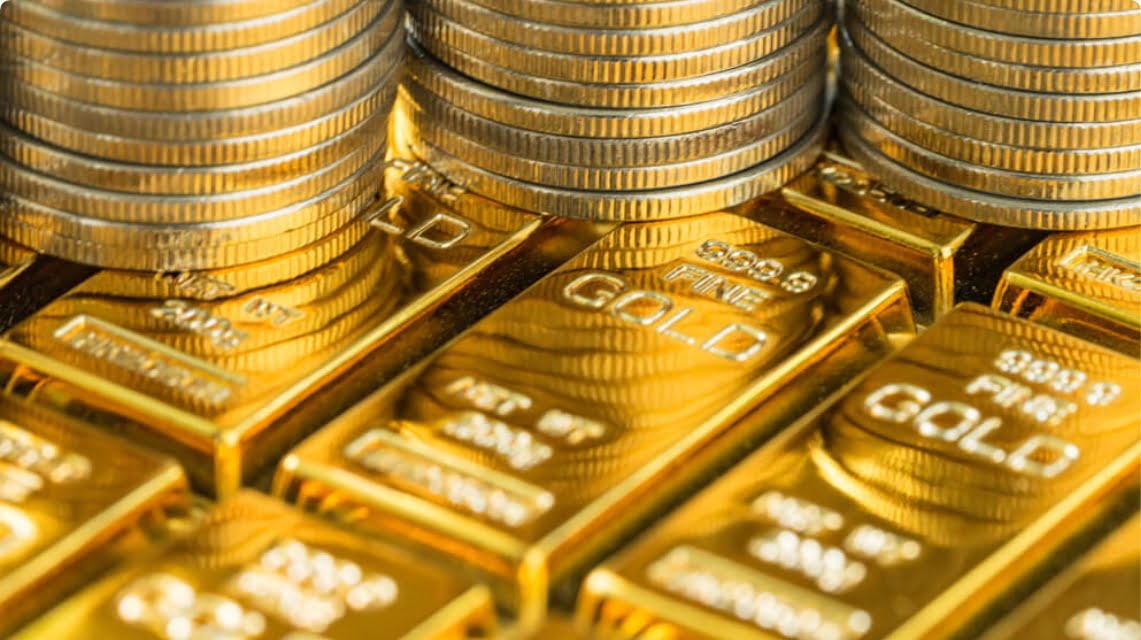
David: Well, I mean, Treasuries and dollars were, for decades, the element used to grease the gears for global commerce, and times have changed. When you think about the Treasury market, demand dynamics have changed. Needs are more for basic and elemental reserves, and that too is changing. Resource procurement has become more of a critical objective, and reserve denomination is more and more biased towards a neutral, towards a globally-trusted, expression that is more suitable to a multipolar world, which is where gold is the unique element.
Kevin: Well, and it’s unique this time around, Dave. After doing this almost 40 years in the gold business, and you grew up in it, so even longer for you, we always watched the popularity of gold amongst the investors to see where it was going to go. Granted, there was central bank demand, but for the most part, we were looking at, “Are people buying gold or are they selling gold?” But it’s not really—We’re talking about policies here that are buying gold. There’s a policy shift to a neutral trading unit that’s not a dollar, it’s not a Chinese yuan, and it’s not a euro.
David: Yep. I was reading the Elliott Wave guys maybe a week ago, and they were looking and trying to make the case that gold was ready for another correction. Their lead indication for that was small speculators in the futures market as an expression of what was driving the gold price, and that it was now overbought, because—
Kevin: They must be very small.
David: Well—
Kevin: Where are they?
David: Again, I think what has built this bull market to the $4,500 announced price range, $5,000 announced price range, has been policies. It’s been central banks. It’s been reserve asset managers who’ve decided to acquire strategically a reserve which is more suitable to a multipolar world.
Kevin: A central bank is not speculating on price, they’re literally moving to another currency. This one just being a 4,000-year—Like I said, if you had lived for 4,000 years, you’d go, “Well, gold is pretty much the currency.”
David: Yeah, so I think the concern they had about the gold market is there’s too much credibility put into a very small group of US-based speculators.
Kevin: Right.
David: I mean, unique to this bull market in commodities and gold and silver is the added layer of policy preference. If you let that sink in a little bit, it is a very different backdrop than we’ve had in the past. Investors will sniff out the opportunities, and they’ll see supply and demand. We’ll see their supply and demand influence the price discovery process, but the added weight on the scales comes from national security imperatives which seek to not only look at what is needed today, but what is needed as reserves in case you’re cut off from what is needed tomorrow.
Kevin: Yeah. Just even think about that for a moment. All right. If India needs fertilizer from China, and China does not want dollars for it, they don’t want US Treasuries, if India offered them gold, what you’re basically saying is gold is replacing this international currency unit.
David: It certainly makes you discount why you hold what you hold in the form of US dollars or US Treasuries.
Kevin: Right.
David: It’s not the most vital of reserves. When you begin to think about reserve management, not only in terms of monetary reserves, but also the cache of resources that you need to run your economy and insulate it from supply chain bottlenecks or choke points, that’s where I think this is really critical, inflation becoming a self-reinforcing dynamic with consumer goods.
We know that to be the case when consumers start hoarding, and we’re not talking about consumers in this case, we’re talking about nation states needing much today and hoarding much for tomorrow while at the same time competing with that investor class for a stake in those raw materials. Gold and silver are a part of this complex competition, competition for resources and reserves in a world that’s gradually leaving behind an old system.
It is a very different setup, having political bigwigs do their best to stake a claim that better ensures economic stability for their people. This competition for scarce resources, as I suggested earlier, it’s in large part an expression of self-interest. Politicians smoothing price volatility, they think that’s going to be rewarded politically.
Kevin: Yeah, but what happens if they’re all doing it at the same time? I mean, if everybody’s buying something at the same time or selling something at the same time, it creates volatility.
David: Right. All what they’re trying to do is secure their supply chains, and that’s where the problem lies. Too many people doing the same thing at the same time, and the price volatility that you’re trying to avoid is exactly what you end up with. It’s the classic collective action problem. You rationally pursue your own self-interest. This is resource security. When it’s pursued by too many people, it creates big problems. Think about somebody who wants to secure their savings at a bank that is now suspect in their mind.
Kevin: Right.
David: One person doing it is an expression of self-interest, and it’s functional.
Kevin: If everybody does it.
David: It’s a bank run.
Kevin: It’s a bank run.
David: But the same thing applies to overfishing. You’ve got the honey hole, which is great as long as no one knows about it. It’s good for you.
Kevin: Right.
David: But if everybody knows about it, it’s overfished.
Kevin: Right.
David: When I lived in LA, you leave 45 minutes early to get someplace on time, but if everybody leaves 45 minutes early, you end up with traffic congestion. Even if you thought you were going to be early, you may end up being late, because everybody else was thinking the same thing at the same time.
Kevin: Right.
David: These are all examples of social dilemmas or collective action problems.
Kevin: When everybody’s hoarding, you’ve got commodity inflation, basically.
David: Commodity price inflation, it’s that, too. This is the bottom line. Whether you’re looking at oil or copper or fertilizers, gold and silver, microchips, everyone wants greater security, and the collective move to secure it determines the exponential price rise to follow.
* * *
You’ve been listening to the McAlvany Weekly Commentary. I’m Kevin Orrick along with David McAlvany. You can find us at mcalvany.com and you can call us at 800-525-9556.
This has been the McAlvany Weekly Commentary. The views expressed should not be considered to be a solicitation or a recommendation for your investment portfolio. You should consult a professional financial advisor to assess your suitability for risk and investment. Join us again next week for a new edition of the McAlvany Weekly Commentary.