

Podcast: Play in new window
Gold and silver pulled back again this week, but don’t mistake a short-term retreat for a change in direction. The forces driving this multi-year bull market in precious metals haven’t gone anywhere — and for patient, long-term investors, the current dip may be one of the better buying windows you’ll see for a while.
Let’s take a look at what’s moving prices right now and what it means for your portfolio. Here’s where prices stand as of Wednesday, April 29:
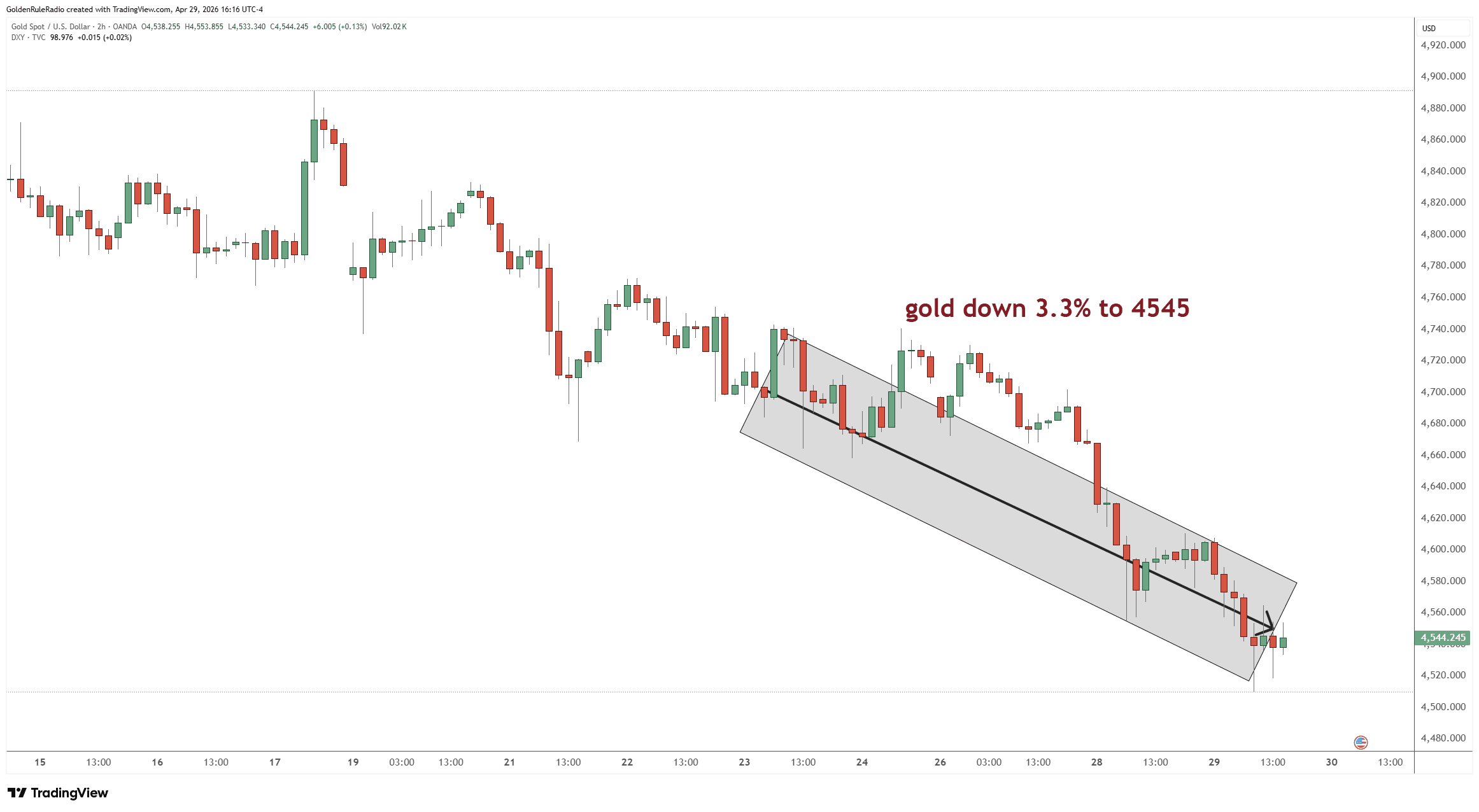
The price of gold is down 3.3% from our recording last week, currently sitting at $4,545.
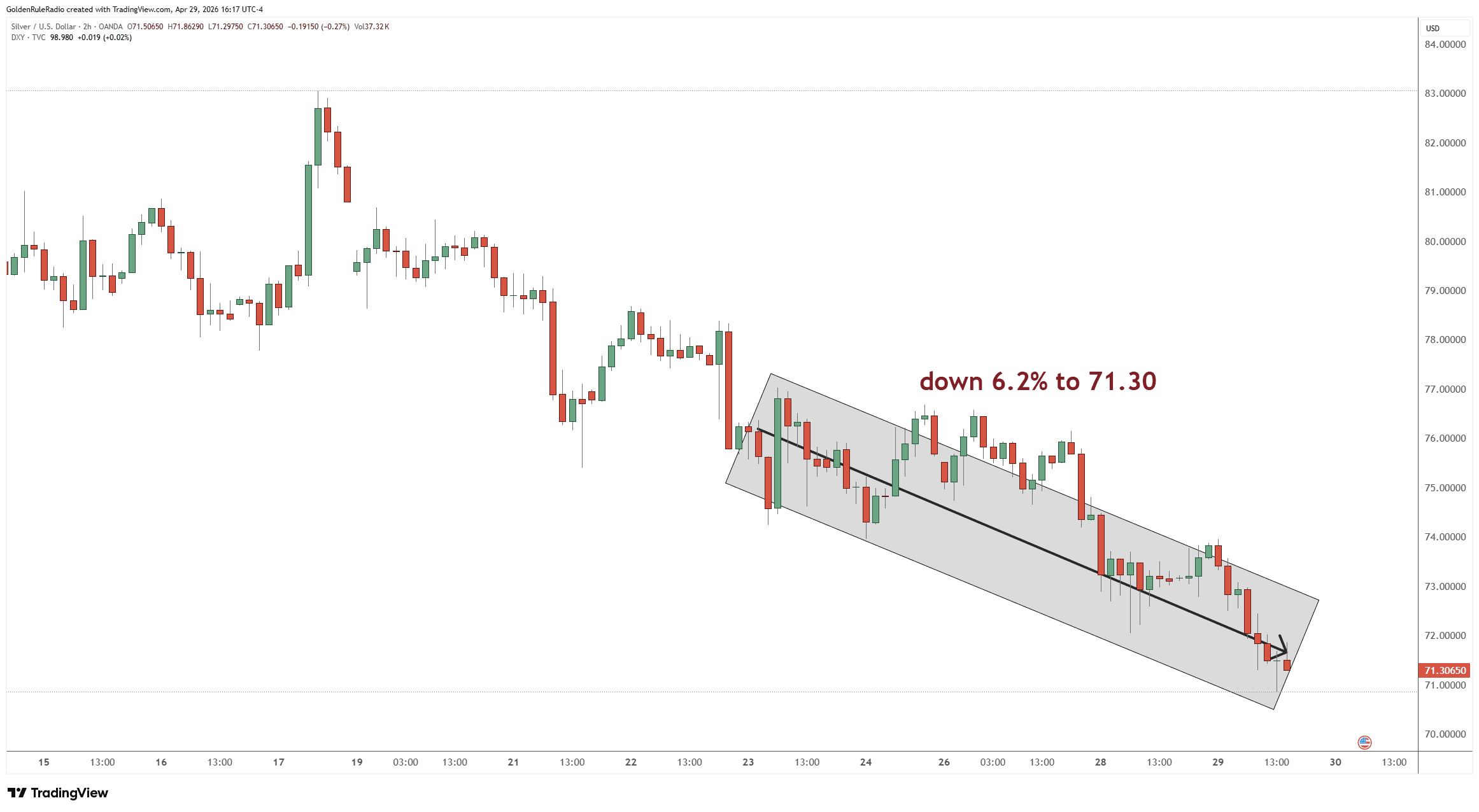
The price of silver is down 6.2% over the past week, sitting at $71.30.
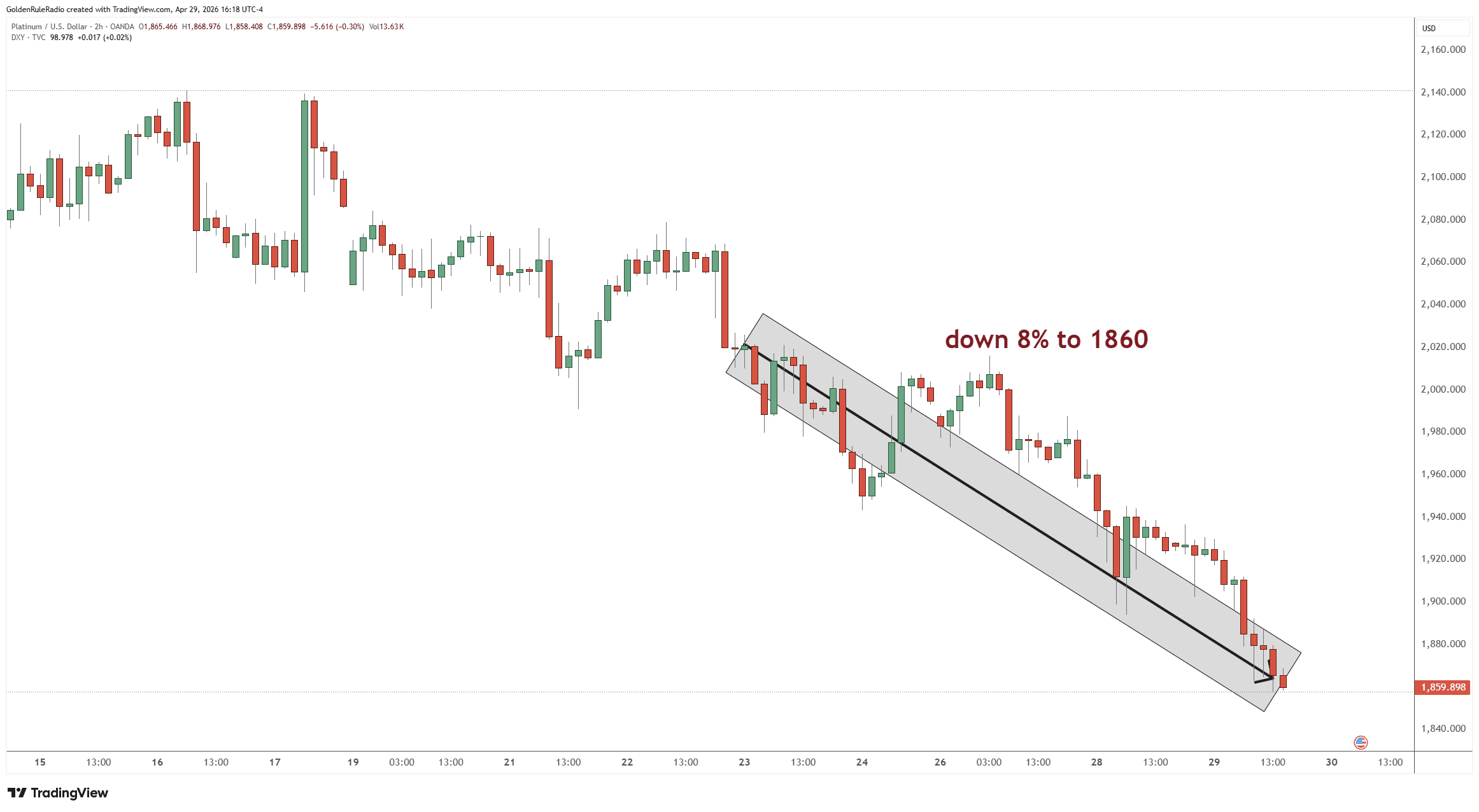
Platinum is down 8%, currently sitting at $1,860 for the white metal.
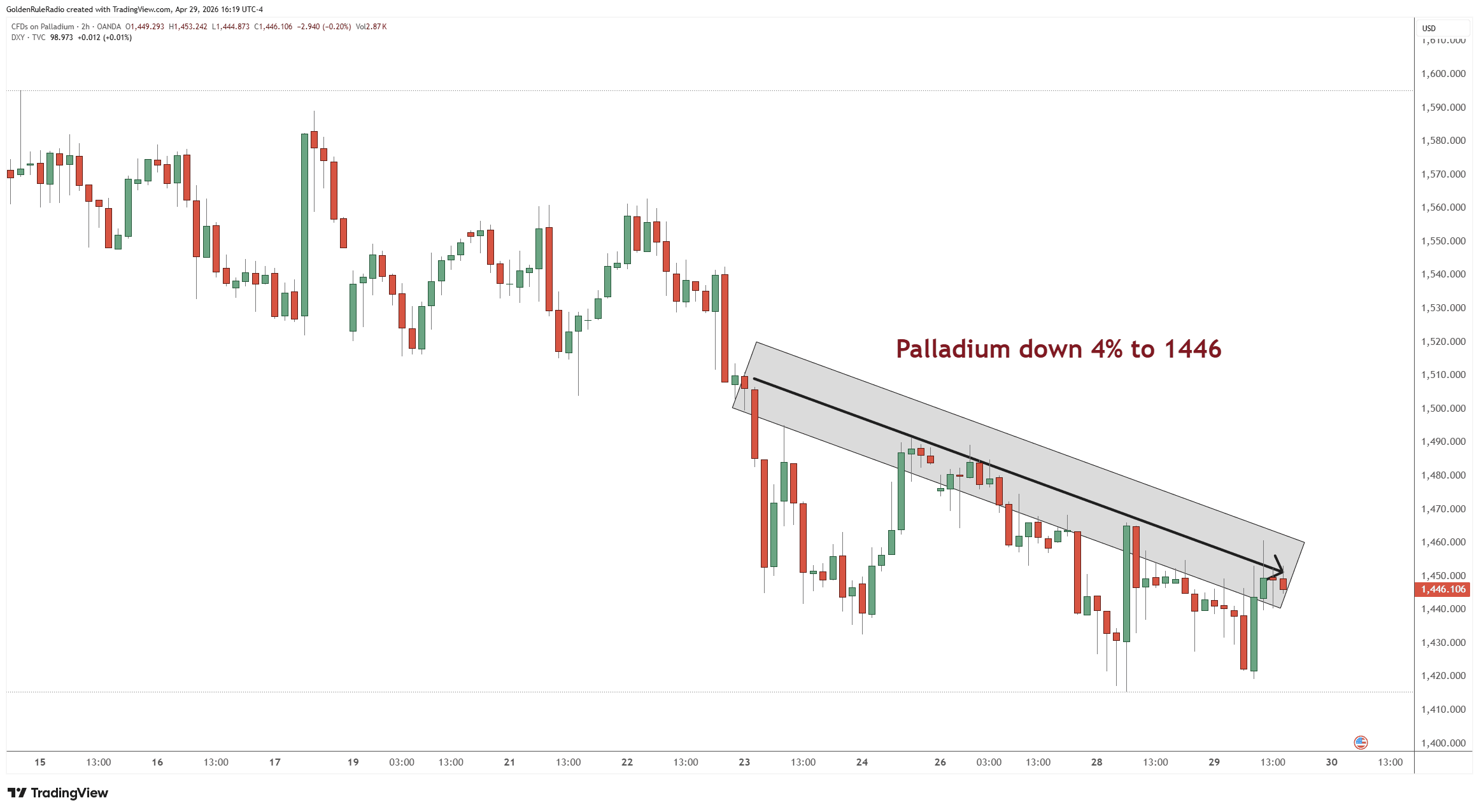
Palladium is down 4%, currently sitting at $1,446.
Looking over at the paper markets…
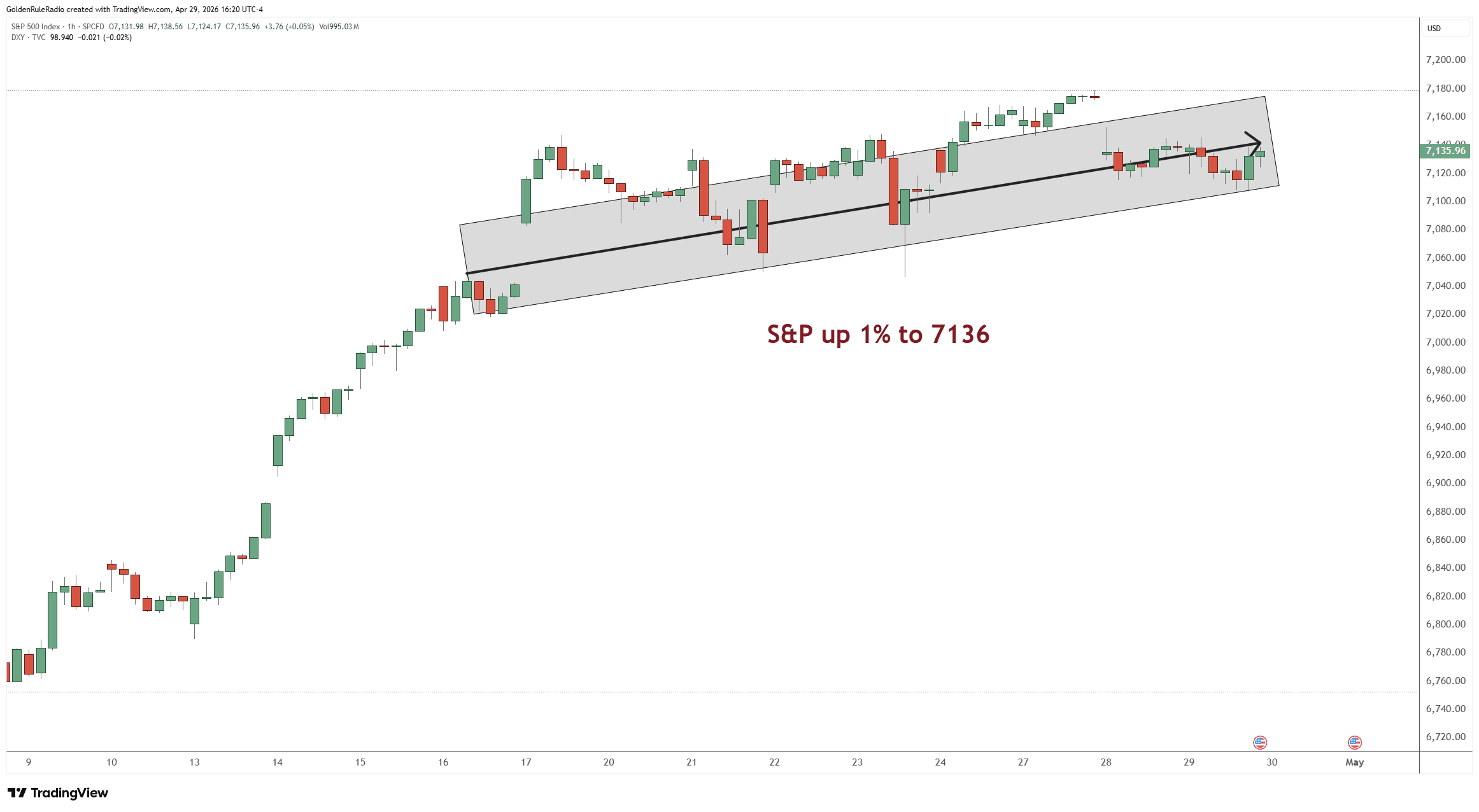
The S&P 500 is up about 1%, currently sitting at 7,136.
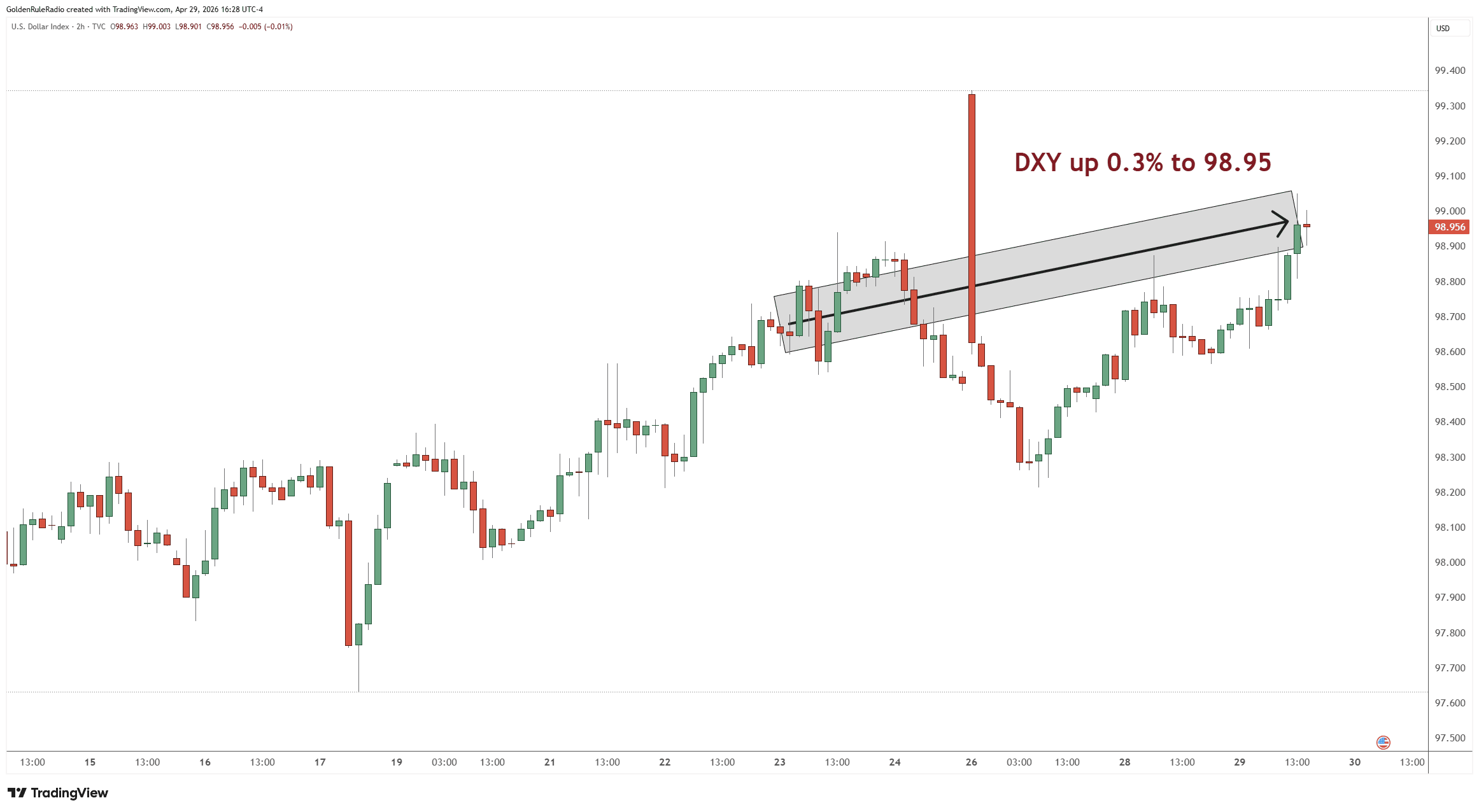
And finally, the US dollar index is up about 0.3% to 98.95. Not that surprising with all of the precious metals down.
Global Reserves Shift to Gold
Gold now represents approximately 30% of global reserve assets, up from just 10% back in 2000. Over that same period, the US dollar’s share has fallen from 60% to around 40%.
This isn’t a blip. It’s a 25-year reallocation by central banks, sovereign wealth funds, and institutions around the world — and it’s accelerating. As Deutsche Bank put it, gold is anchoring a monetary order that builds independence from the dollar.
Gold has already surpassed US Treasuries as a share of global foreign exchange reserves. That’s not bearish news dressed up — it’s the single most important long-term signal in the market. The institutional demand that drove prices from $1,000 to $4,500+ wasn’t retail speculation. It was the world’s largest balance sheets quietly voting with their capital.
If you’re wondering whether the gold bull market has “run its course,” consider that this monetary shift is still very much in progress.
Silver’s Supply Deficit is Getting Worse
Silver gets a lot of attention for its price swings, but the underlying supply story is what should keep long-term investors focused.
Annual mine production runs roughly one billion ounces per year. Annual demand — from industrial use, investment, defense, and energy technology — runs 1.15 to 1.25 billion ounces. That gap has to be filled somewhere, and for the past six years it’s been filled by drawing down inventories held at the COMEX and the London Bullion Market Association (LBMA).
Those vaults, which once held 1,200–1,300 million ounces combined, are now down to roughly 25–40 million ounces. Six straight years of deficit. The cushion is nearly gone.
And here’s where it gets even more interesting: China just set an all-time record for silver imports, bringing in 800 tons in March alone — roughly half of annual global mine production absorbed by one country in a single month. They need it for solar panels, EV batteries, electronics, and defense applications, and they show no signs of slowing down.
The price doesn’t fully reflect this yet. That’s not unusual — structural deficits take time to show up in spot prices. But when they do, the move tends to be significant and fast.
The Short-Term Charts: Where Are the Floors?
For those watching price levels, here’s the technical picture as we see it:
Silver has been carving out lower highs and lower lows since its January peak near $121. The current range to watch is roughly $55–$95, with interim support near the $64–65 area (the 61.8% Fibonacci retracement). Silver has already briefly touched that level but hasn’t sustained a break below it. A more aggressive washout could push prices into the mid-to-high $50s — still within the larger bull market structure given that silver was trading in the low $30s just a year ago.
Gold has come down to its first 38.2% retracement level. The next meaningful support zone is around $4,200, with a deeper 61.8% retracement sitting near $3,400. That deeper level would take several months to reach if it happens at all — and it would still represent one of the strongest bull market corrections in recent memory, not a breakdown.
The key point: both metals remain in longer-term uptrends. Algorithmic selling to known technical levels (Fibonacci retracements, moving averages) is what’s driving this weakness — not a collapse in demand fundamentals.
At $71 Silver, Context Is Everything
Eighteen months ago, silver was trading around $18 an ounce. A year ago it was under $32. It ran to $121 earlier this year before being knocked down — first by Chinese authorities halting futures trading overnight, then by back-to-back CME margin hikes that forced leveraged traders out of positions.
At $71, silver is still more than double where it was a year ago. A 500-coin Silver Eagle monster box that cost around $13,500 not long ago is worth north of $40,000 today. The “crash” from $121 to $71 is painful if you bought at the top, but it’s noise in the context of the larger move — and the structural demand story hasn’t changed one bit.
For investors building a long-term position, what matters more than today’s price is whether you have a plan.
What’s your exit strategy? Are you ratio trading into gold at a target level? Are you holding for the long term and letting the supply deficit do its work? Have those conversations now, while you can think clearly — not in the middle of a spike when emotion takes over.
Fed Keeps Rates Unchanged
The Federal Reserve held rates steady this week (8–4 vote), and Jerome Powell announced he won’t retire, though he’ll step down as the Fed chairman. The incoming nominee, Warsh, passed through the Senate Banking Committee and is headed for confirmation. Rate policy and Fed leadership will remain a source of volatility in the months ahead.
Meanwhile, the US continues to run large deficits, refinance trillions in debt at higher rates, and manage a monetary system under increasing international pressure. None of that is a short-term silver bullet — but all of it continues to support the long-term case for physical precious metals.
Here to Help
Whether you’re adding to an existing position or just getting started, the team at McAlvany Precious Metals is here to help you build a plan that fits your goals. With a collective 75 years of experience in the precious metals market, we offer complimentary, no-obligation consultations. Give us a call at 800-525-9556.