More
Learn more about the value and history of this rare and beautiful historic coin.
When it was first minted in 1907, this coin didn’t just say it was worth $20 — it actually was worth $20 in gold. Today, the market value of a Saint-Gaudens Double Eagle reflects both its gold content and its historical and artistic significance, placing it well above its original face value.
That reality offers a clear illustration of how the purchasing power of the dollar has changed over time.
But the Saint-Gaudens Double Eagle was never intended to be merely a monetary instrument or a measure of value. From the beginning, it was conceived as a true work of art — and in that goal, it succeeded brilliantly. Many collectors and historians regard it as one of the most beautiful coins ever minted.
Each of our client’s needs is unique, and we take the time to customize recommendations to fit your financial goals. Click below to take the quiz and find the right advisor for you.
“Double Eagle” may sound like a confusing name for a coin that features only one eagle. To understand it, you have to know the history behind U.S. gold coinage.
Shortly after the nation’s founding, Congress authorized gold coins in three denominations: $10, $5, and $2.50. Each featured an eagle on the reverse, but only the $10 coin was called an “eagle.” The $5 coin became known as a “half eagle,” and the $2.50 coin as a “quarter eagle.”
When President Theodore Roosevelt viewed a collection of historic coins at the Smithsonian Institution, he became convinced that American coinage could — and should — aspire to a higher artistic standard. Determined to elevate the beauty of U.S. coins, he commissioned renowned sculptor Augustus Saint-Gaudens to design a new gold coin.
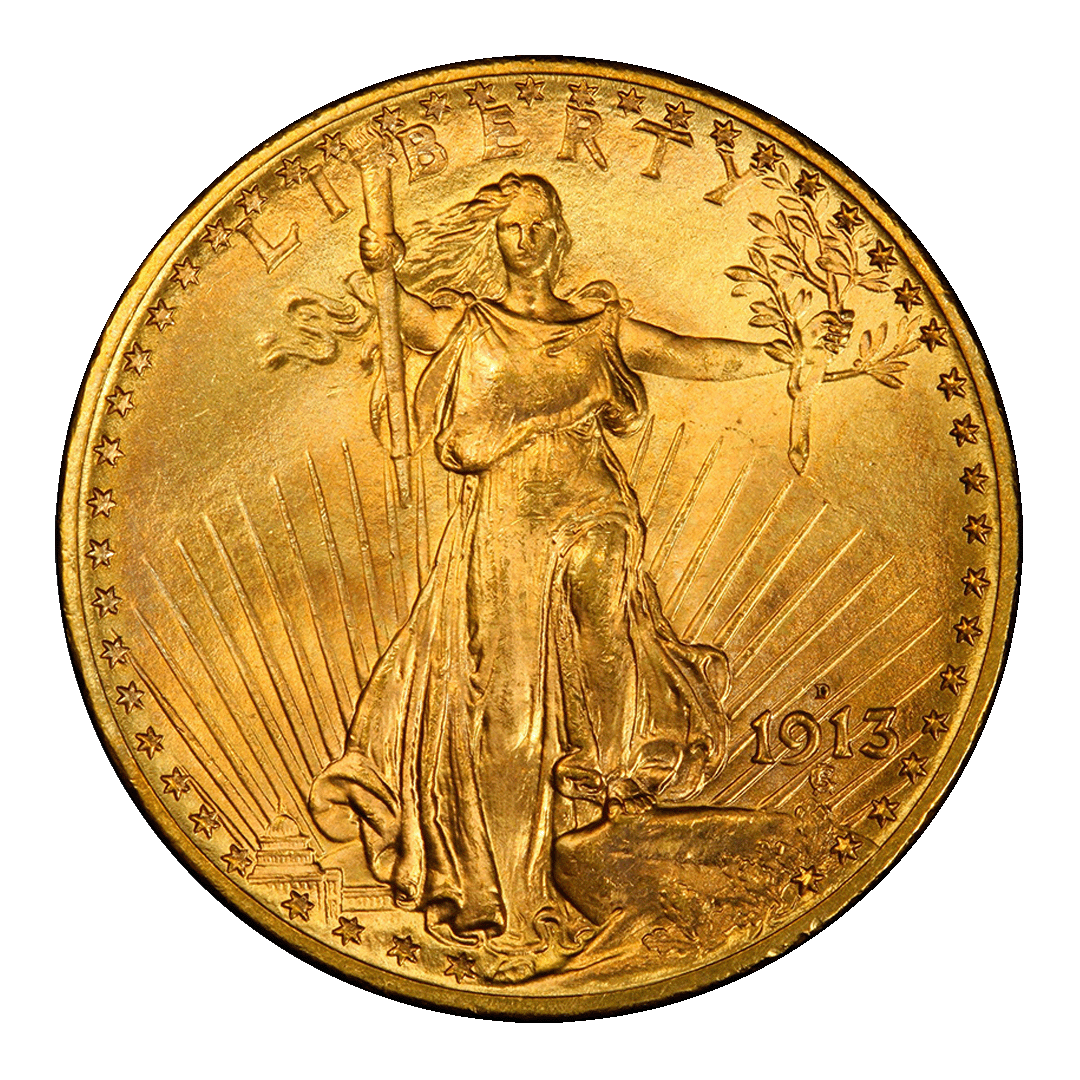
The result was the now-famous image of Lady Liberty on the obverse (front) and a soaring eagle in flight on the reverse. Issued with a face value of $20, the coin logically became known as a “double eagle.”
Saint-Gaudens’ original design featured exceptionally high relief, which made the coins difficult to stack and prone to wear at the highest points of the sculpture. As a result, a lower-relief version was adopted — one that preserved much of the original beauty while improving durability and usability.
Lady Liberty strides forward in flowing robes, stepping onto a rocky outcropping while holding aloft the torch of freedom and the olive branch of peace. The U.S. Capitol appears in the lower-left background. The date appears to the right of Liberty, and the word LIBERTY arcs across the top of the coin.
Early versions of the coin featured the date in Roman numerals, which were later replaced with Arabic numerals in the same year of issue.
The reverse of the coin depicts a powerful, stylized eagle in flight — another signature Saint-Gaudens design. The words UNITED STATES OF AMERICA and TWENTY DOLLARS arc across the top of the coin, while IN GOD WE TRUST appears above the rising sun near the bottom.
Several important changes were made shortly after the coin’s introduction:
The date was changed from Roman numerals to Arabic numerals in 1907, the coin’s first year of issue.
The inscription IN GOD WE TRUST was added in 1908.
The original high-relief design was discontinued in 1907 after only 12,367 coins were minted. The lower-relief version replaced it and remained in use thereafter.
Two stars were added to the circle of stars on the obverse in 1912, following the admission of Arizona and New Mexico to the Union, bringing the total from 46 to 48 stars.
From the beginning, the Saint-Gaudens Double Eagle was meant to be extraordinary. President Roosevelt commissioned the finest sculptor of his era, and this project became one of Saint-Gaudens’ final works.
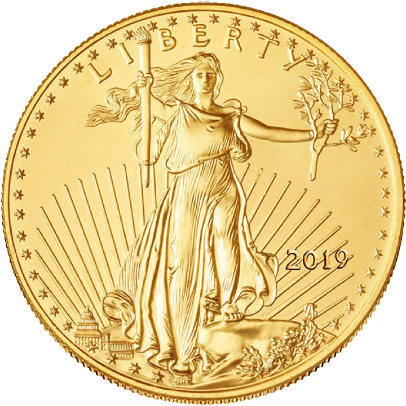
Public acclaim confirmed the success of that vision, as did the later decision to reuse Saint-Gaudens’ design for the modern American Gold Eagle. When you acquire a Saint-Gaudens Double Eagle, you’re not simply purchasing a historic gold coin — you’re owning a piece of American artistic and monetary history.
It is, quite literally, a sculpture by a master, struck in gold. For many investors and collectors, that combination of beauty, history, and intrinsic value gives the coin enduring appeal across market cycles.
Get a personally tailored plan specific to your financial goals and needs. Connect with an advisor today.