

Podcast: Play in new window
Gold roared back this week, climbing 2.3% and jumping nearly $190 on our recording day alone after Treasury Secretary Bessent announced an expanded bond-buyback program. Platinum was the week’s standout with a 4.3% gain, while the U.S. dollar slid back under 99. As gold approaches the next major resistance level, continued pressure on bond yields, the dollar, and global demand for gold provide footing for higher prices in the gold market.
Let’s take a look at where prices stand as of Wednesday, August 19:
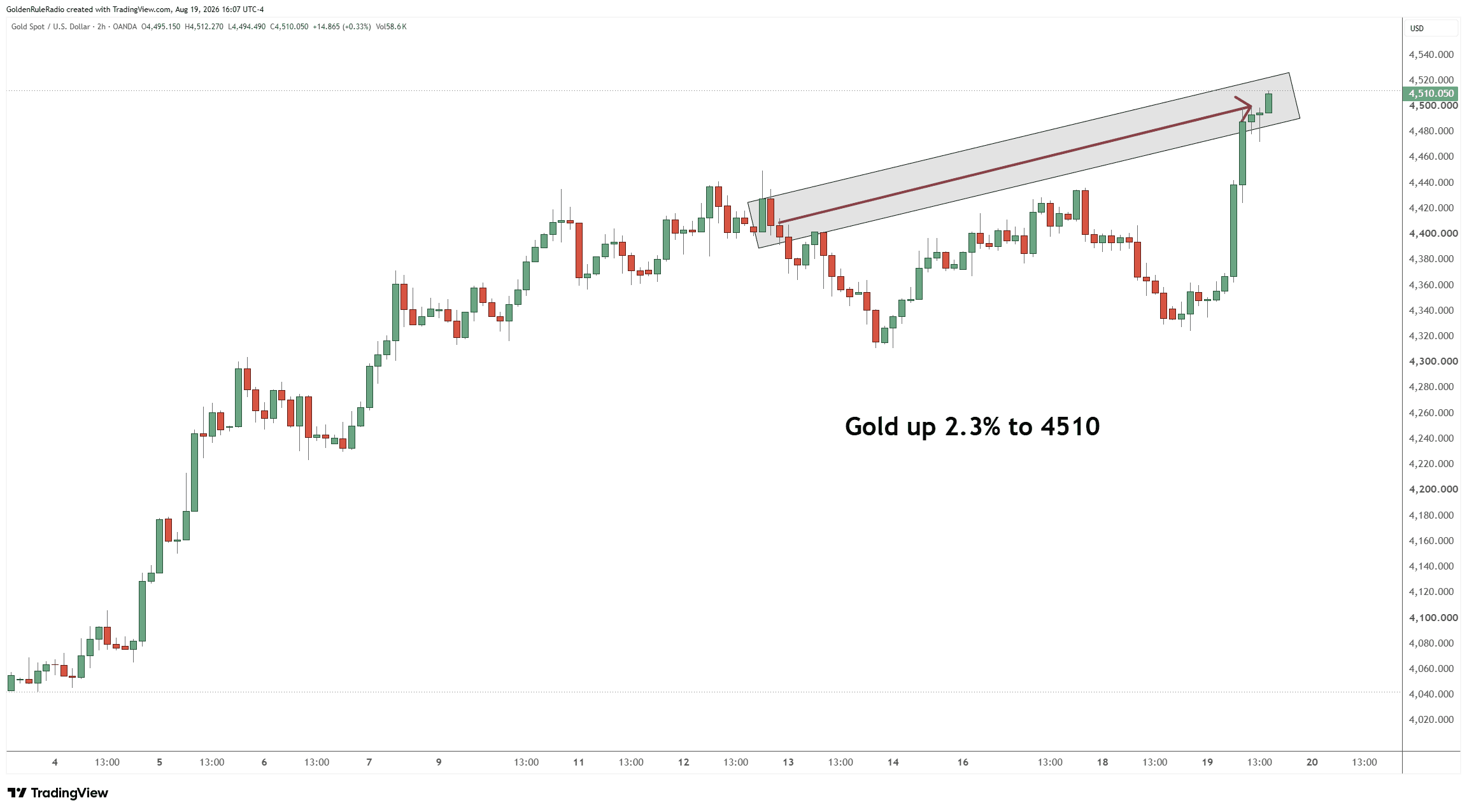
The price of gold is up 2.3%, back over $4,500 and currently sitting at $4,510 as of recording.
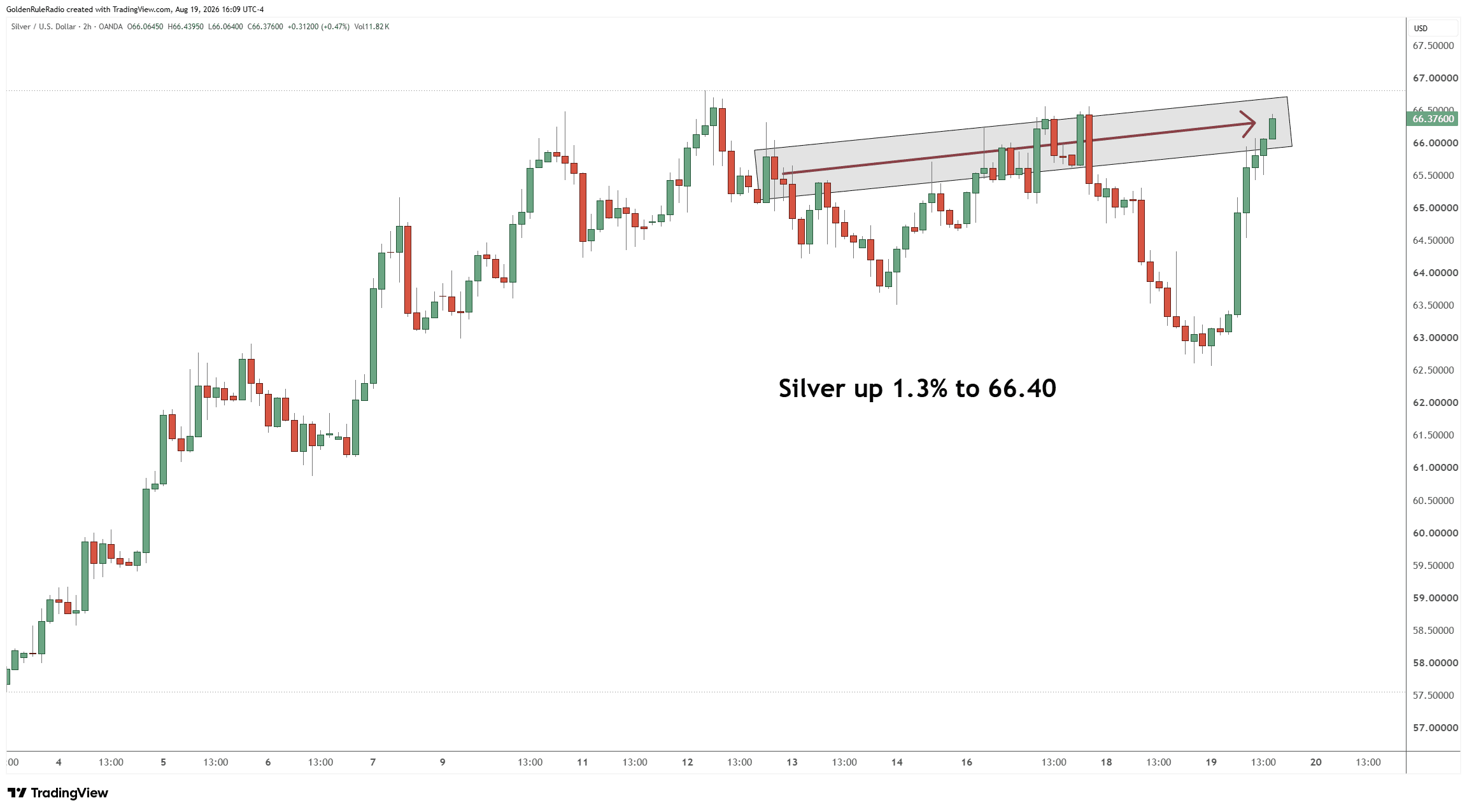
The price of silver is up 1.3%, climbing back to $66.40.
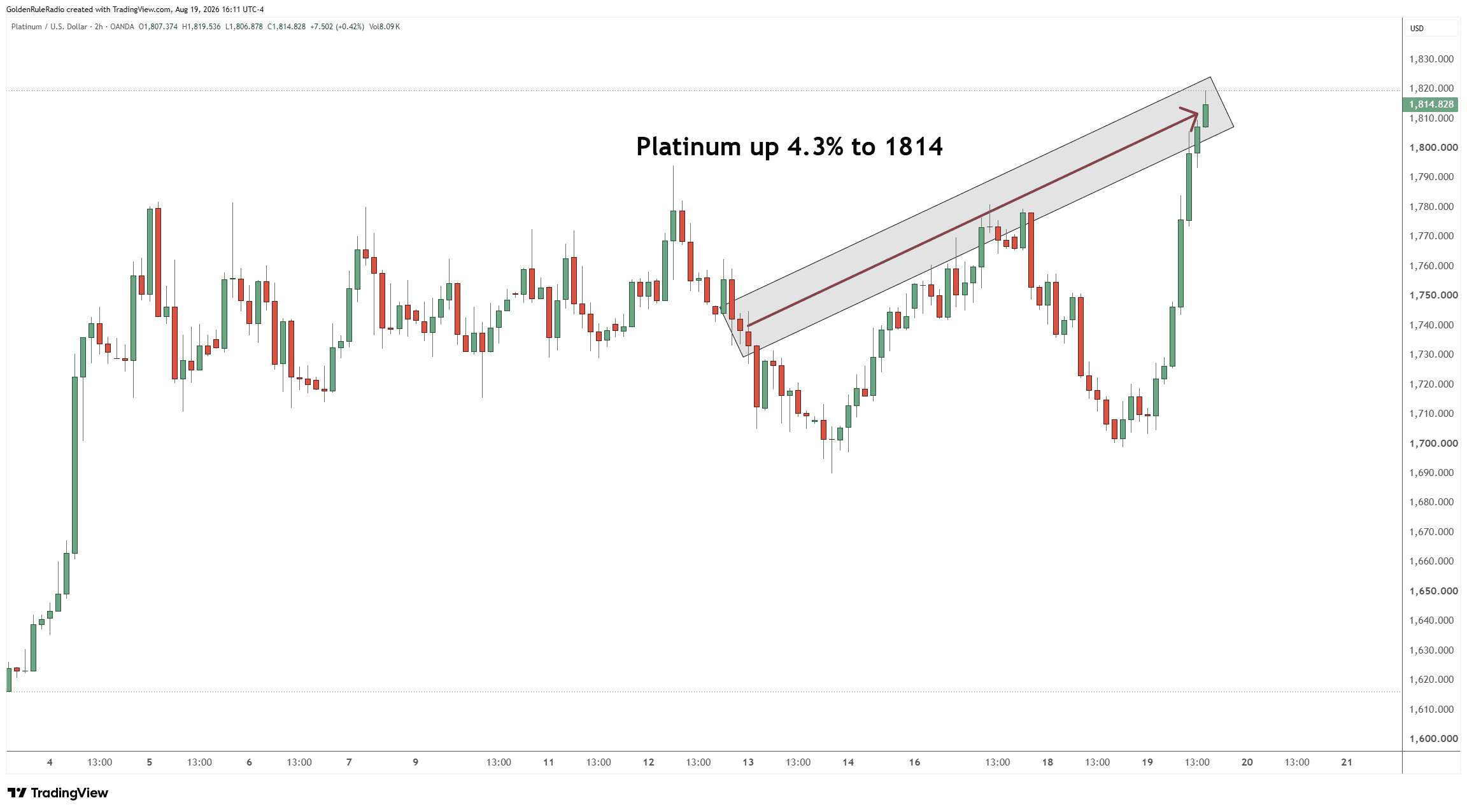
Platinum is the big winner this week, up 4.3% all the way to $1,814.
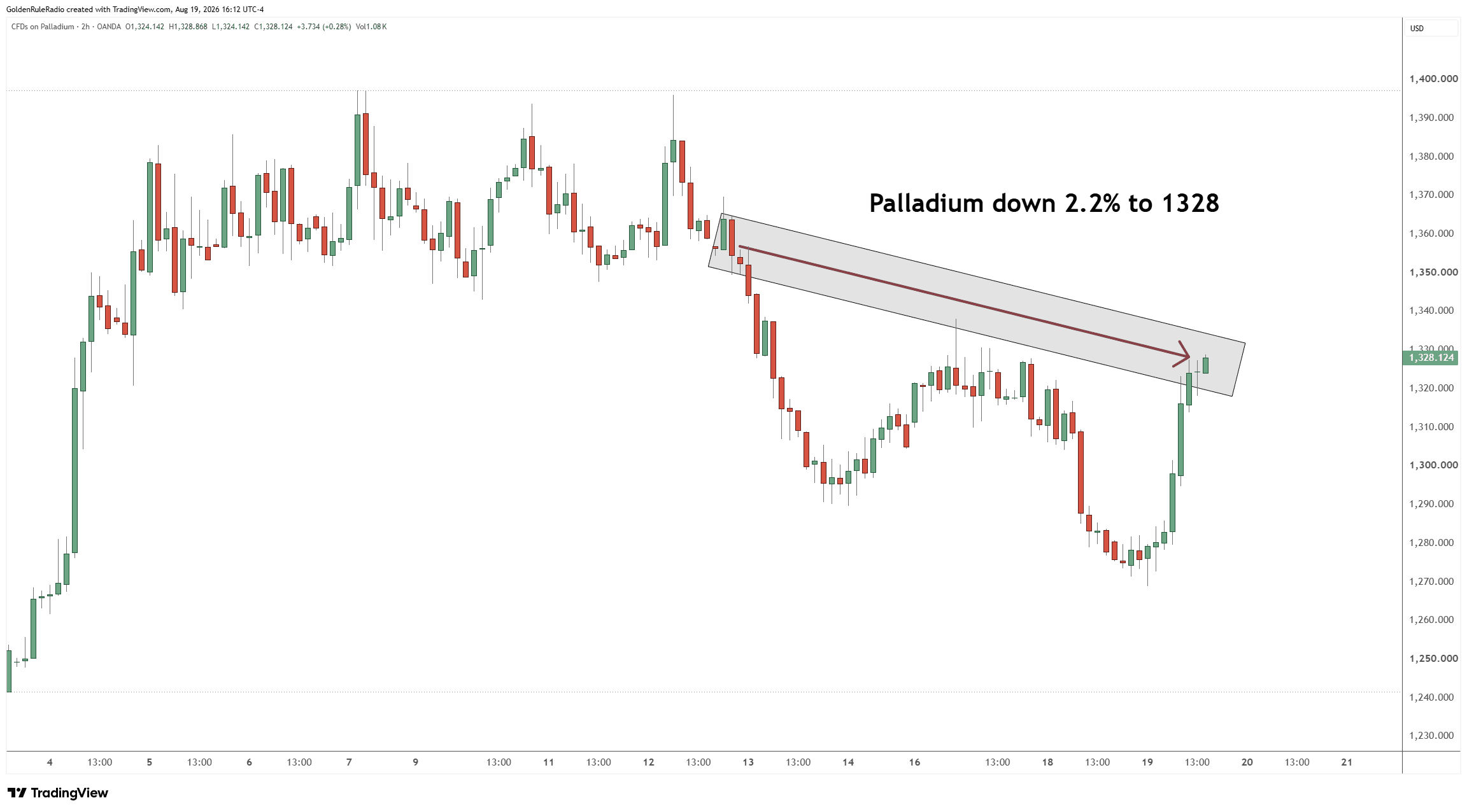
Palladium bucked the trend, down 2.2% to $1,328.
Looking over at the paper markets…
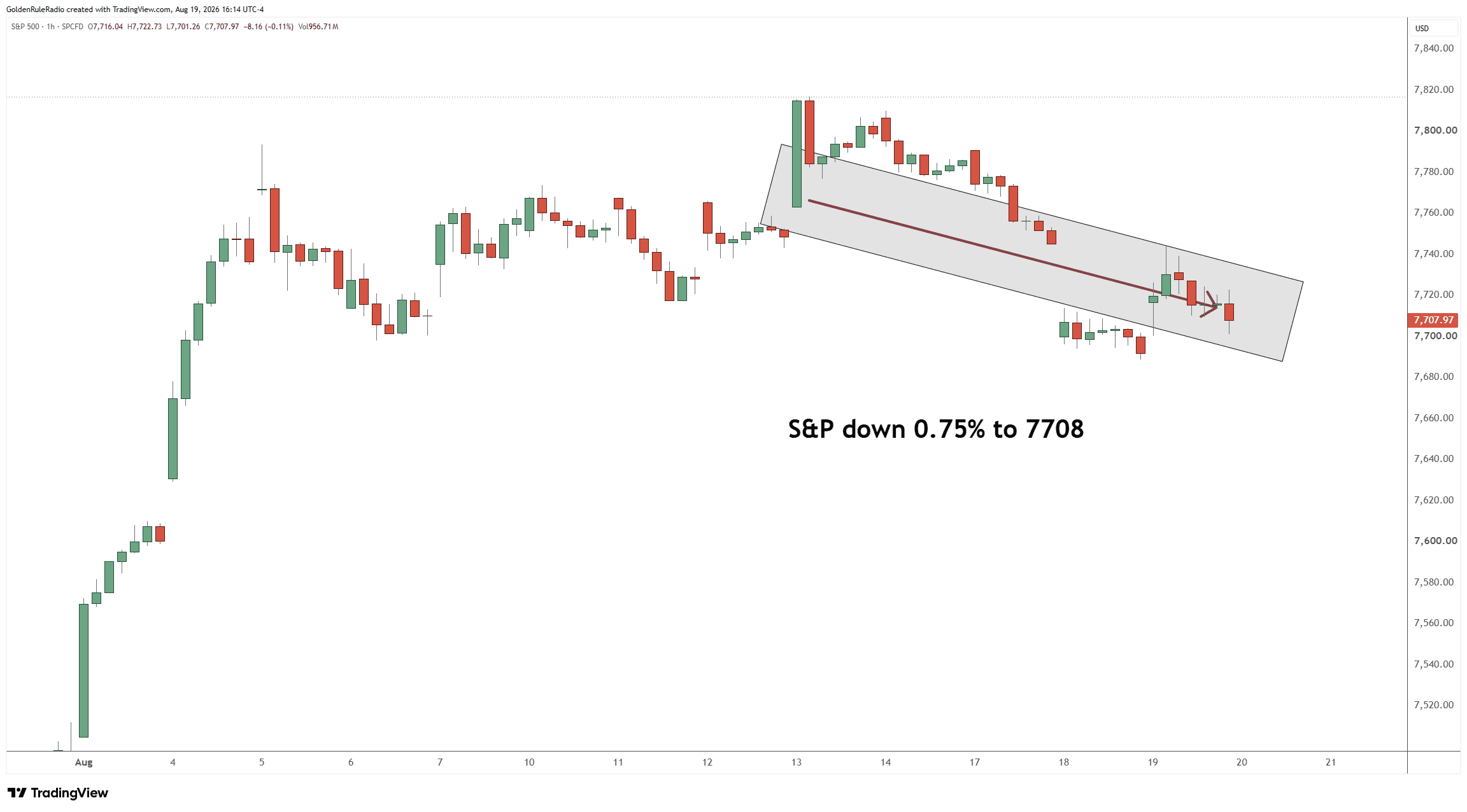
The S&P 500 is down about 0.75% at 7,708.
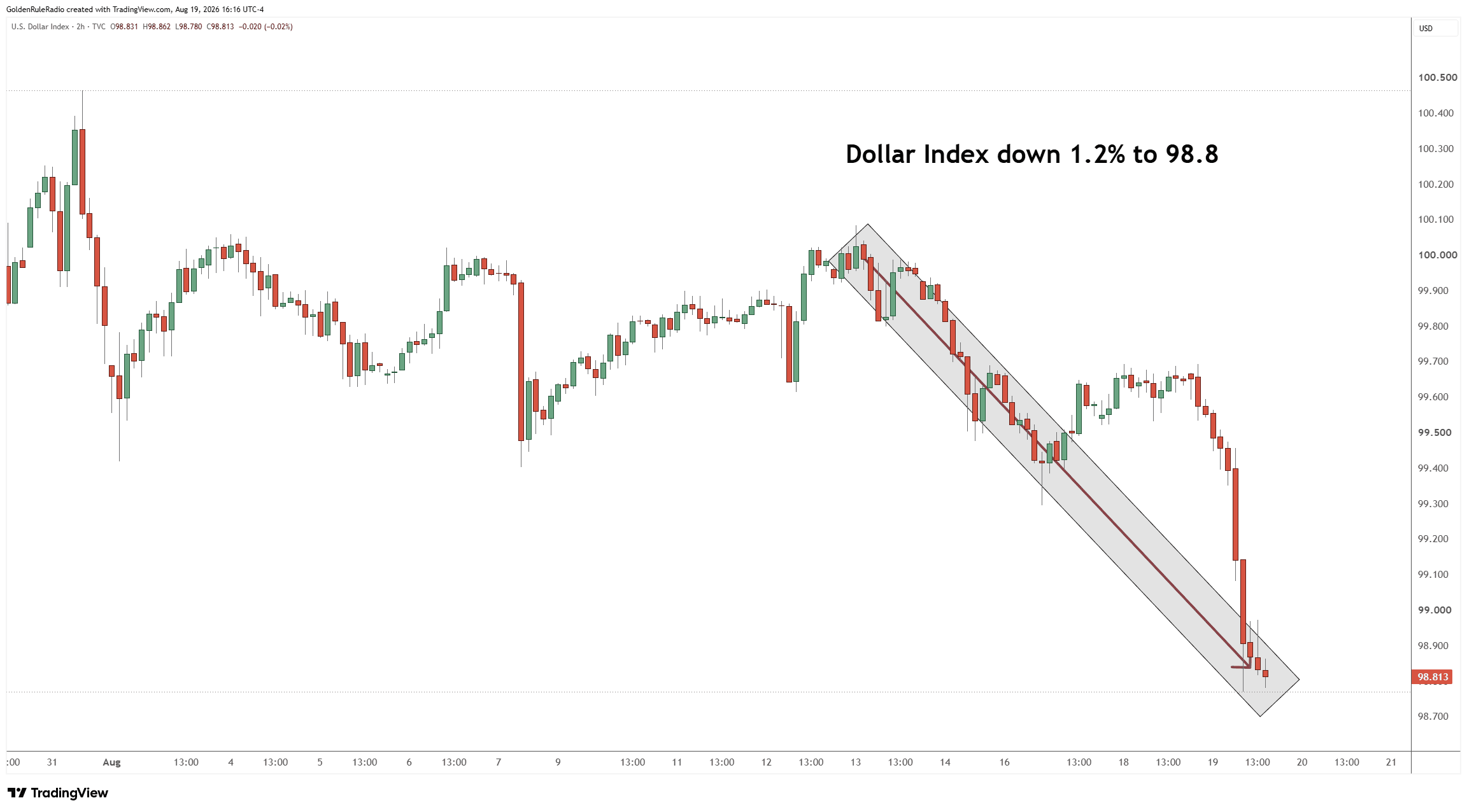
The US dollar index is down 1.2%, back under 99 at 98.8.
Worth watching: the 10-year Treasury yield has climbed more than 20% so far this year, moving from 3.9% to 4.8% — a big part of the story below.
A Rare Day: We Actually Know Why Gold Rallied
Most days, gold moves and no one can tell you exactly why. This week was the exception. Treasury Secretary Bessent announced the government would roughly double its bond buybacks, setting a target range designed to push yields lower — in other words, yield curve control.
To buy those bonds and park them on the Fed’s balance sheet, they have to print the money to do it. That’s why gold responded the way it did, popping roughly $180–$190 on the day. Call it a mini quantitative-easing intervention.
The urgency behind it is the long end of the curve. The 30-year had been sitting near 5.3% — a genuine threat to the housing market. That’s because mortgages track those longer-term yields, not the Fed’s discount rate. Nobody finances a home off the two-year Treasury. On the day of the announcement, the 30-year dropped to 5.19% as the plan went to work.
The takeaway: when Washington prioritizes suppressing yields over everything else, money printing is the tool they reach for — and that is structurally bullish for gold. This is intervention working in the favor of the metals owner, not against.
Gold Pullback Was Healthy — and a Floor May Be In
Step back and the recent weakness looks a lot less scary. Gold was down about 20% from its high over the past three months — and over that same stretch, the 10-year yield was up 20% and the dollar was strong. Bond yields up plus a firm dollar equals gold down. That’s cyclical, not a breakdown.
Now the setup is reversing: yields turning lower, dollar rolling over. Technically, we’d frame it simply — $3,900 is the interim floor, $4,900 is the interim ceiling, and everything in between is noise. From here, two paths are realistic: an extended sideways consolidation (the kind of pennant/triangle pattern we saw for a couple of years post-COVID before the breakout), or a push toward $4,800–$5,000 by year-end.
We’re not alone in seeing higher prices ahead — even mainstream houses like Citigroup and Bank of America see room for gold to climb before the year is out. The practical point for you: buying near the lower edge of an intact uptrend beats chasing spikes at the top.
Fiscal Dominance and Competitive Devaluation
This week’s news is really just one symptom of a much bigger disease. The U.S. is now carrying a roughly $40 trillion debt load — a monster that has taken on a mind of its own. And bond yields haven’t just jumped here; they’ve been climbing all over the world. This is a global story, not just a U.S. one.
What you’re watching is fiscal dominance: central banks increasingly forced to support their governments’ debt rather than fight inflation. When they have to choose, they choose the government — every single time. That means more money printing, a steadily weaker currency, and a higher cost of living for anyone sitting in cash.
And don’t be fooled by a dollar index near 99. The dollar only looks strong because it’s measured against a basket of other currencies that are all devaluing at the same time. It’s a competitive devaluation — everyone racing to the bottom together. The smart-money response to that race is to own something no government can print.
Central Banks Keep Buying — and Gold Is Coming Home
China set a fresh gold-buying record just last month, putting a floor under the market yet again. And around the world, sovereigns are pulling their gold closer to home.
The clearest example this week: Venezuela is repatriating roughly 31 tons of gold — worth more than $4 billion — out of London. The likely play isn’t to sell it, but to use it as collateral to finance reconstruction after their recent earthquakes. That’s the same move we’re seeing elsewhere: gold collateralization in China, repatriation across multiple nations, and hard assets being treated as premium, no-counterparty collateral.
The lesson for you is to put your balance sheet on the same side of the trade as the central banks — owning physical, verifiable gold rather than paper claims on it.
Add Ounces and Watch the Premiums
Here’s something notable amid all the price volatility this week: the gold-to-silver ratio held steady at 67. No ratio trades means the play is simpler — just keep adding ounces. The conversations worth having are about which ounces, what form, which location, and which strategy.
And that’s where the real opportunity is hiding today, because premiums on several products are historically low:
- 90% “junk silver” — old dimes and quarters — can currently be bought cheaper than spot.
- Proof American Eagles are priced below regular American Eagles right now, by a couple of dollars.
- 100-year-old Morgan silver dollars are trading at roughly 1% over their silver content.
These low-premium windows don’t last. When premiums on items like these eventually spike 25–30%, that becomes your swap opportunity — selling the high-premium product and rolling into bars or additional ounces.
One more thing to keep on your radar: seasonally, the metals have already worked through their weak period, while equities are heading into theirs. In midterm-election years, the average stock market downturn has run about 16.8% with an average start around early September — followed by a strong rally the next year. If equities do roll over, gold may dip briefly alongside them before its next leg higher. That makes right now a good time to check where you sit on the investment triangle and rebalance accordingly.
Plan Your Next Move
Wondering what your next move in precious metals should be? The team at McAlvany Precious Metals is happy to speak with you about your goals on a no-obligation, complimentary consultation. We have a collective 75 years of experience investing in the precious metals market. Reach out to us at 800-525-9556.