

Podcast: Play in new window
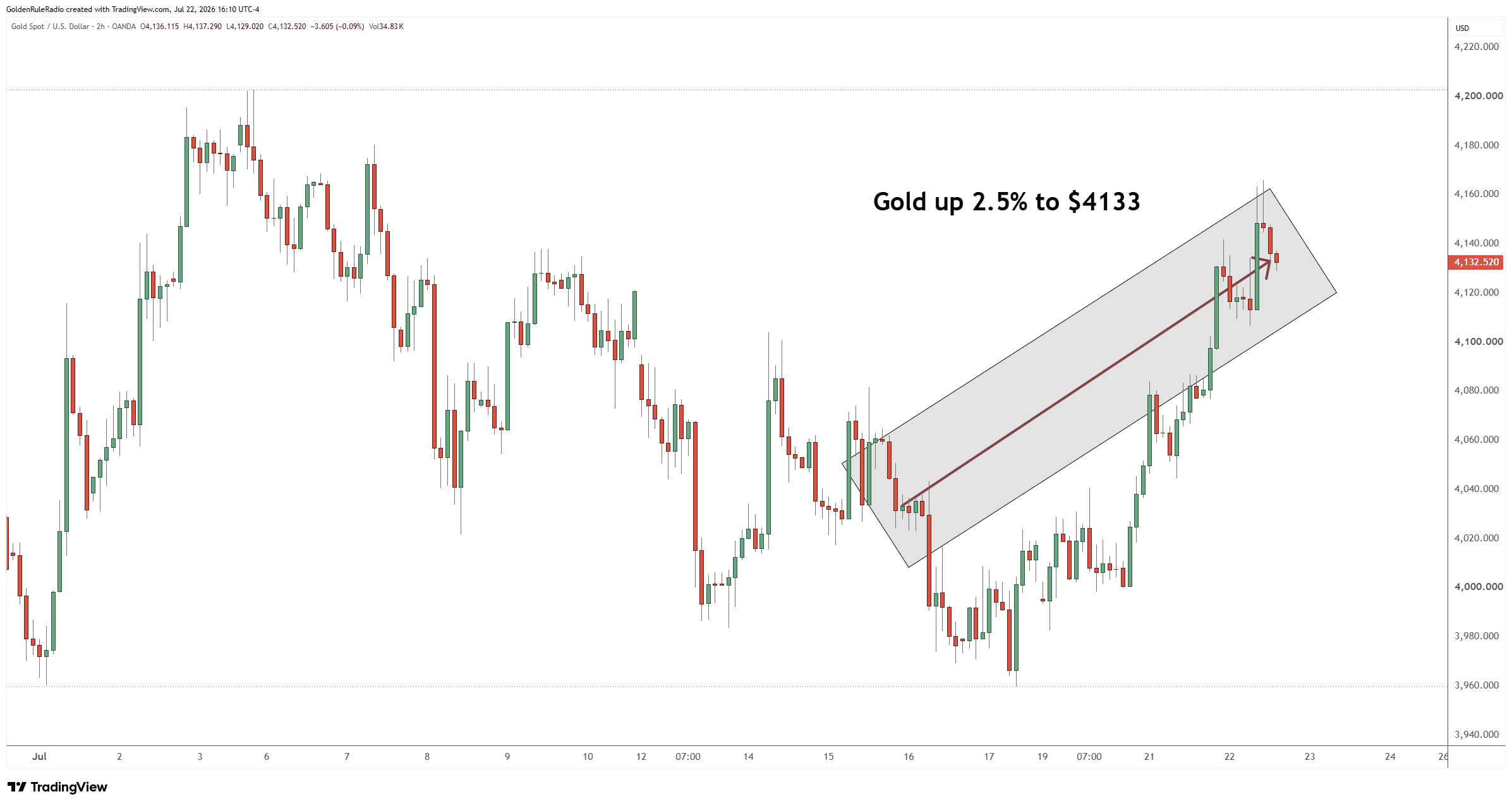
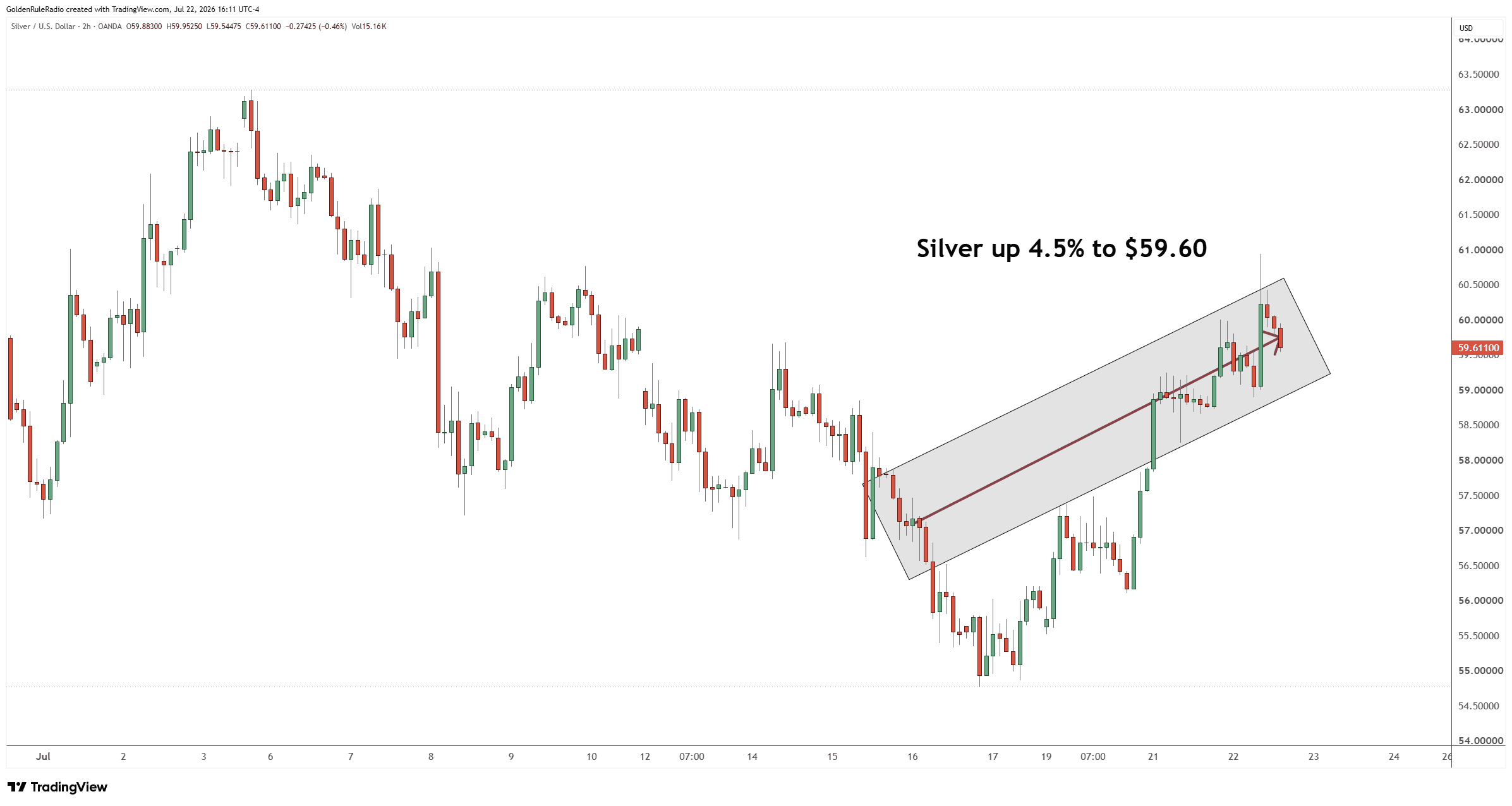
Gold and silver strengthened this week as gold climbed 2.5% and silver with a solid 4.5% gain. Technicals point towards precious metals establishing a durable bottom as the 65-week moving average and potential double-bottom pattern. For disciplined buyers, that combination is worth paying attention to.
Let’s take a look at where precious metals prices stand as of Wednesday, July 22:
The price of gold is up about 2.5%, currently sitting at $4,133.
The price of silver is up 4.5%, sitting at $59.60. Whatever gold does, silver tends to do a little better.
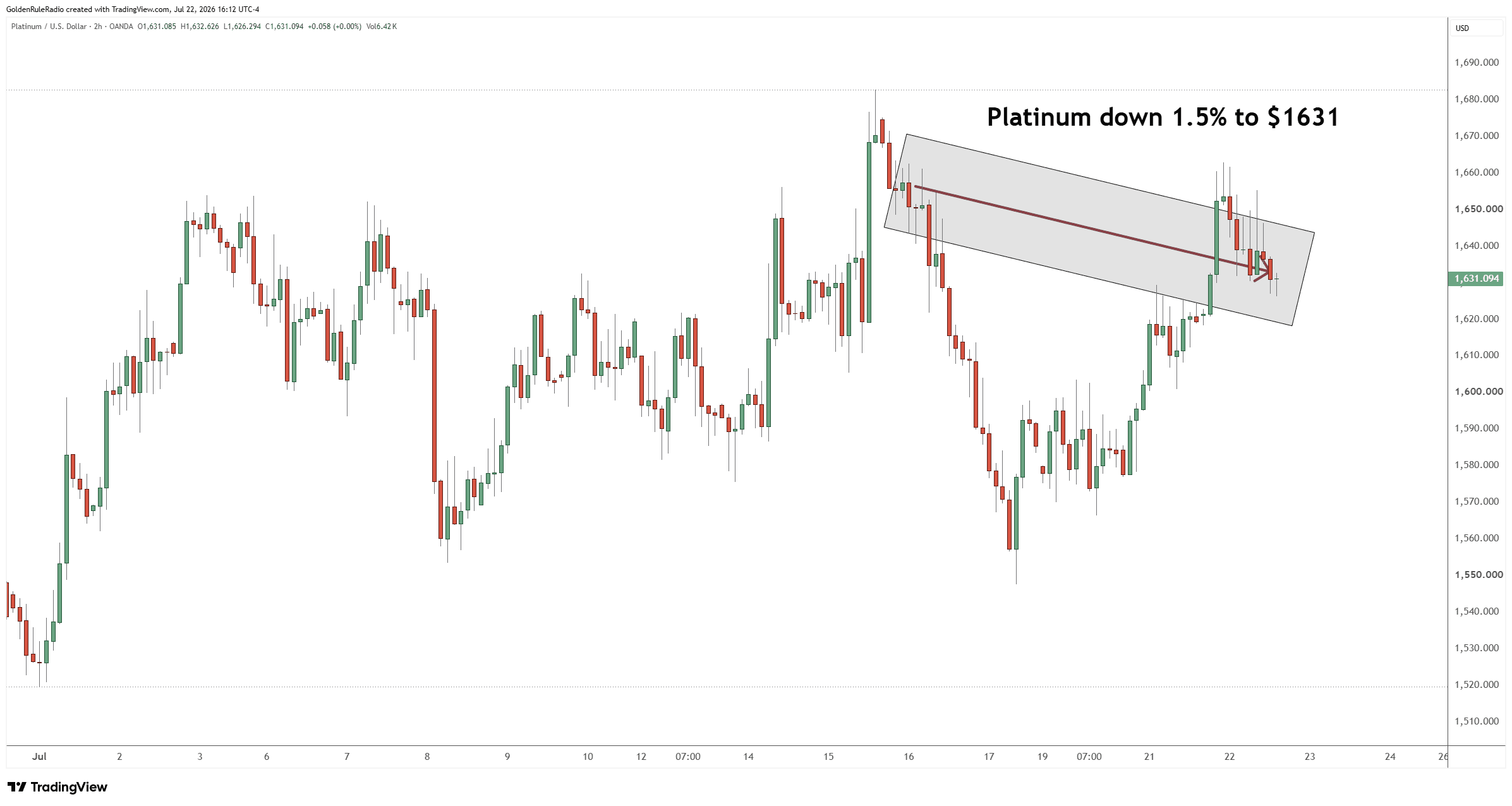
Platinum is down 1.5% at $1,631.
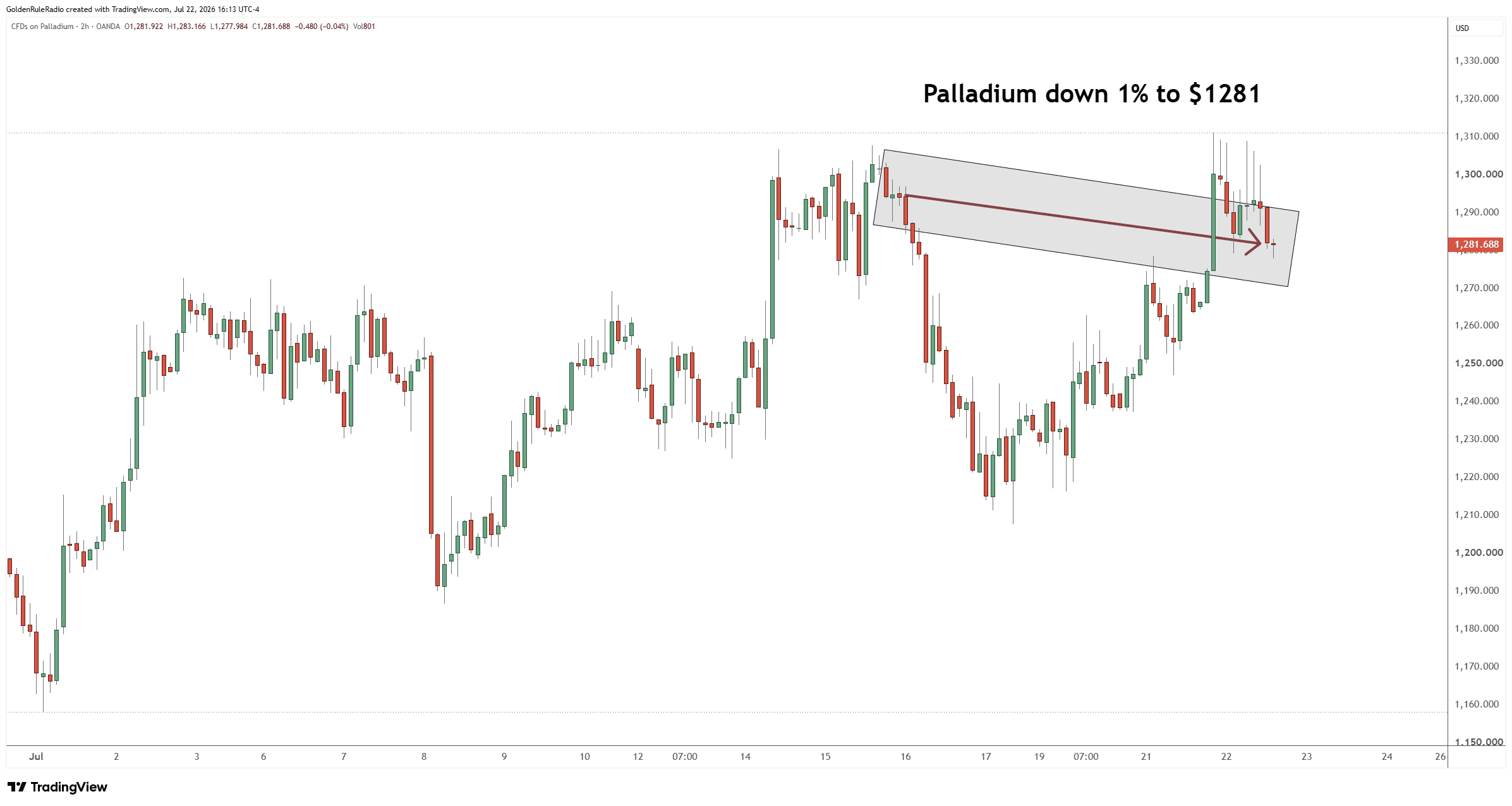
Palladium is down 1%, currently at $1,280.
Taking a look over at the paper markets…
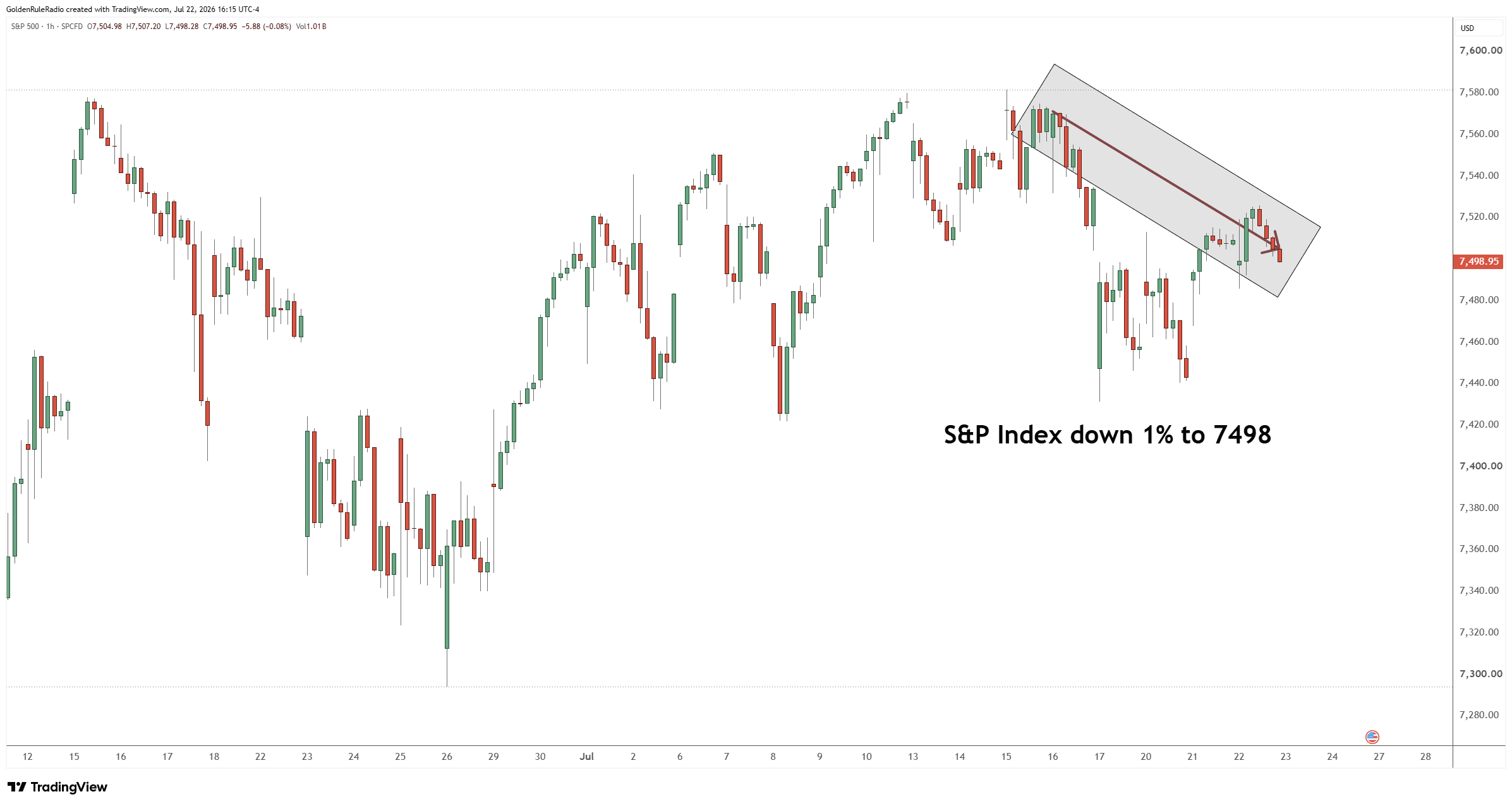
The S&P 500 is down about 1%, sitting at 7,498.
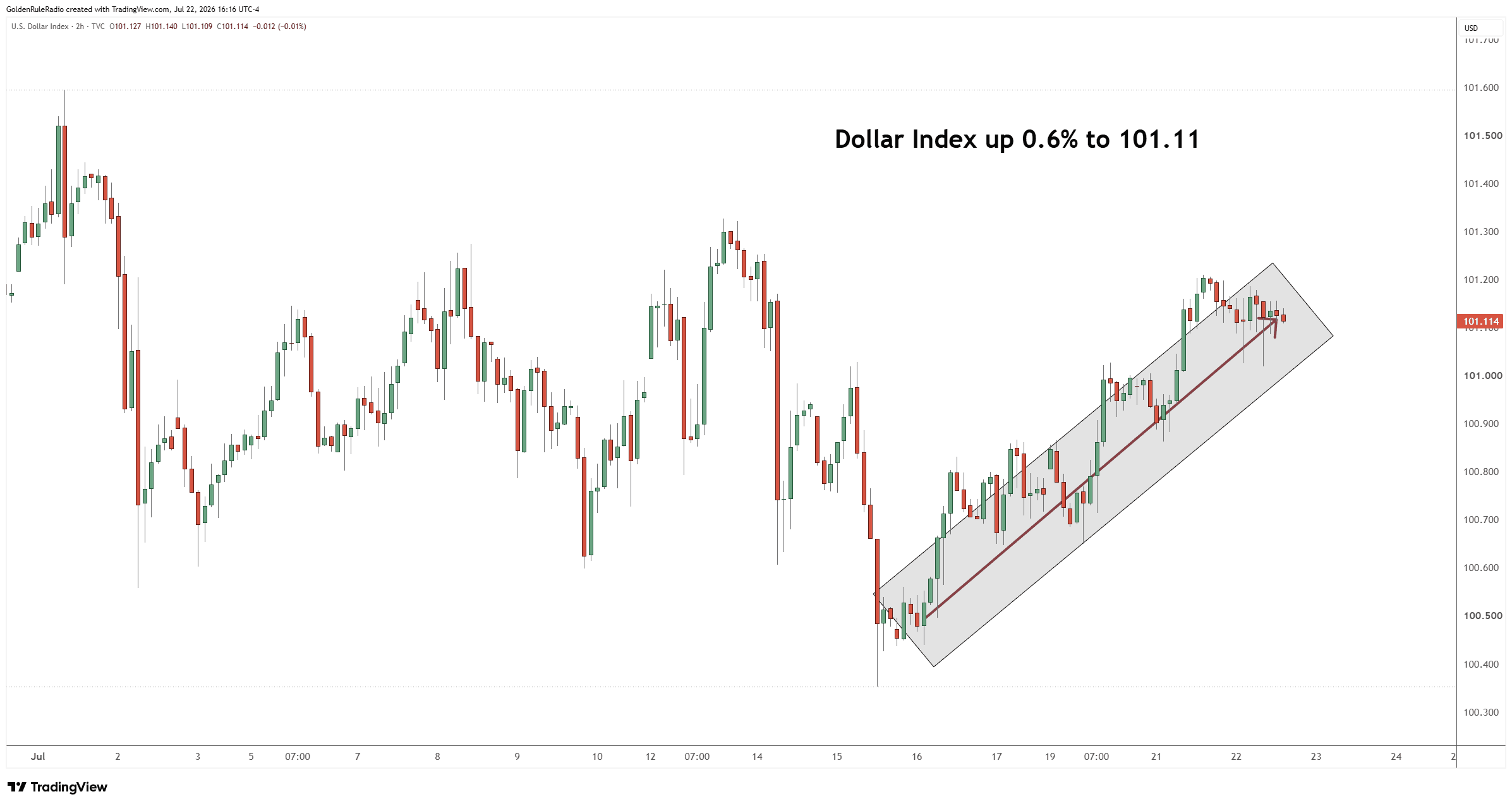
And the US Dollar Index is up 0.6% to 101.11.
Consolidation, Not Collapse
Metals ran hard through the end of 2025 and into January, corrected sharply in March, bounced into a mid-April peak near $4,800–$4,900. Then they bled slowly lower through the spring before bottoming out at the end of June around $3,950.
That’s a textbook three-phase sequence: growth, correction, consolidation. We’re in the third phase now.
The encouraging detail is what happened after that late-June low. Gold bounced, came back down to roughly $3,960, and held — a short-term double bottom over the last few weeks. Meanwhile the relative strength index, which had flat-lined at the bottom of the decline, has started building back up. It isn’t enough yet to call a decisive move in either direction, and we may still be one more small bottom away from confirmation. But the ingredients for a floor are assembling.
When a market extends as far as this one did, it tends to trail back toward its long-term pricing average. That’s the bull market catching its breath.
The Levels Tell You What’s Next
If you want to know whether the bottom is truly in, watch these numbers:
$4,200 is the first line in the sand. Getting above it would do a good job of confirming gold has already put in its low.
$4,350–$4,400 is the next hurdle. Clear that, and there’s meaningful runway.
$4,800–$4,900 is where gold made its first failed attempt to continue the previous bull market. Reaching it again would likely establish a trading range roughly between $3,950 and $4,850.
That’s a $1,000 range — which sounds enormous until you remember that’s precisely where we already are. There is going to be a lot of momentum in this gold market either way.
Worth keeping in perspective: a $300 move in gold used to be a 50% swing. Today it’s 5% or 6%, and it can happen in a couple of days. The dollar amounts have gotten big enough to feel alarming while the percentages stay ordinary. Don’t let the headline number rattle you out of a sound position.
The 65-Week Moving Average Is Your Consistency Trigger
Gold just moved back above its 65-week moving average, weaving above and below that line over the past several sessions.
This 65-week moving average is the most consistent indicator we know of in this market. Buying at or near it — plus or minus — has historically been about as close to long-term security as a metals buyer gets. You’re not calling a top or a bottom. You’re buying the trend line the trend keeps returning to.
That’s why we’d rather be a consistent buyer than a brilliant one. The frustrating part of dollar-cost averaging is that you never get to make one impressive, well-timed purchase — you make a lot of small unremarkable ones instead. But saving up for five years to make a single big buy usually means paying 20–30% more when you finally pull the trigger.
Nobody is smarter than the market. Anyone who tells you otherwise is either lying or selling you something you don’t want. Invest where you have an advantage, in something you know works the way you need it to, and then get out of its way. If the decision is right, it doesn’t matter whether it pays off in six days or sixty years.
Two Pitfalls to Avoid Right Now
We’ve watched both of these cost people real money, and both are especially common coming off a correction.
Pitfall one: buying on a predicted event from someone on the internet. You’ll hear that the President is about to do something specific with gold, or that a return to the gold standard is imminent. Don’t build a purchase around a prediction. Build it around Fibonacci levels, relative strength, and moving averages — things you can actually observe.
Pitfall two: waiting for the next dip. This one is subtler. Investors watch a correction, decide to wait until the floor is confirmed, then decide to wait for one more pullback — and the market steadily marches away from them.
Seasonality, Deficits, and Who You Buy From
Three things frame the months ahead.
The seasonal drag is behind us. Look at average monthly gold returns over 10, 20, or 30 years and June takes a beating every time. But we’re now well into July, and gold returns historically pick up moving into the fall. If gold works its way toward $4,400 and beyond, the calendar will likely have turned to October or November by the time it gets there. We all know what tends to happen in that part of the year.
The structural case hasn’t changed. Washington still hasn’t stopped running deficits. We’re still looking at a trillion-dollar plus shortfall. Gasoline that used to be $4 a gallon cost us $5 to fill the tank this week. There are only two ways the precious metals industry goes away: hype dies, or the government balances the budget and stops inflating. Until that second one happens, the only thing that reliably withstands that long-term pressure is owning something oblivious to it.
Quiet markets reveal who’s actually solvent. As Warren Buffett put it, “Only when the tide goes out do you discover who’s been swimming naked.” A television gold dealer with a well-known celebrity spokesman declared bankruptcy two weeks ago. Precious metals brokers built on hype and dramatically overpriced products can’t support their clients through the quiet stretches — which is exactly when clients should be doing business. Buy when nobody else wants to. Just make sure the gold firm you’re buying from will still be there when the excitement returns.
Claim a Free Consultation
This is a prudent time to invest, not an exciting one. If you’re a periodic buyer looking for opportunities, this is what one looks like.
Your McAlvany Precious Metals advisor is here to help. The team has a collective 75 years experience investing in the precious metals market. We are happy to speak with you about your goals on a no-obligation, complimentary consultation. Reach out to us at 800-525-9556.