

Podcast: Play in new window
Kicking off the week, gold and silver experienced small swings in price, but finished nearly unchanged. Platinum and palladium both posted strong gains along with the S&P 500 nearing the all-time high. Long-term fundamentals including rising government debt and fiscal deficits continue to support precious metals. Despite current pauses in the metals markets, this period of consolidation offers the opportunity to increase your portfolio before gold’s next move.
Let’s take a look at where prices stand as of Wednesday, July 15:
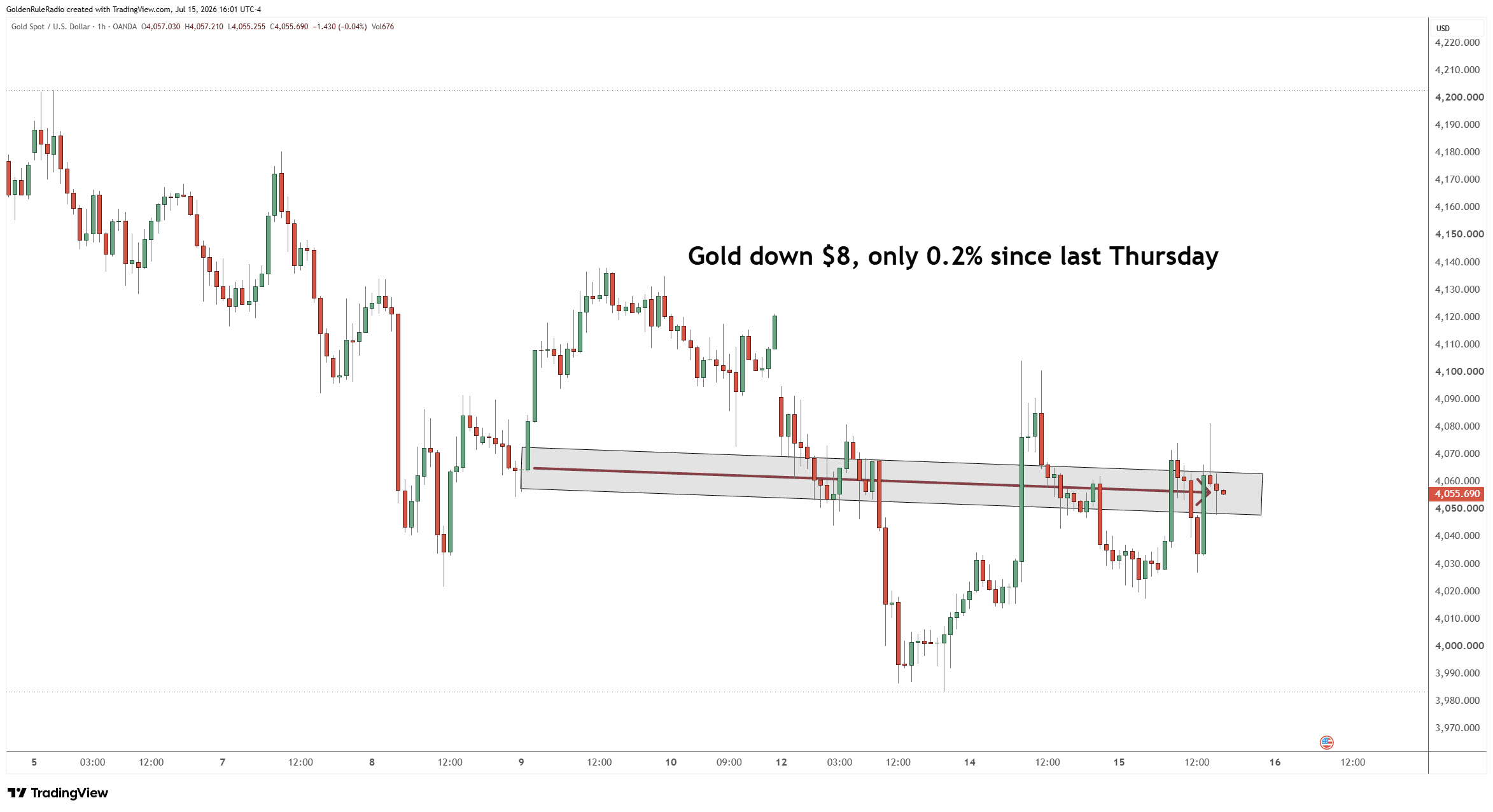
The price of gold is essentially flat — down about $8 since midweek last week — after swinging up roughly 2% and down roughly 2% inside its range. It continues to consolidate in the low-$4,000s.
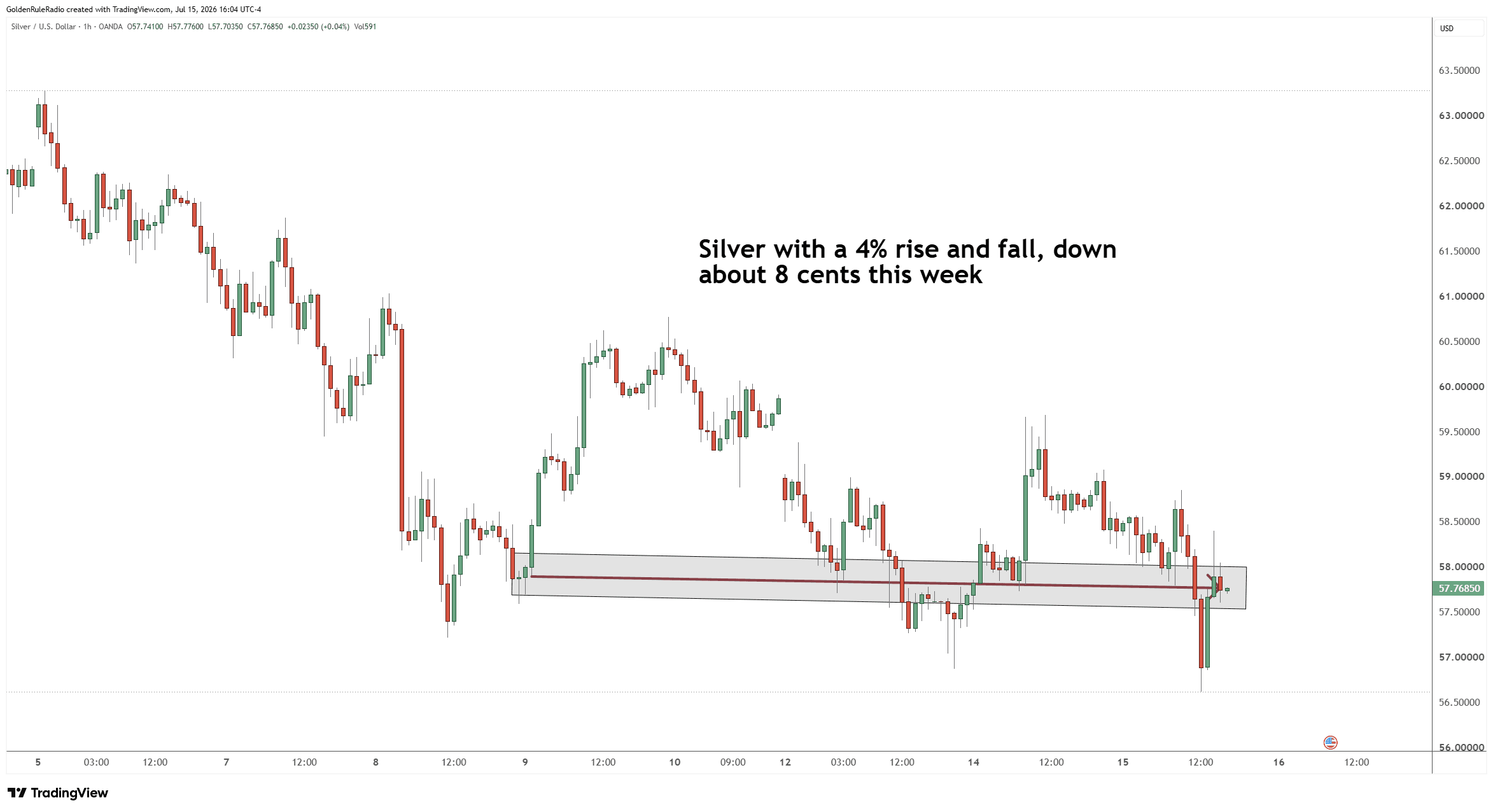
Silver is flat as well, doing its usual “little bit more than gold” — up about 4%, down about 3% — before finishing the week down just about eight cents. It’s sitting in the same trading range we’ve been watching for weeks.
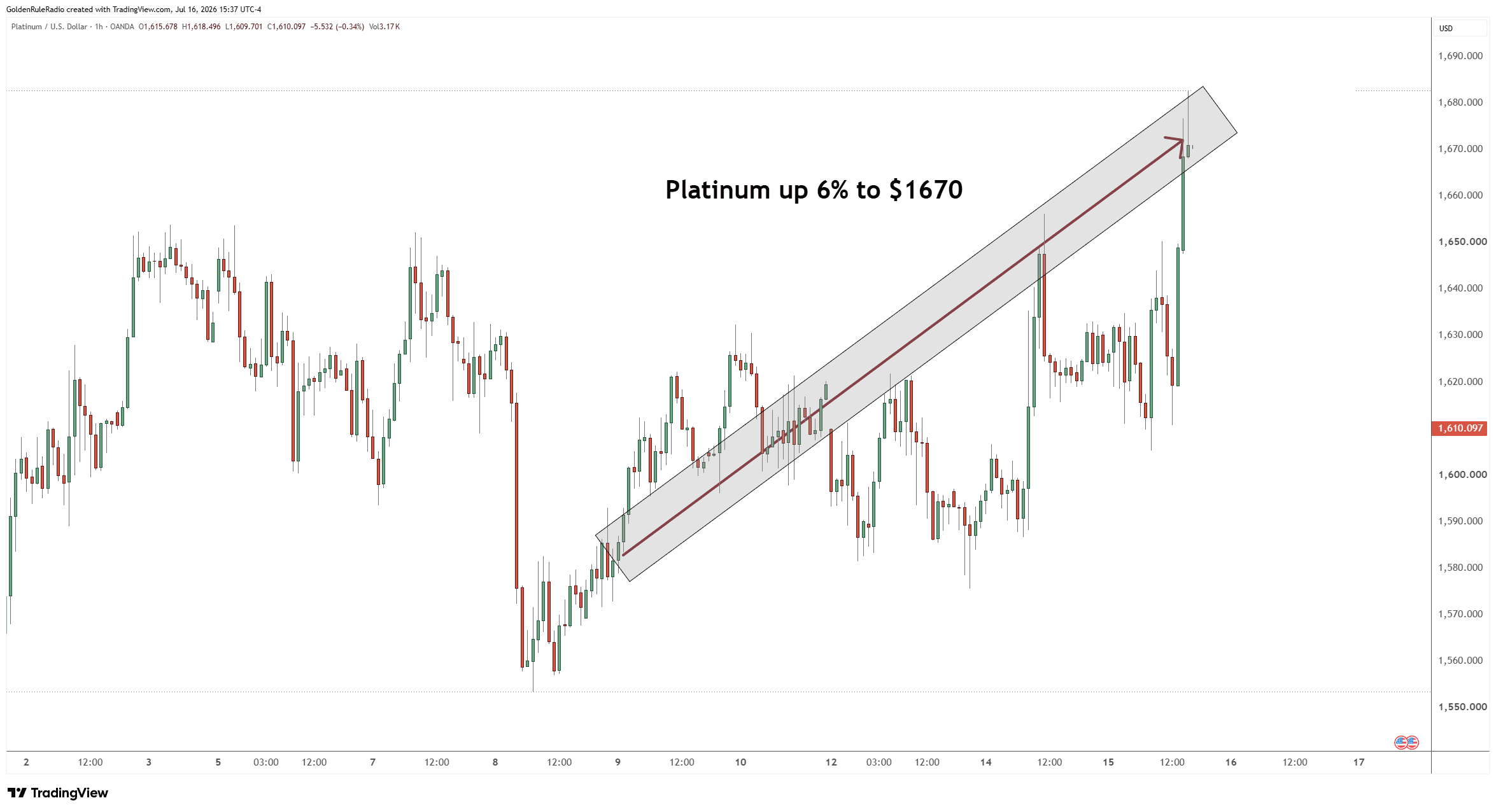
Platinum is the surprise of the week, up about 6% to $1,670. That’s its highest level in roughly a month, and it’s now pressing against a potential breakout point just above $1,700.
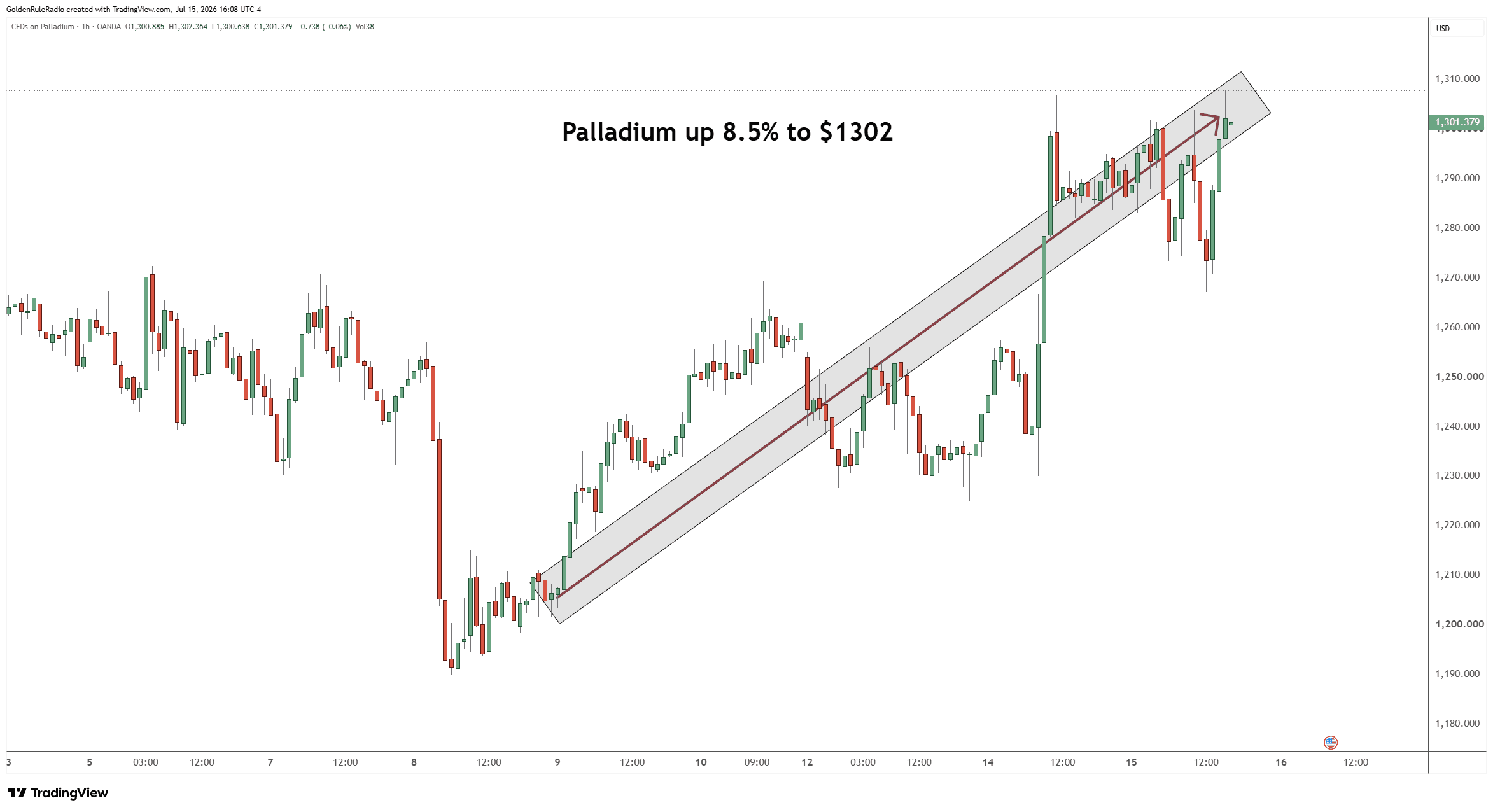
Palladium is up about 8.5% to $1,302. It’s back above the $1,300 mark, breaking a short-term interim high set back in June.
Looking over at the paper markets…
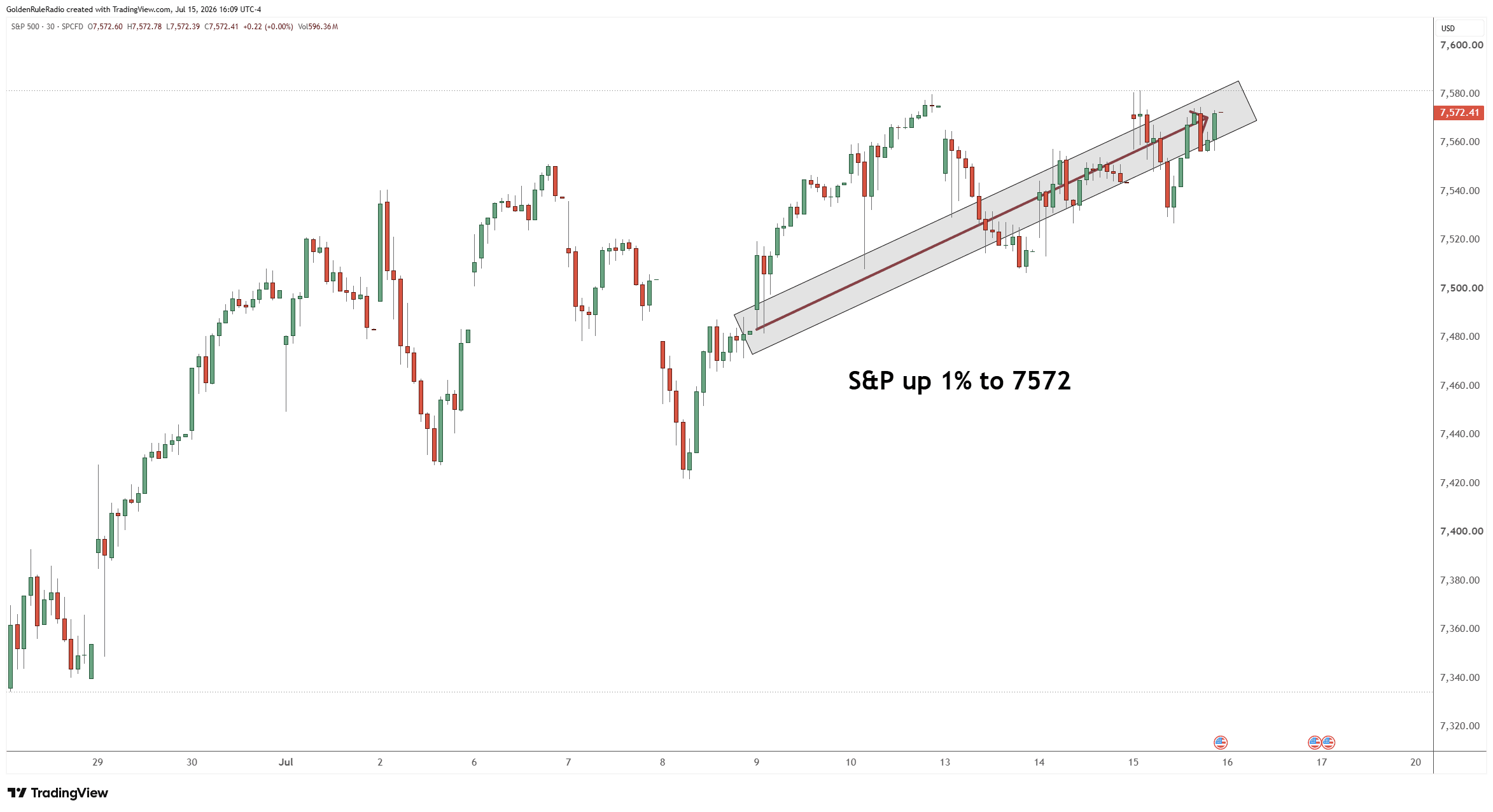
The S&P 500 is up about 1% to 7,572. That’s still below the all-time high set at the beginning of June — the index is knocking on that door again after failing to reclaim it in mid-June.
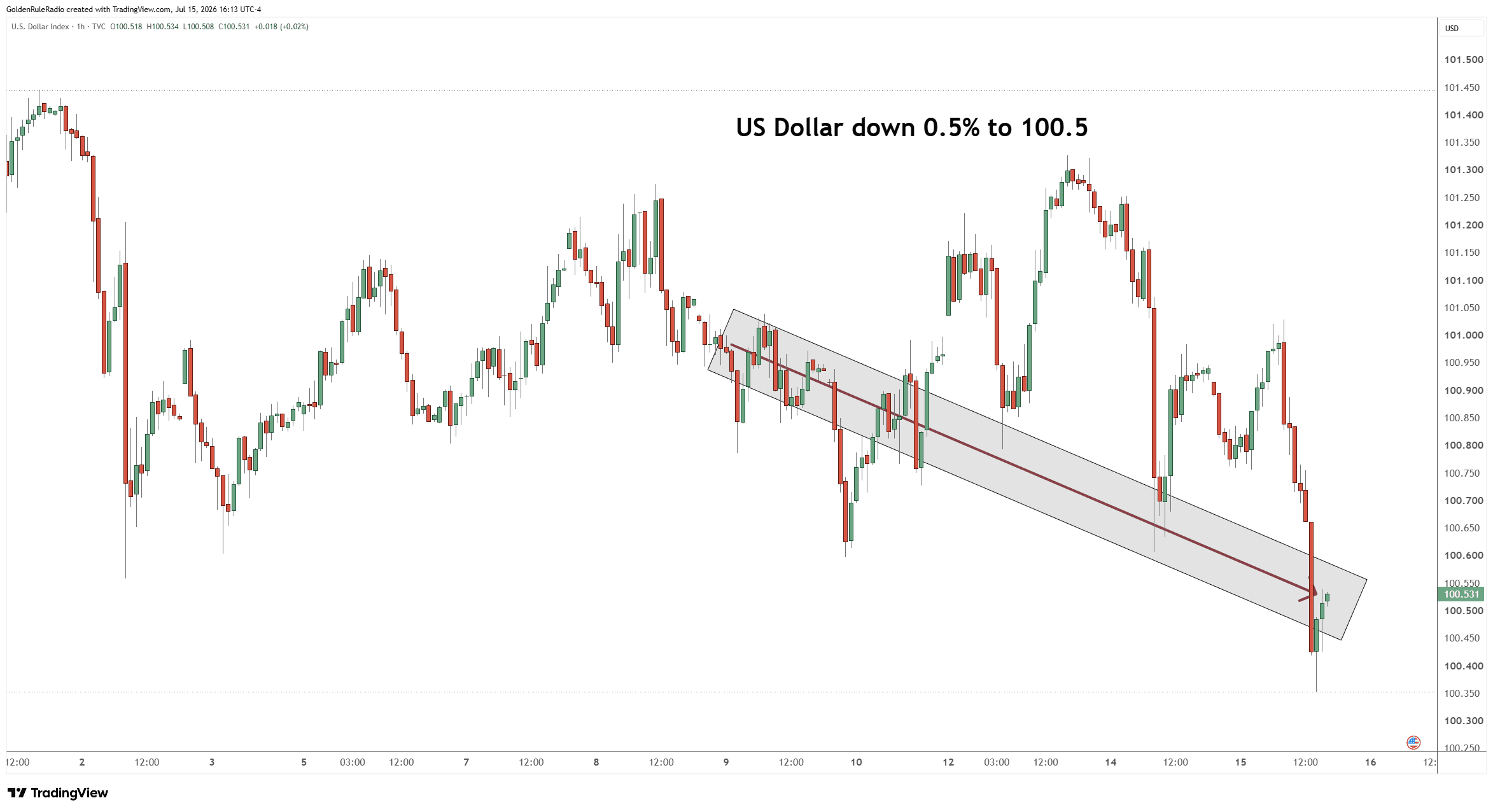
The US Dollar Index is down about 0.5%, breaking a short-term floor on a hard dive and now sitting around 100.5.
White Metals Break Out
The story this week isn’t in the monetary metals — it’s in the industrial ones. Gold and silver are acting as the alternative monetary hedge they’ve always been, sitting quietly in their range. Platinum and palladium, by contrast, behave more like industrial metals, and both are showing real growth right now.
Platinum at $1,670 is the highest it’s been in about a month, and a push above $1,700 would confirm a genuine breakout. Palladium has already cleared a short-term high from June and is back over $1,300. When the industrial metals start moving on their own while gold consolidates, it’s a reminder that a diversified metals position isn’t just gold — silver, platinum, and palladium each have their own drivers and their own moments to shine.
The Fed Is Quietly Stimulating Again
Here’s the development most headlines are missing: the Federal Reserve has added roughly $200 billion to its balance sheet since the end of the year. Rather than cutting rates outright, the Fed is buying assets — a form of stimulus that many now consider more effective than rate cuts themselves.
That matters to you because it’s real fuel entering the system even without an official rate cut. The market is responding to the absence of a cut on one hand while quietly enjoying balance-sheet expansion on the other. Layer that on top of ongoing money-supply growth, and you have the structural tailwind that has driven metals for years: when the government spends more than it takes in and the Fed accommodates the difference, the price of everything real — gold included — grinds higher over time.
Good Inflation News
This week’s CPI report was encouraging. We saw one of the largest month-over-month declines in headline US inflation on record, while core CPI came in essentially unchanged. Good inflation news takes pressure off the Fed to hike, and that’s precisely why gold popped: in this environment, gold trades almost tick-for-tick against the dollar and Treasury yields.
If you want to predict gold’s short-term direction, watch the dollar index and the 10-year bond yield. The two charts have become near-perfect mirror images — when yields and the dollar rise, gold falls, and vice versa.
The wild card in that equation is oil, the great force multiplier for inflation. As oil has spiked on the Iran conflict, it has revived rate-hike concerns, strengthened the dollar, and pressured gold. Any easing of tensions — for instance, Persian Gulf producers routing pipelines away from the Strait of Hormuz toward the Red Sea, which could take Hormuz off the table — would relieve that pressure and let energy prices fall, a disinflationary outcome the white metals in particular tend to like.
Keep an eye on the calendar: the next FOMC meeting lands July 28–29. The Fed is talking hawkishly, but the odds of a hike are still roughly fifty-fifty, and PPI is yet to come. Don’t hang your whole read on a single CPI print.
Consolidation Is a Gift
Step back from the week-to-week noise and the picture is a market skipping along a fairly consistent channel — roughly the $3,900 to $4,100 range in gold — before what we’d expect to be the next growth phase. Prices are riding the 65-week moving average, and we’re moving through one of gold’s more favorable seasonal windows in June and July.
That combination — consolidation, seasonality, and an intact long-term uptrend — is exactly the setup long-term buyers wait for. You’ll never catch the precise bottom of a consolidation channel, but this is the kind of level investors look back on and wish they’d bought. It wasn’t long ago that people were saying “I wish I’d bought at $2,400,” and before that “I wish I’d bought at $1,600.” The lesson repeats.
The backdrop only reinforces the case. Federal debt is on track toward $40 trillion by the September 30 fiscal year-end, and annual debt service has climbed to about $1.38 trillion and is rising fast. With an election year underway and both parties inclined to spend, the money supply has every reason to keep expanding — and that is the long-term engine under the gold price.
Save in Gold, and Buy Consistently
Gold’s price, in real terms, hasn’t changed in a very long time; an ounce of gold buys roughly what it always has. What changes is the dollar, which is repriced against gold as more of it gets printed. That’s why the highs you see today tend to become the lows of tomorrow. The same way $50 silver and $2,000 gold once looked like ceilings and now look like bargains, today’s records will likely look inexpensive in hindsight.
You can see it in real purchasing power: in 1973 a new car cost roughly 20–25 ounces of gold; today it’s closer to five or six. Cars, homes, and stocks have rarely been cheaper when you price them in gold rather than dollars. If you’re saving in gold instead of holding cash in the bank, your purchasing power has quietly compounded while savers sitting in dollars have lost ground. As we put it this week: minimize your cash exposure, because idle cash is robbing you — especially cash with no near-term purpose.
Ultimately, how much you allocate comes down to a simple question of trust. To the degree that someone has lost faith in the financial system, that will dictate the percentage they choose to hold in gold. You don’t have to time the market perfectly. You just have to be consistent — treat it as disciplined savings, buy through the cycle, and let the long-term math work for you.
Here to Help
Wondering whether this consolidation is the right time to add to your position? The team at McAlvany Precious Metals has a collective 75 years of experience investing in the precious metals market. We’re happy to talk through your goals on a no-obligation, complimentary consultation. Reach out to us at 800-525-9556.